Arbers Aly
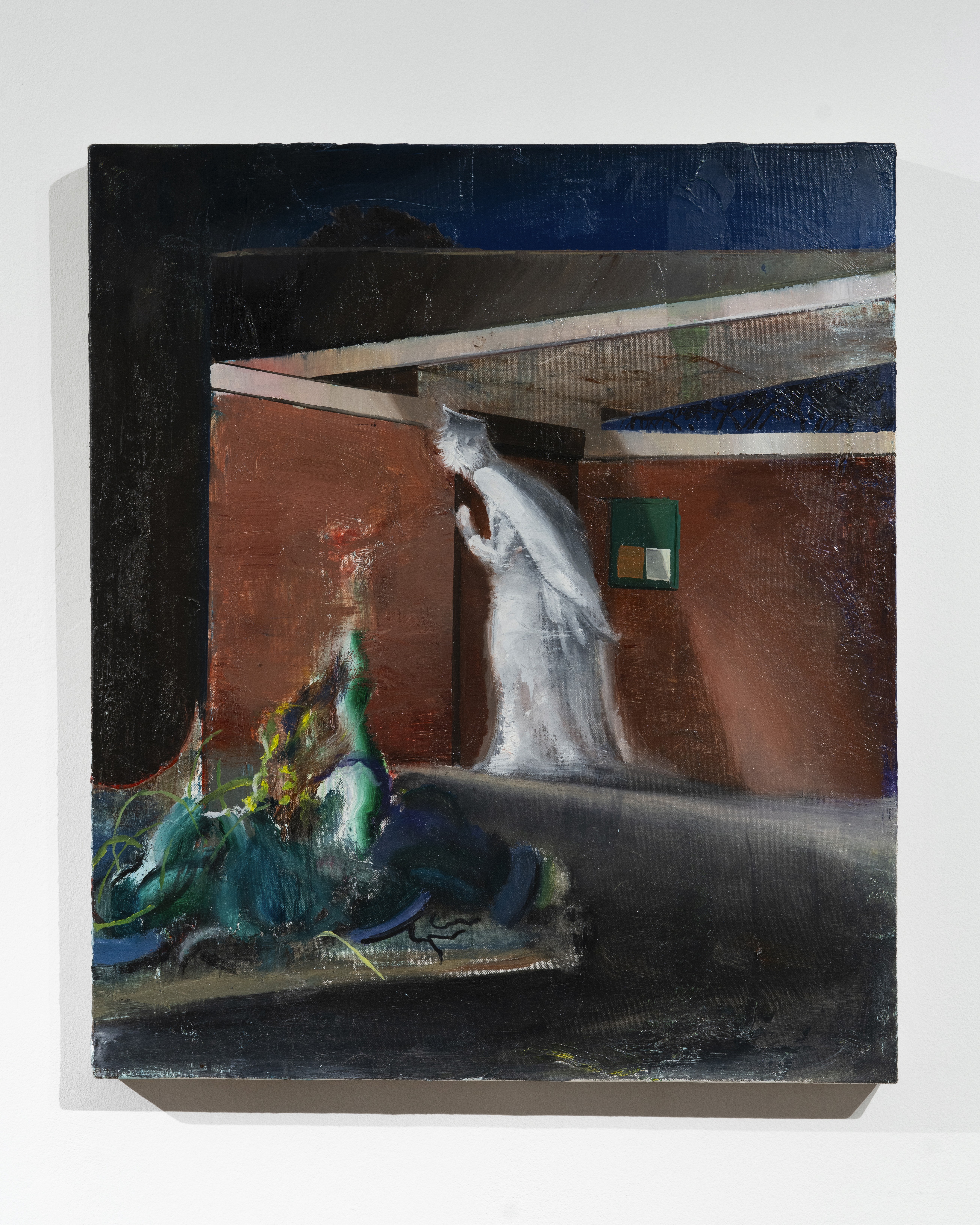
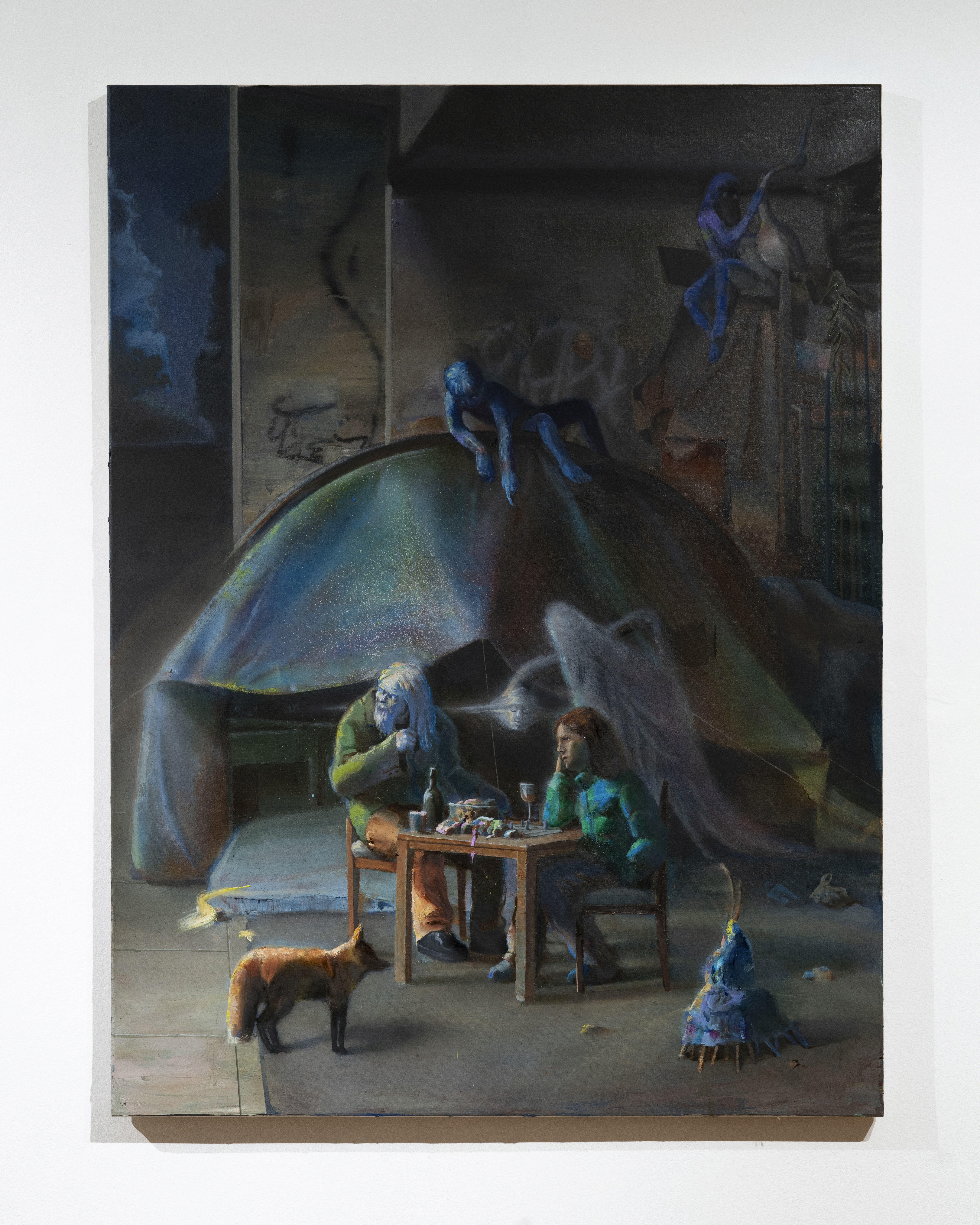
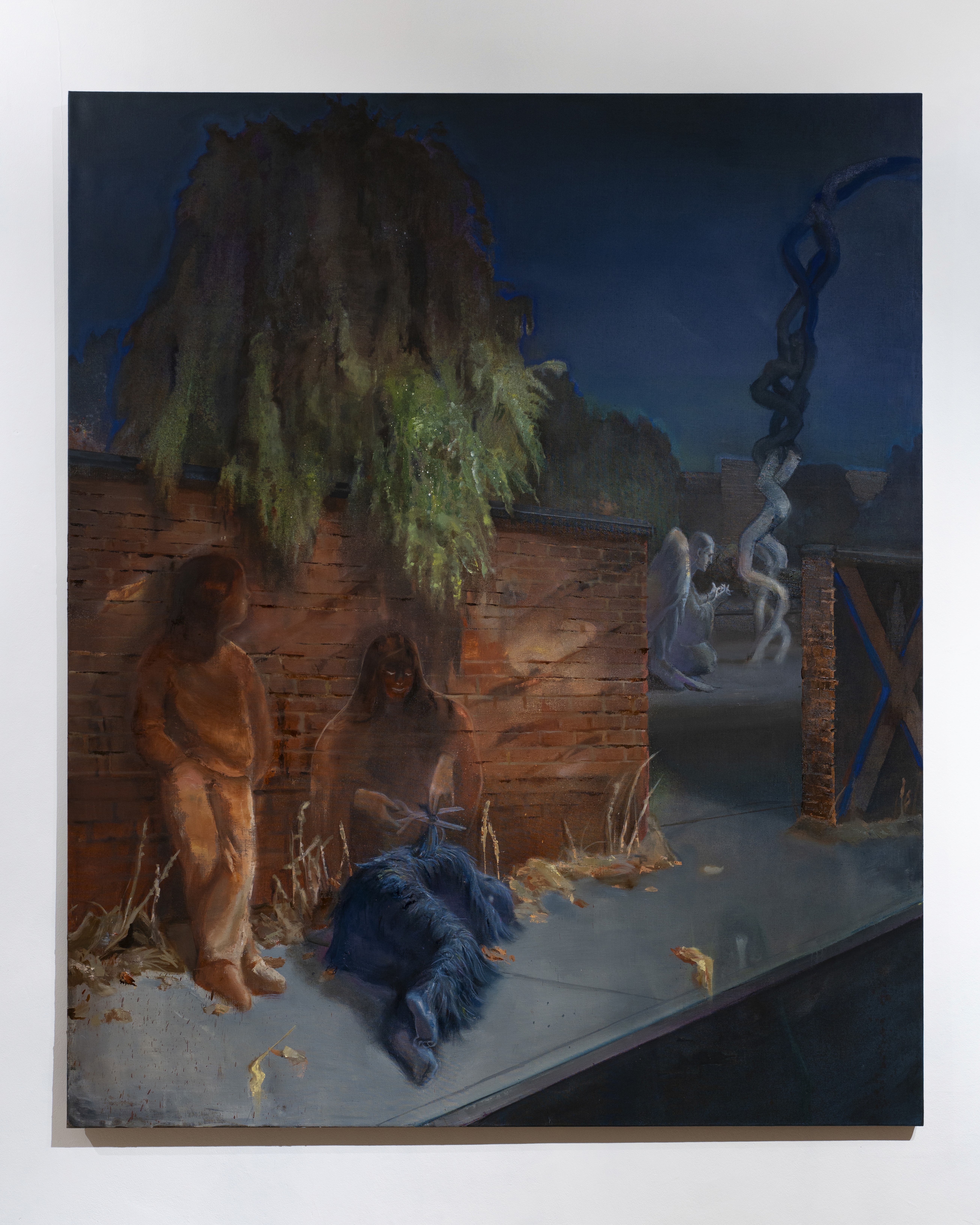
Ahn’s paintings emerge from an evolving archive of everyday landscapes she photographs on the street, fragments of dreams, and threads of literature. These sources are first gathered into a loose constellation of drawings, which may later be summoned into paintings she begins the following week, or sometimes a year later.
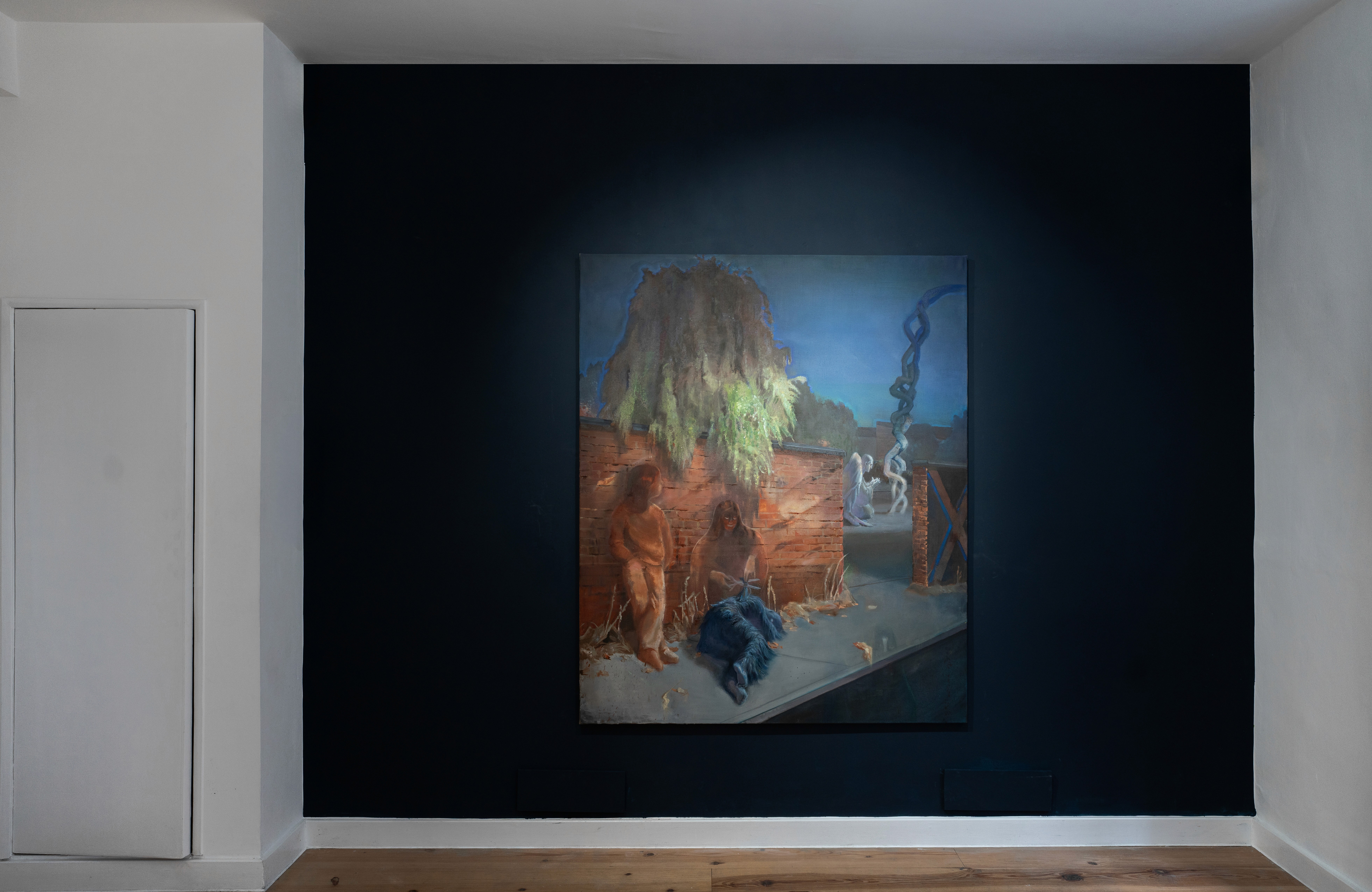
Arbers Aly takes its title from a broken version of Barbers Alley, a real street in East London. In one of Ahn’s source photographs, the letter B is obscured, leaving the name to read Arbers Alley. This accidental alteration becomes generative: the title suggests an anonymous street, partially emptied of specificity, as Ahn further turns her attention toward the ordinary streets and overlooked corners of her everyday surroundings.
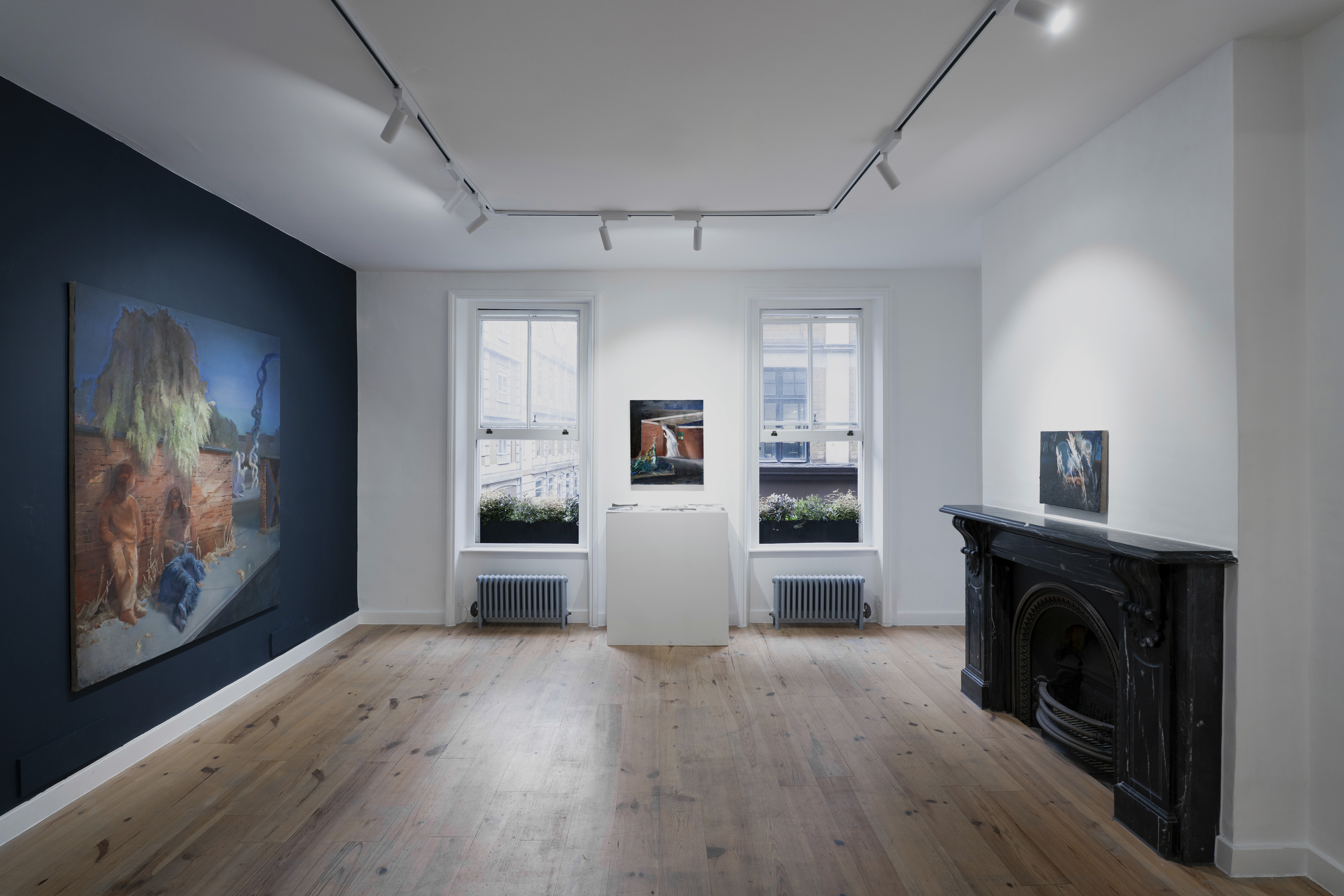
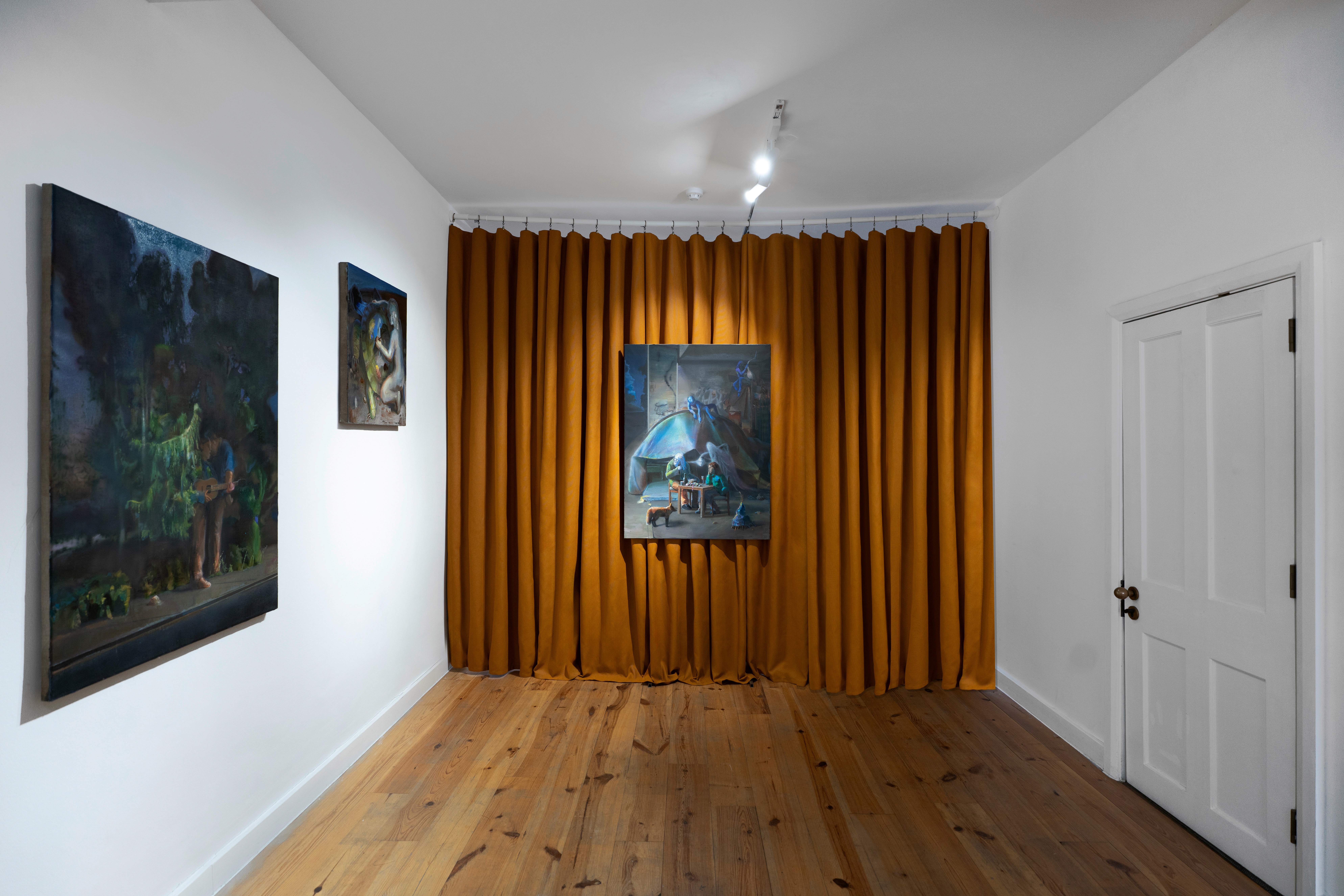
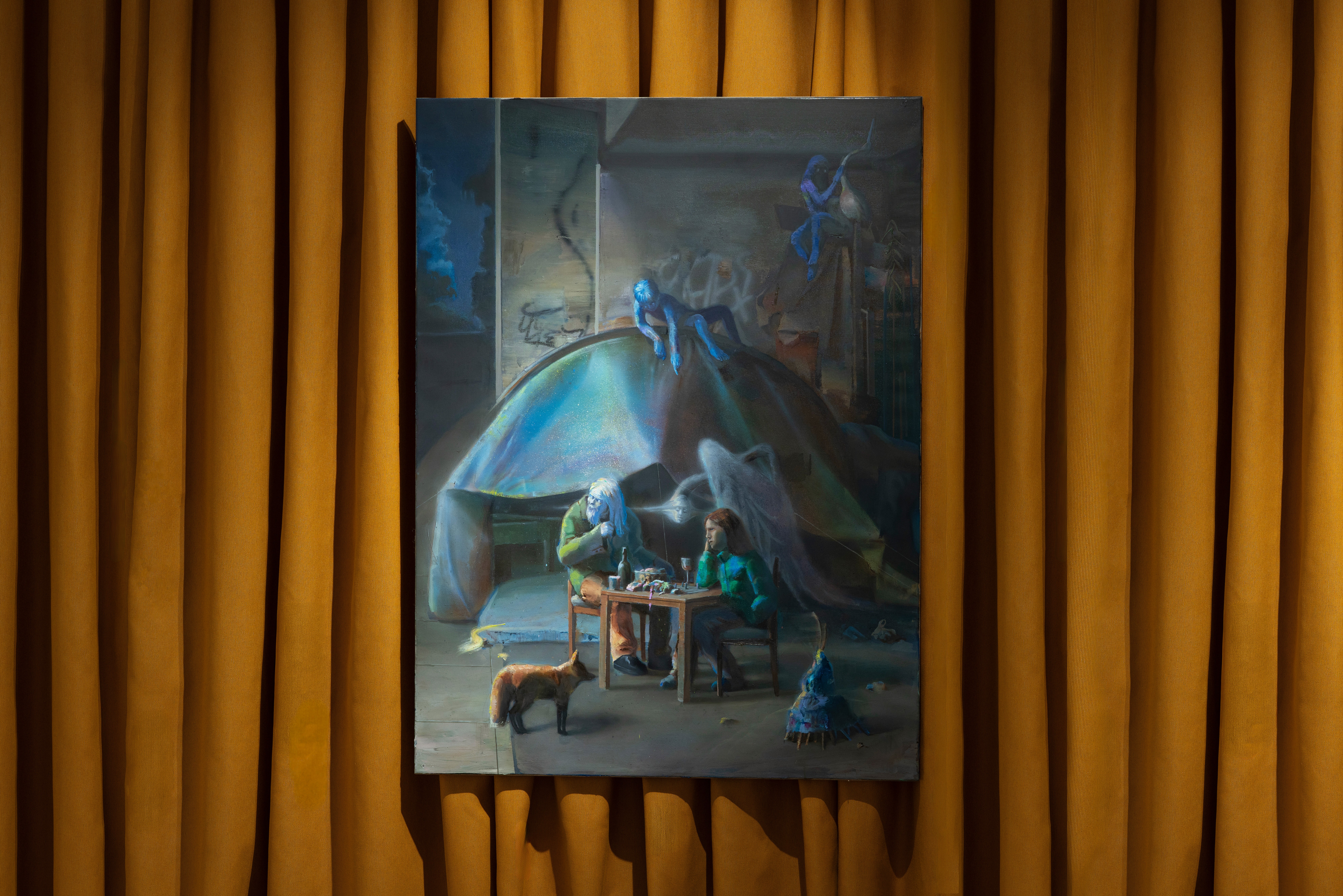
In a two-person exhibition at NORITO in December 2025, Ahn presented Nocturnal Apparition (2025) alongside smaller works, staging a theatrical streetscape of East London. Compared with her earlier paintings, the work introduced more ordinary and contemporary figures—a hooded figure and an infant—while retaining a frontal composition in which the painting operated like a stage supporting multiple narrative threads. In Arbers Aly, this staging shifts further into the fabric of everyday life, following a moment of observation on a red bus back home one evening. Each passing frame of the bus window appeared to her as stage beneath street lanterns, while figures drifting in and out of its light seemed as if glimpsed after a performance had already ended. The new body of works in this exhibition suggests scenes beyond the main stage: anonymous figures, peripheral spaces, and empty streets encountered between dawn and dusk.
Light remains central to Ahn’s practice, functioning as a device that mediates between the imaginary and the real. It allows unstable or uncertain forms to assume a temporary presence within the image. Through overlapping imagery and layered painterly approaches, light becomes a means of linking different layers—the personal and the collective, the visible and the unseen—producing images that resist resolution the closer they are examined. Variations in surface—thin and thick oil passages, controlled and loose brushwork, rough splashes alongside refined areas—combine with a hovering, neon-like illumination to construct a shifting perceptual field.
Across her practice, Ahn continually returns to a process of loosening—of drawing, of painting, and of the narratives that move through her images—allowing them to remain open, contingent, and encompassing.
Selected Works