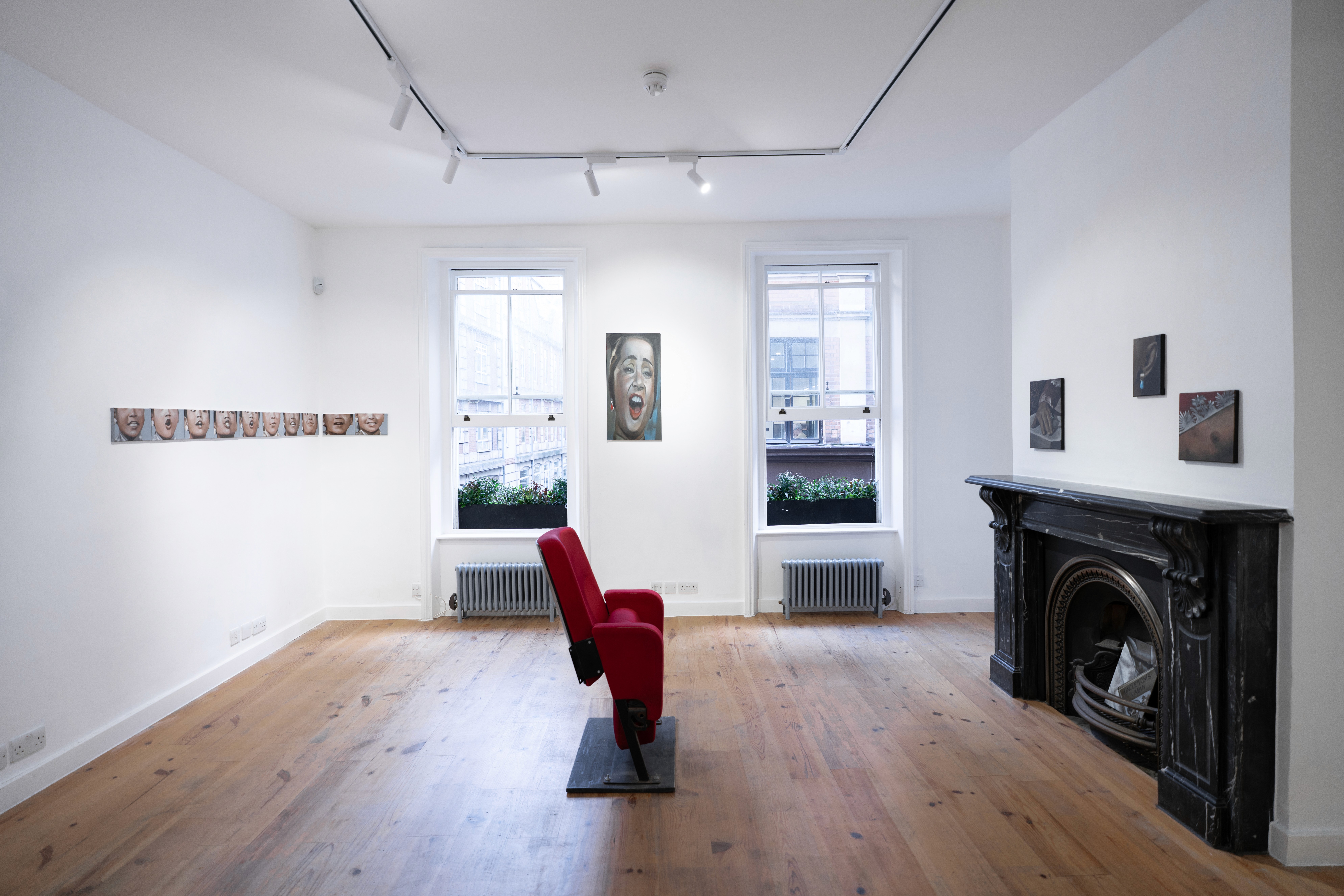
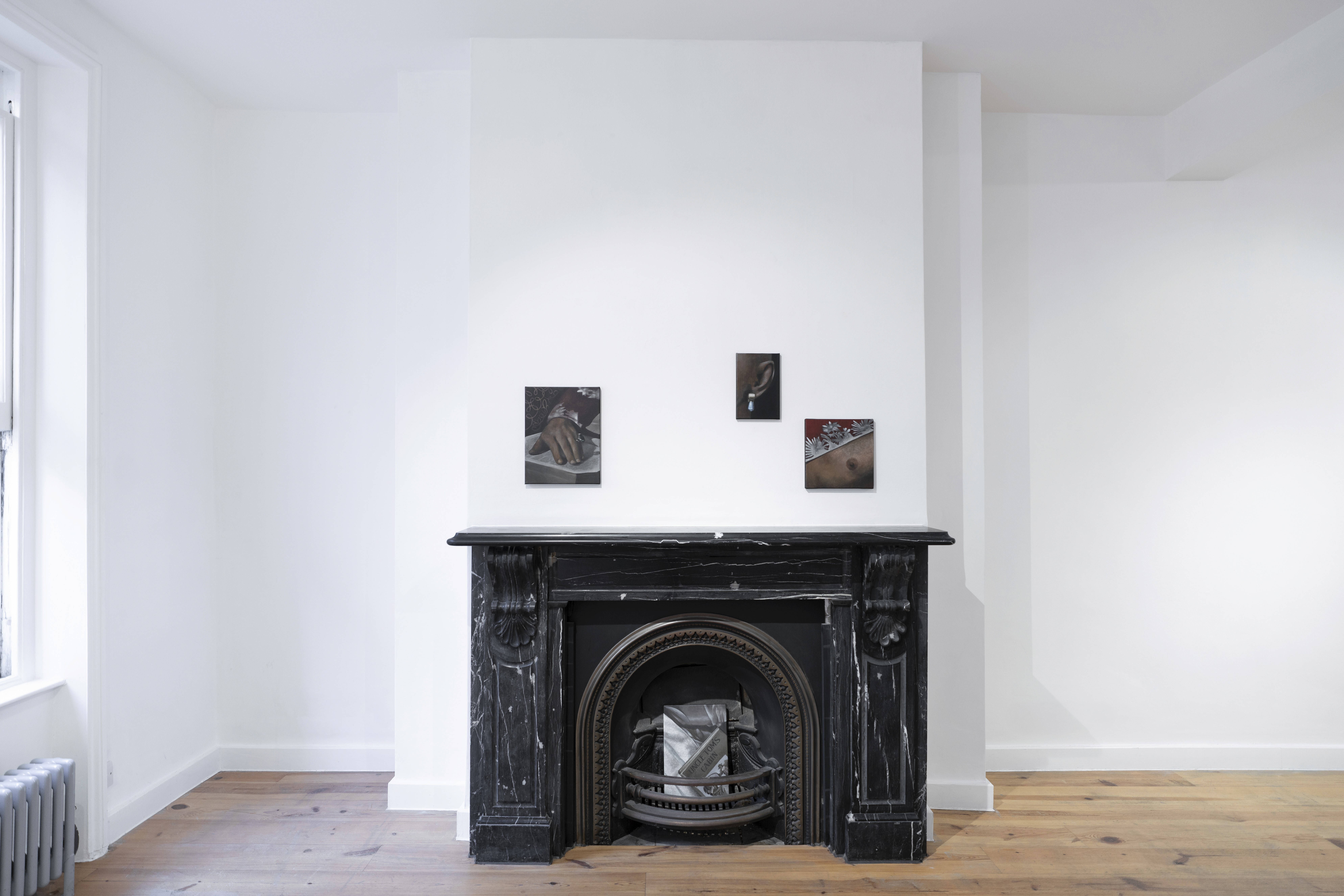
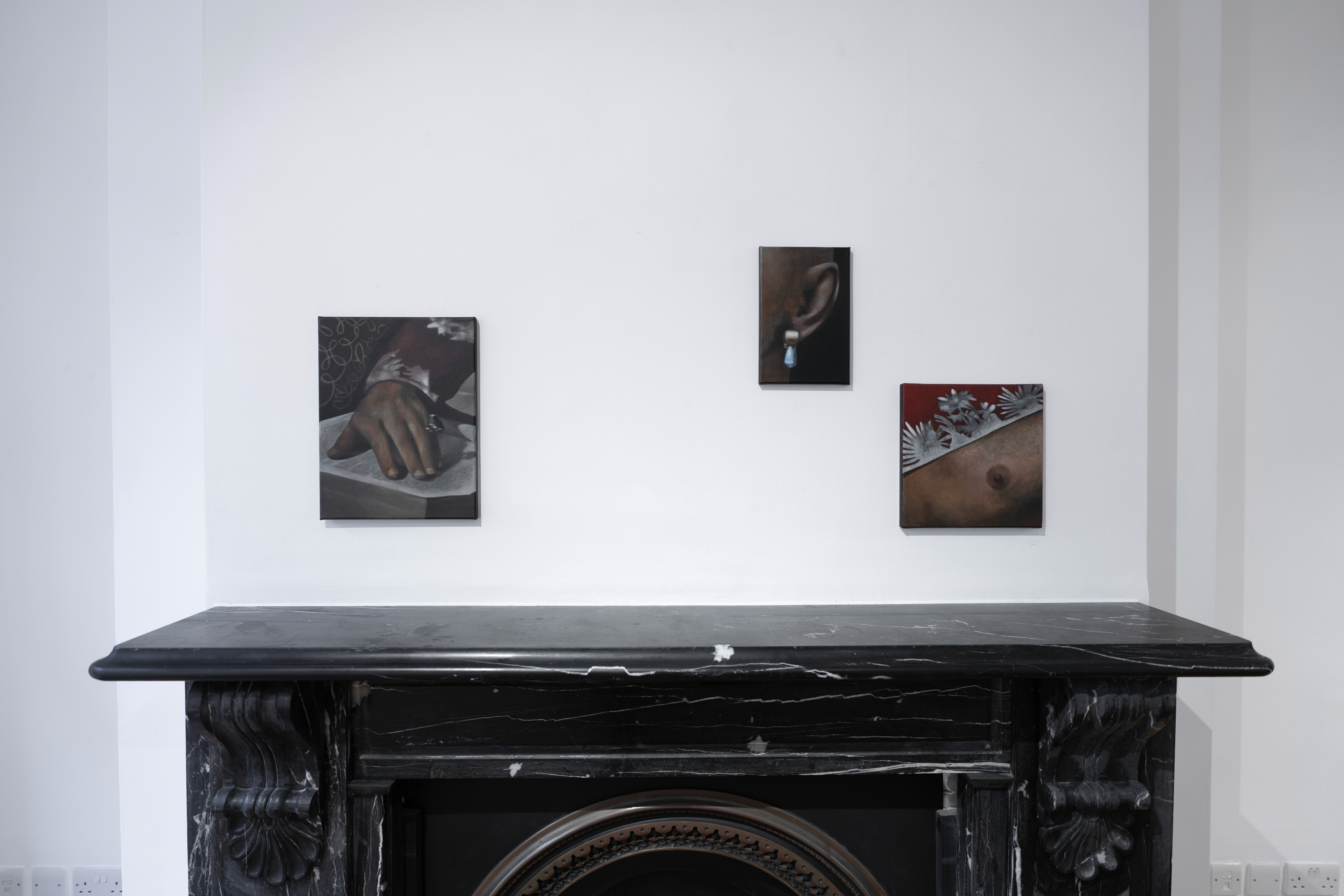
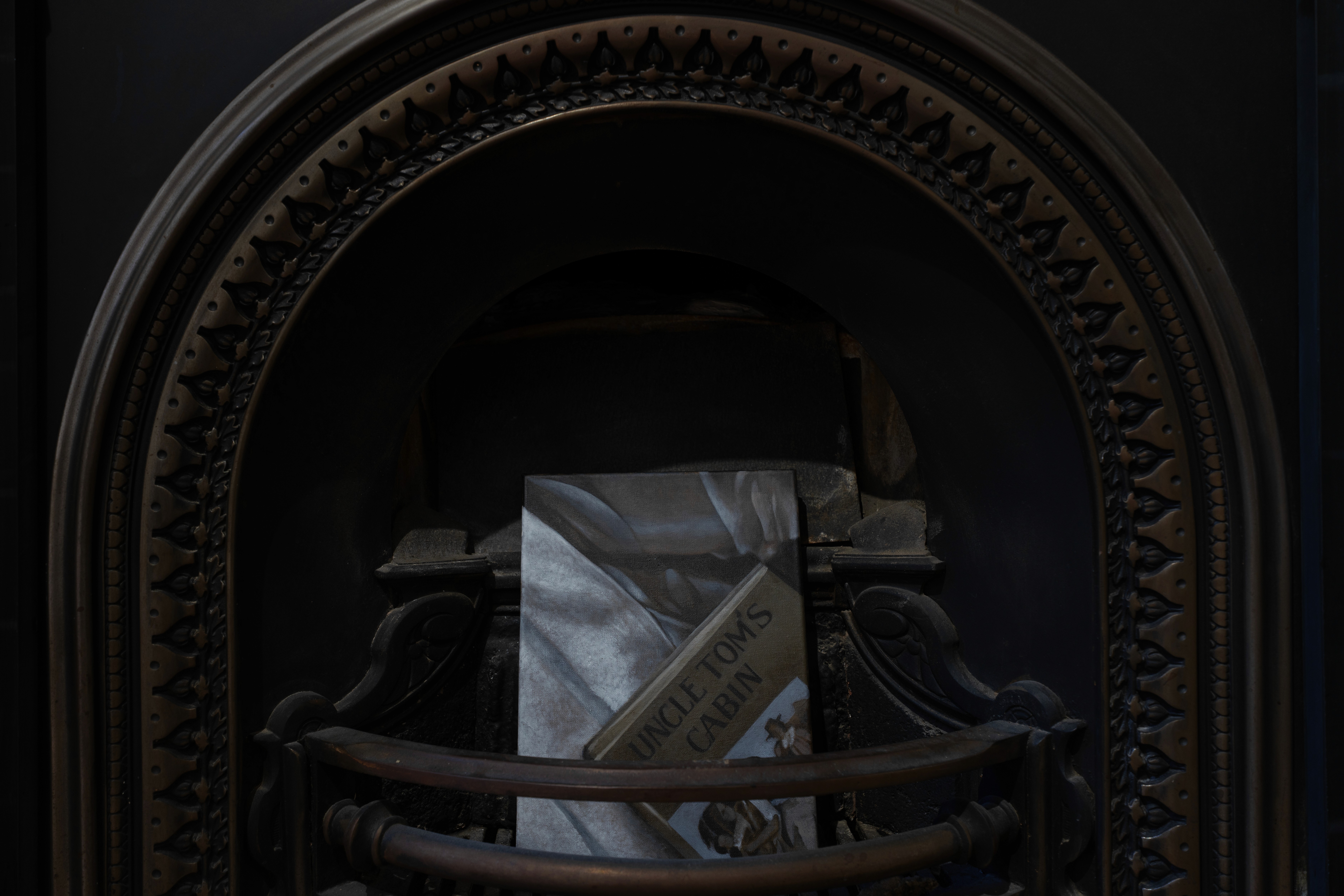
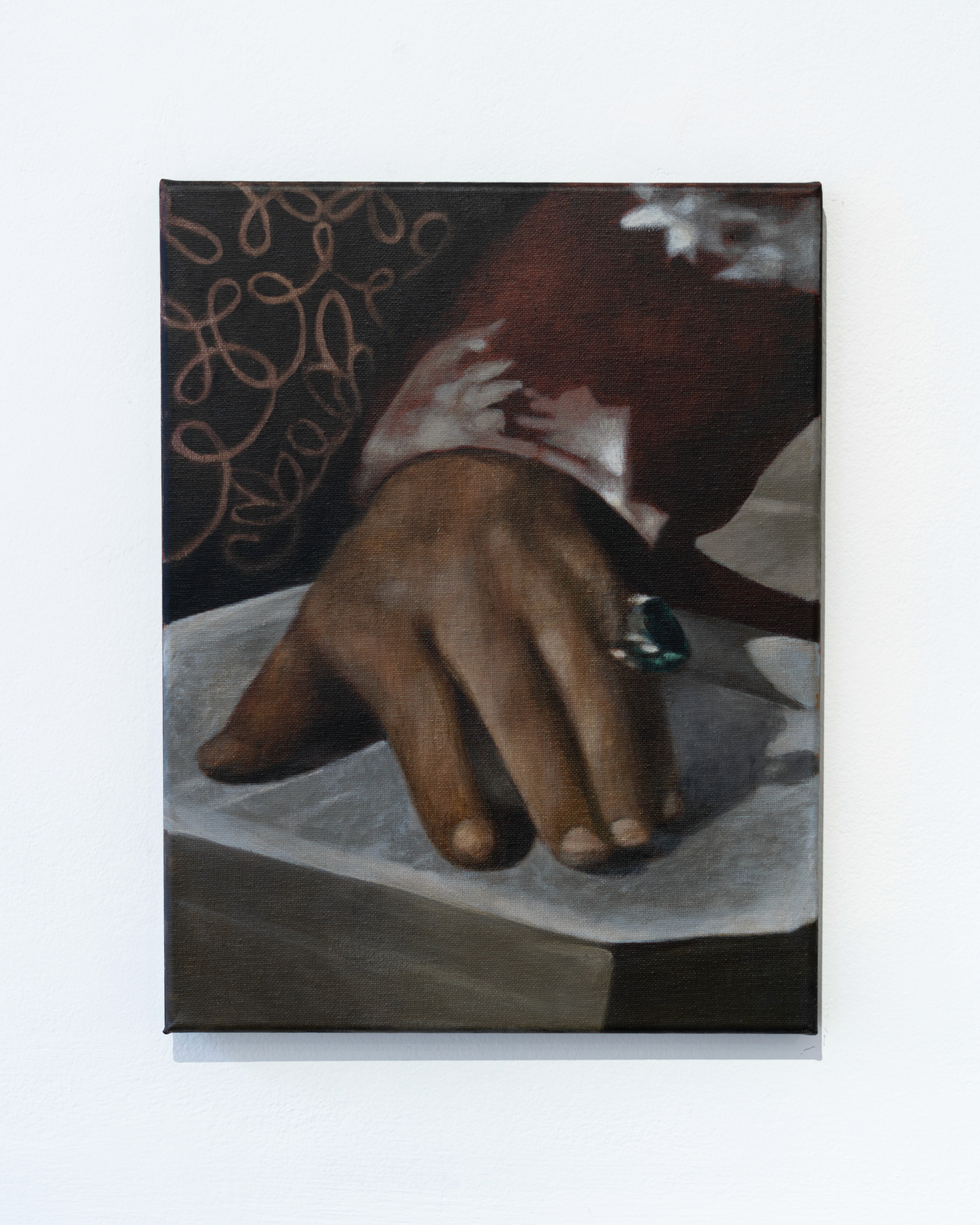
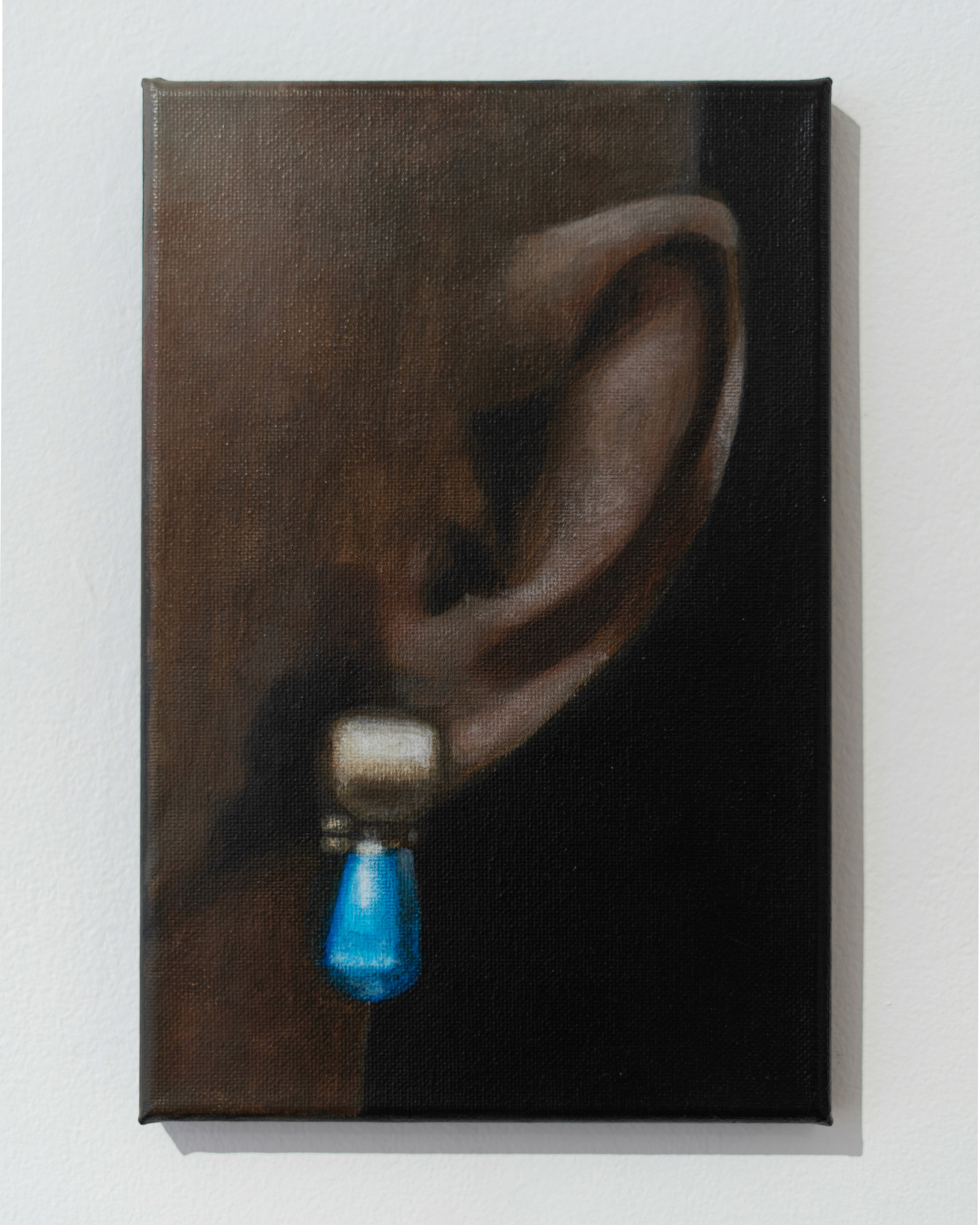
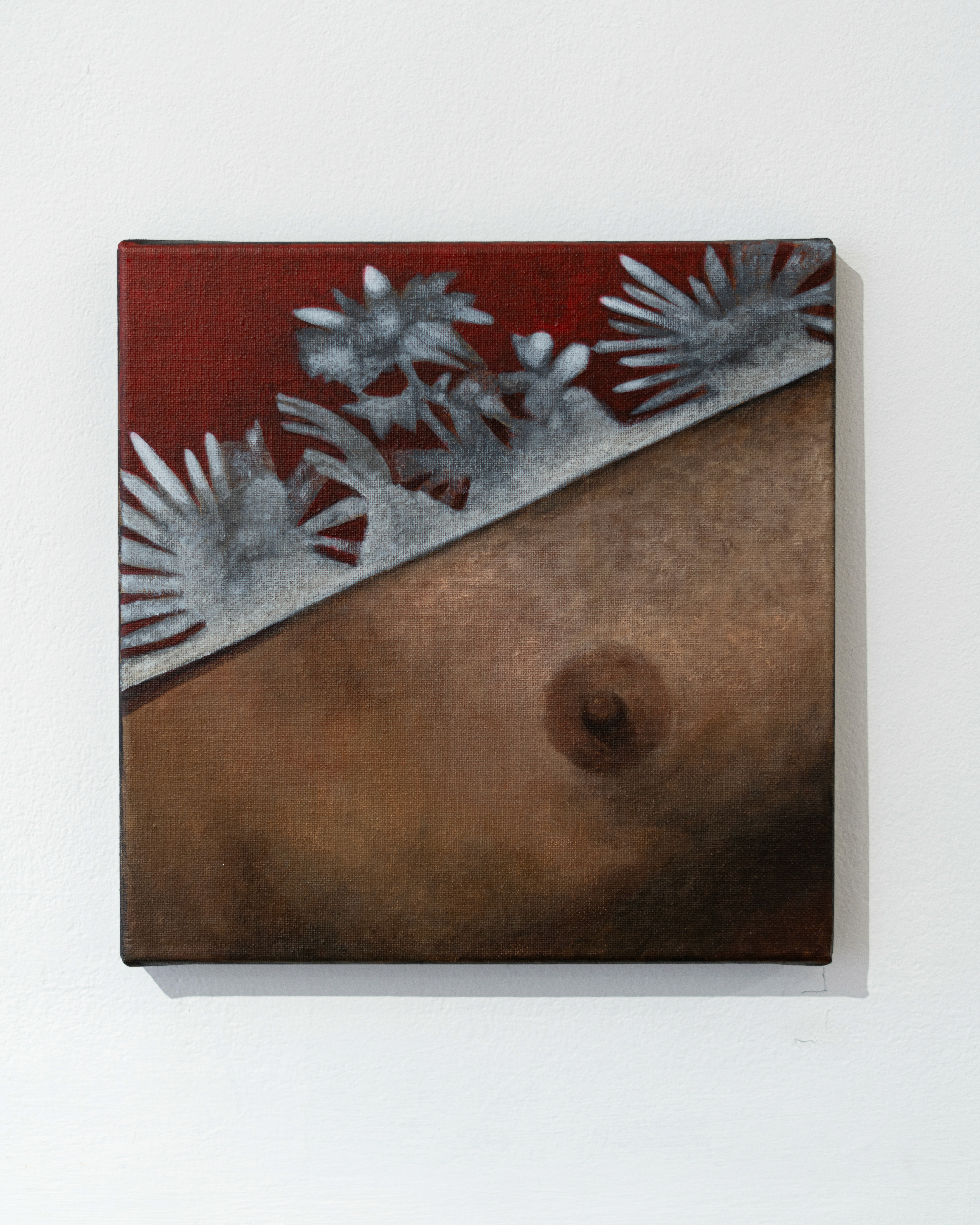
Flatmates 37 opens with SOFT SERVE, a group exhibition bringing together five artists whose practices consider belonging, vulnerability, material memory and the unstable boundaries between bodies, objects and places.
Shared by NORITO, starch and Teaspoon Projects, Flatmates 37 takes its name and structure seriously: three independent programmes inhabiting one space. Rather than operating as a gallery with a singular curatorial voice, it is conceived as a place of cohabitation — a rotating programme of exhibitions by each of its three ‘flatmates’, punctuated by collective exhibitions such as SOFT SERVE.
The exhibition begins with a contemporary idea of home as something increasingly personal, shared and abstract. In cosmopolitan lives, home is often less tied to a single place than to people, habits, objects, memories and temporary forms of belonging. Across the works, home is inherited, withheld, reconstructed and carried between places, shaped as much by displacement as by intimacy. Familiar materials and forms become slightly strange, reflecting the instability of belonging when home is something we continually make, lose and remake.
SOFT SERVE also proposes a way of thinking about hospitality. Flatmates 37 is interested in forms of gathering that do not depend on a singular host or centre. Instead, hospitality becomes reciprocal: a willingness to make room for different positions, to relinquish control, and to create conditions in which uncertainty and vulnerability are not treated as weaknesses. The exhibition embraces this instability — between host and guest, belonging and estrangement, protection and exposure, the organic and the manufactured.
London-based Venezuelan artist Francisca Sosa López explores materiality and process through shifting definitions of home, migration, femininity and cultural contrast. Working with materials that can travel back and forth across the Atlantic, she extends drawing into thread, beads and textile, making portability part of the work’s relationship to place. In Bamboleo de detalles ambigüos (Swaying of Ambiguous Details), a Margarita hammock becomes both painting and object. Weaving, repetition and intervention bring forms of making historically associated with women into dialogue with the language of painting, while the hammock itself hovers between domestic utility, memory and exhibition object.
This sense of home as something carried, inherited and never entirely secure also runs through Cansu Yıldıran’s Dispossessed series. Made in the Kuşmer Highlands in northern Turkey, where their family has roots, the photographs emerge from a landscape to which Yıldıran is deeply connected yet cannot fully lay claim. Women, animals and the landscape form a collective presence within images that are tender and uncanny, marked by histories of gendered inheritance and dispossession. Yıldıran describes this condition as being “guests for life”: belonging intimately to a place while remaining, in some sense, outside it.
Questions of who or what occupies the centre shift again in Chok Si Xuan’s installations. Working with found electronics and industrial materials, Chok looks to cybernetics and the feedback systems connecting humans, living organisms and machines. Her environments resist a stable hierarchy between body and apparatus, organic and manufactured, allowing agency to circulate through the systems she constructs. If home can be understood as a network of relations rather than a fixed site, Chok pushes that network beyond the human, towards the objects, technologies and organisms with which we continually share space.
A related surrender of control appears in Ruijin Song’s approach to making. Working across painting, ceramics, metalwork and printmaking, Song describes the studio as an expanding inner ‘burrow’: intuitive, secretive and without a predetermined route. Images are layered, rotated and interrupted until familiar ways of seeing begin to loosen. Her sensitivity to death, labour and fragile forms of existence gives this process an emotional weight; vulnerability becomes less a subject to depict than a condition through which the work is allowed to emerge.
Mithra Jeevananthan’s practice explores speculative ecologies and chimeric spaces. Through sculpture and installation, she combines references to flora, fauna, insects, and biological systems with industrial materials such as welded metal, plastics, readymade objects, laser-cut elements, and fabricated structures. These fragments are distorted, reconstructed, and brought together to form unfamiliar habitats that resist fixed interpretation. The work considers how imagined environments might develop their own systems and relationships, creating spaces that feel simultaneously beautiful, unsettling, and difficult to classify. Welcome to My Island is an ongoing exploration of world-building through mutation, transformation, and the possibility of landscapes that exist somewhere between reality and fiction.
Together, the works in SOFT SERVE resist the idea that belonging requires certainty. They propose instead something gentler and more permeable: identities formed through contact, homes assembled from fragments, and spaces made meaningful through the people, materials and memories temporarily held within them.
As the first exhibition at Flatmates 37, SOFT SERVE makes its position clear: loosen the centre; belonging is something we make together.
Sirawit Chatu and Audrey Lukban examine how colonial image systems persist beyond the formal end of empire. Their works focus on structure: how ideology operates through aesthetics, display, and repetition.
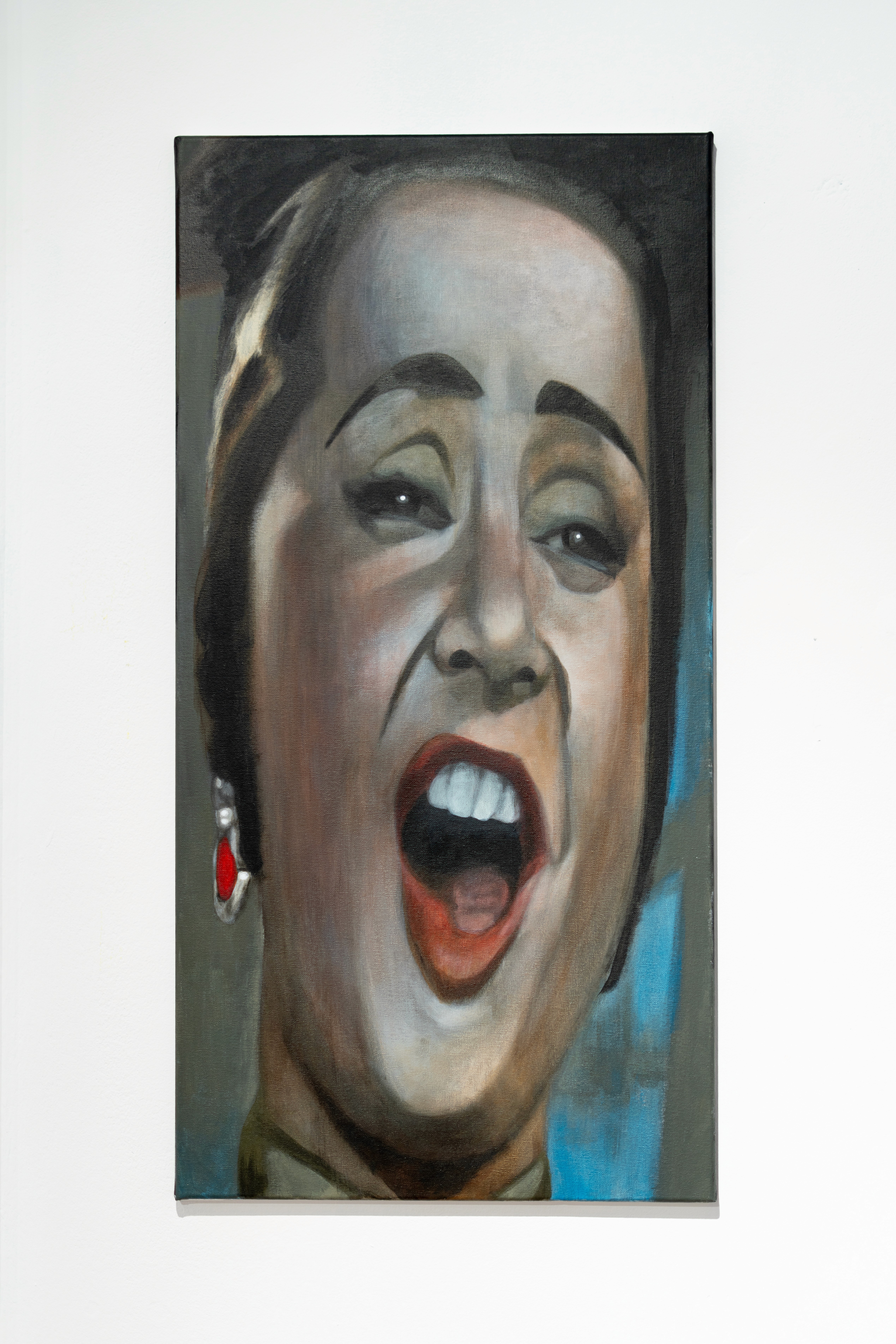
Chatu reworks scenes from The King and I, the Hollywood musical that staged a fictional Siam for Western audiences. His paintings return to the Orientalist construction identified by Edward Said in Orientalism: the East rendered as spectacle, the West positioned as civilising authority. Executed in acrylic — a synthetic, industrial medium — the works underscore the manufactured quality of stereotype and its capacity for mass circulation. By translating film stills into slow, manual paintings, Chatu isolates moments that once functioned as seamless cinematic narrative.The ideological script becomes visible: a clear division between ‘us’ and ‘them’, with authority performed as the civilised and the ‘other’ rendered as lacking.
Cinema operates as what Louis Althusser describes as an ideological apparatus — a system that produces subjects through interpellation, where identification with the narrative feels natural and convincing. In The King and I, Western rationality is affirmed through narrative pleasure. Through repetition and painterly delay, Chatu exposes how these positions are constructed and maintained at the level of the image.
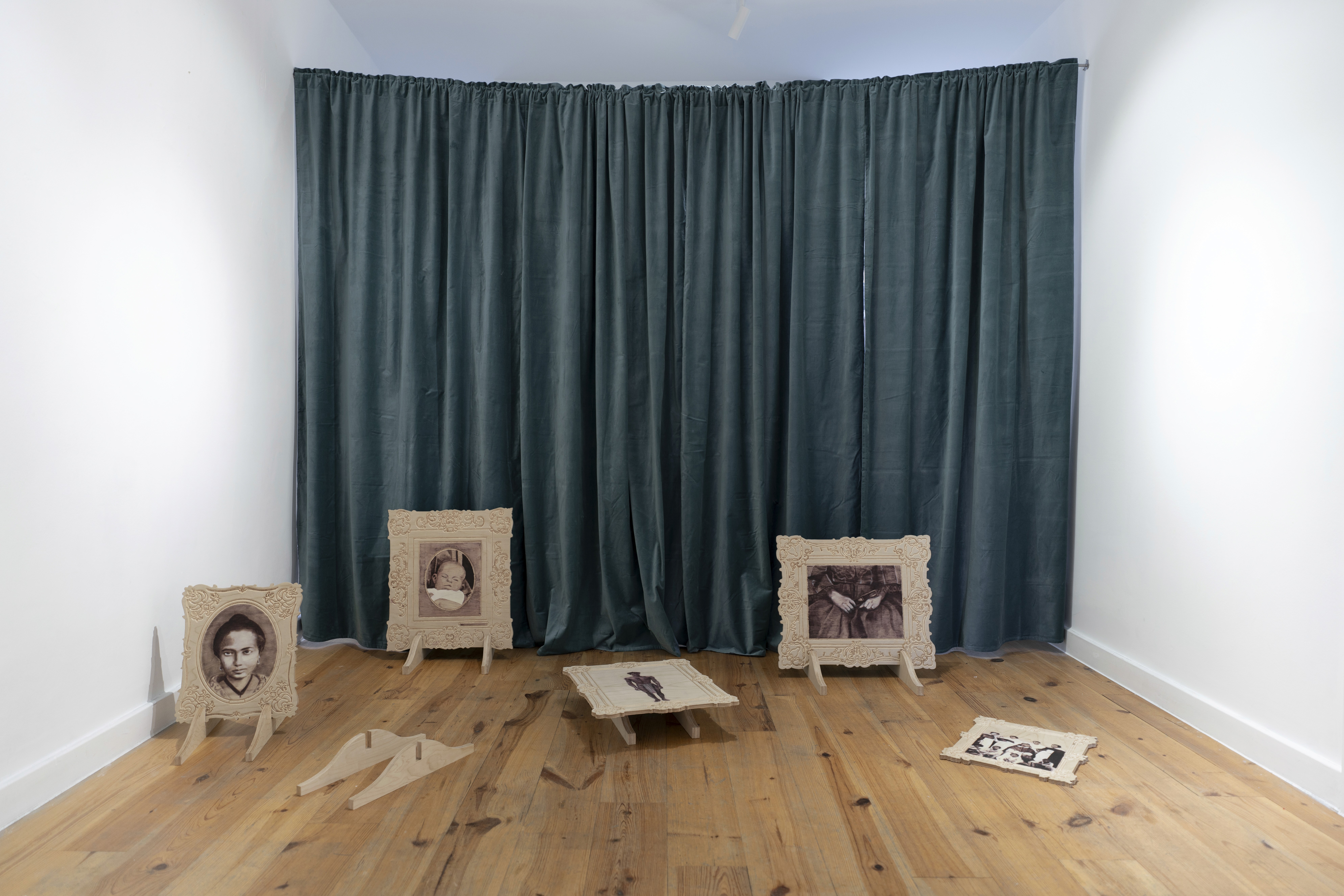
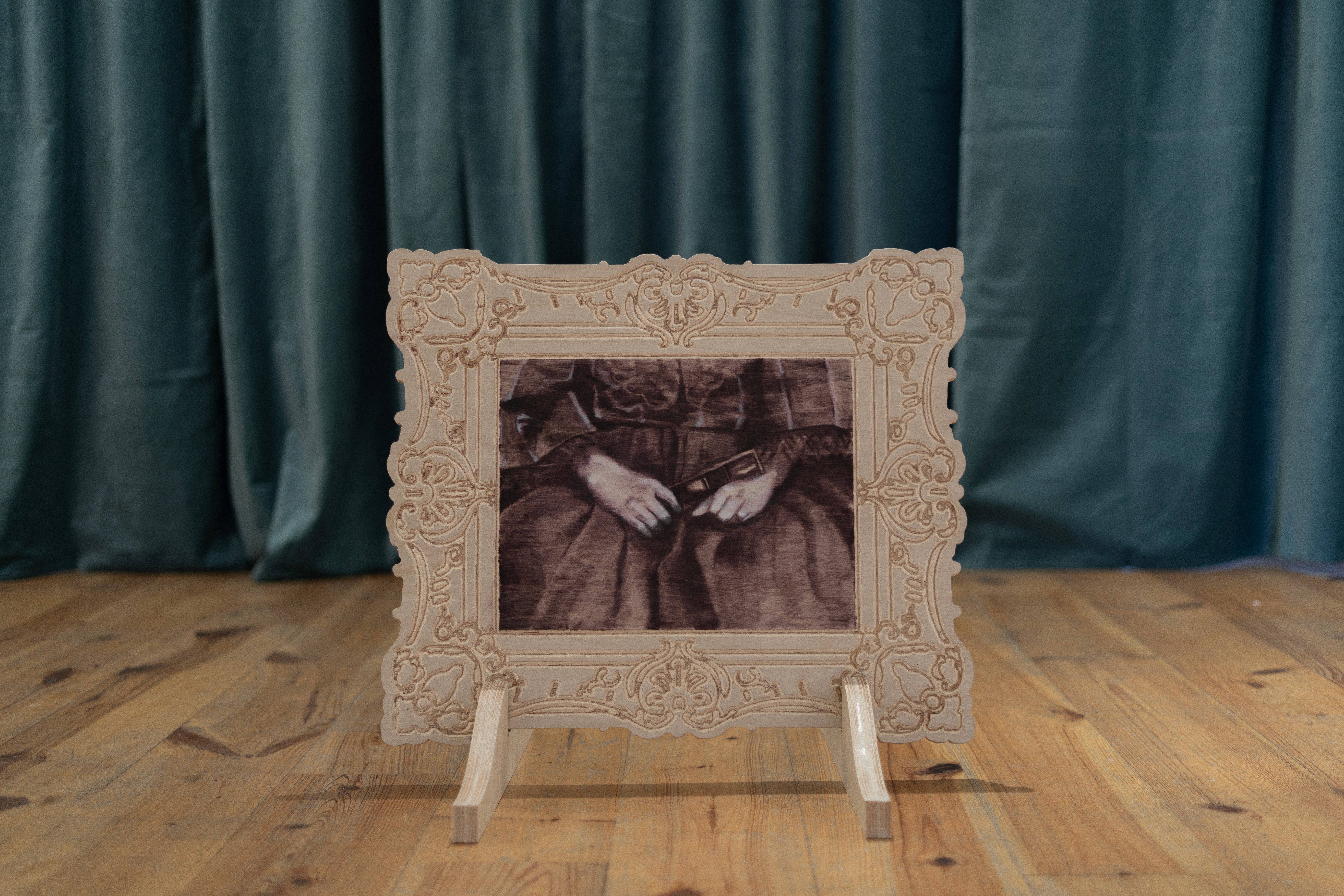
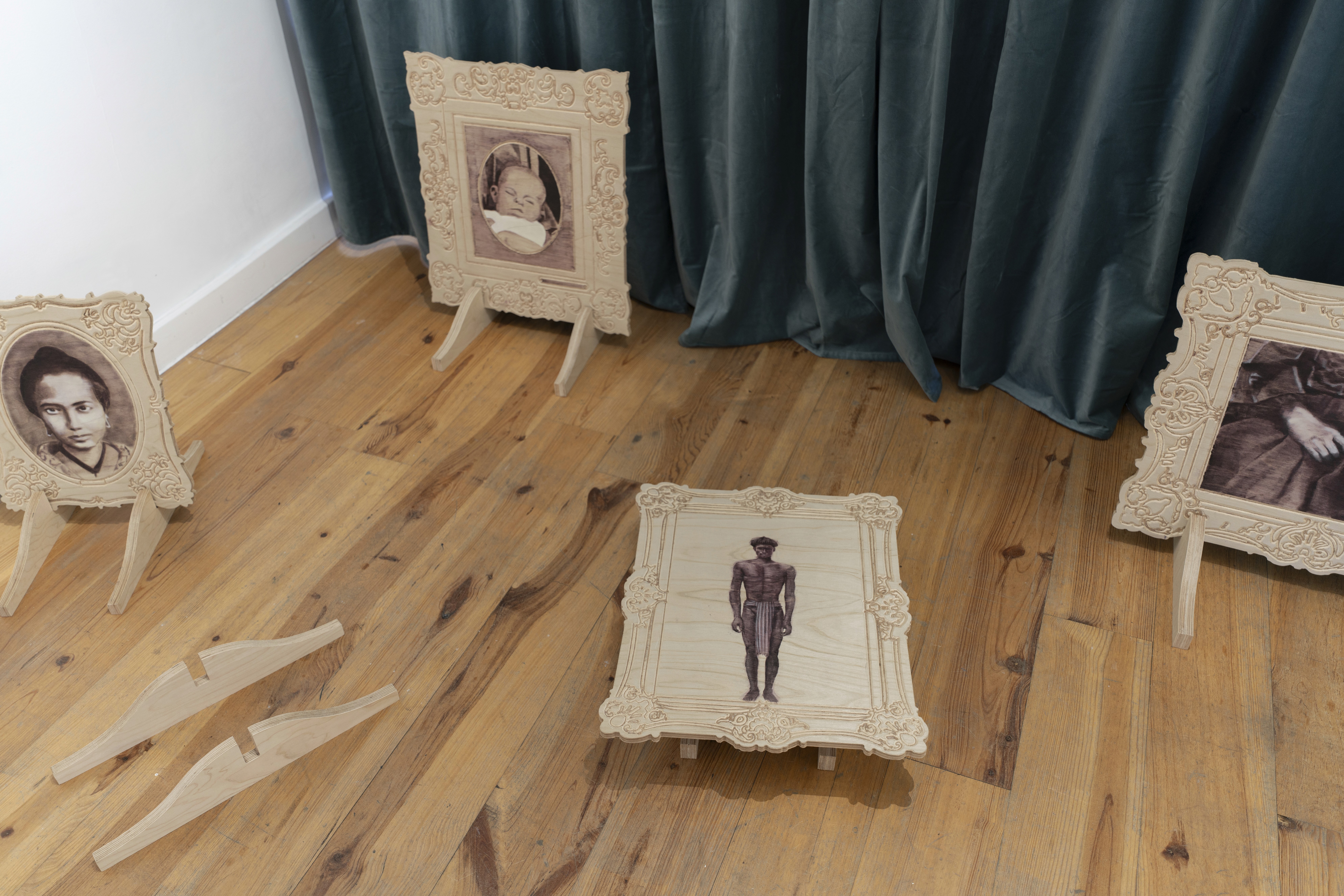
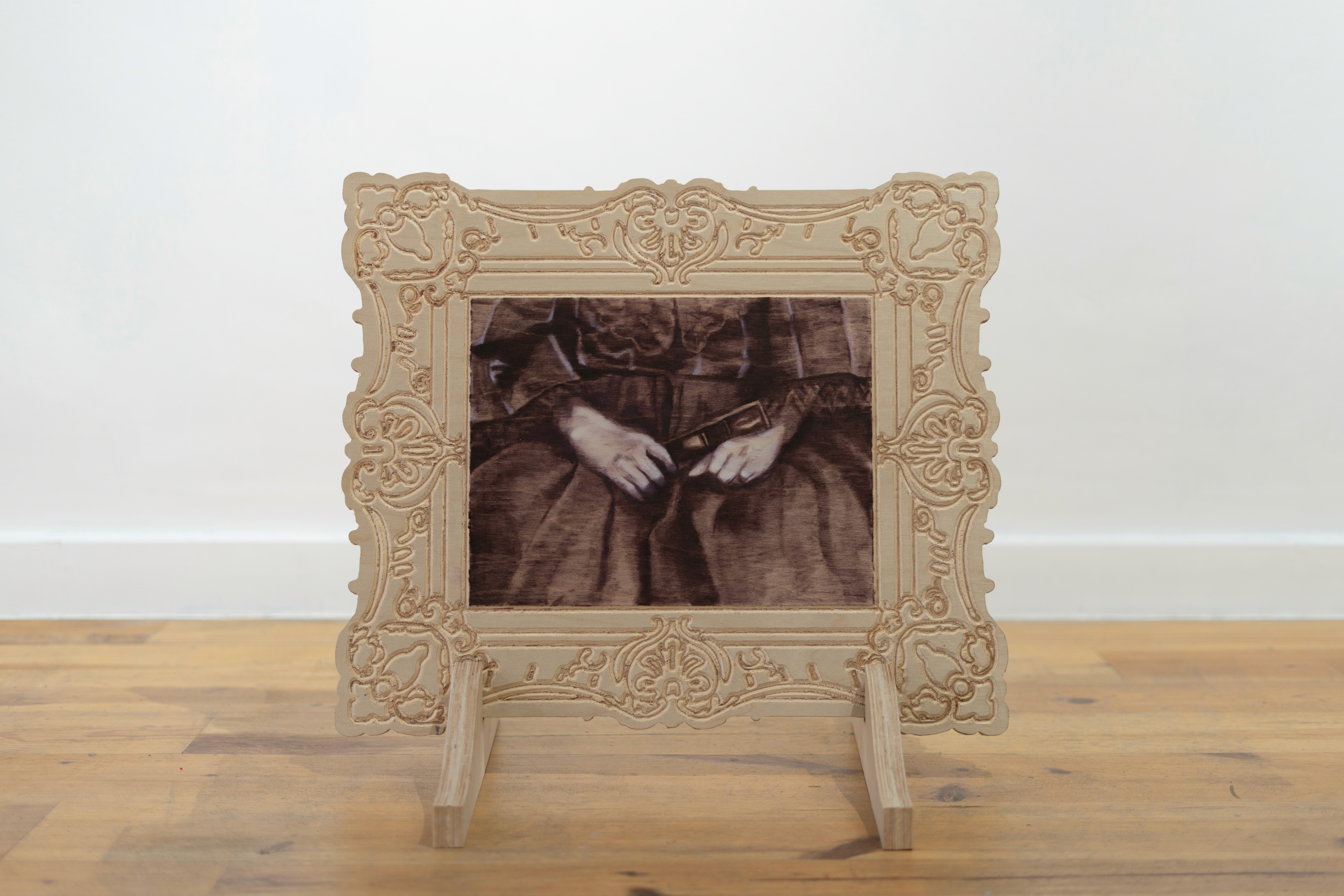
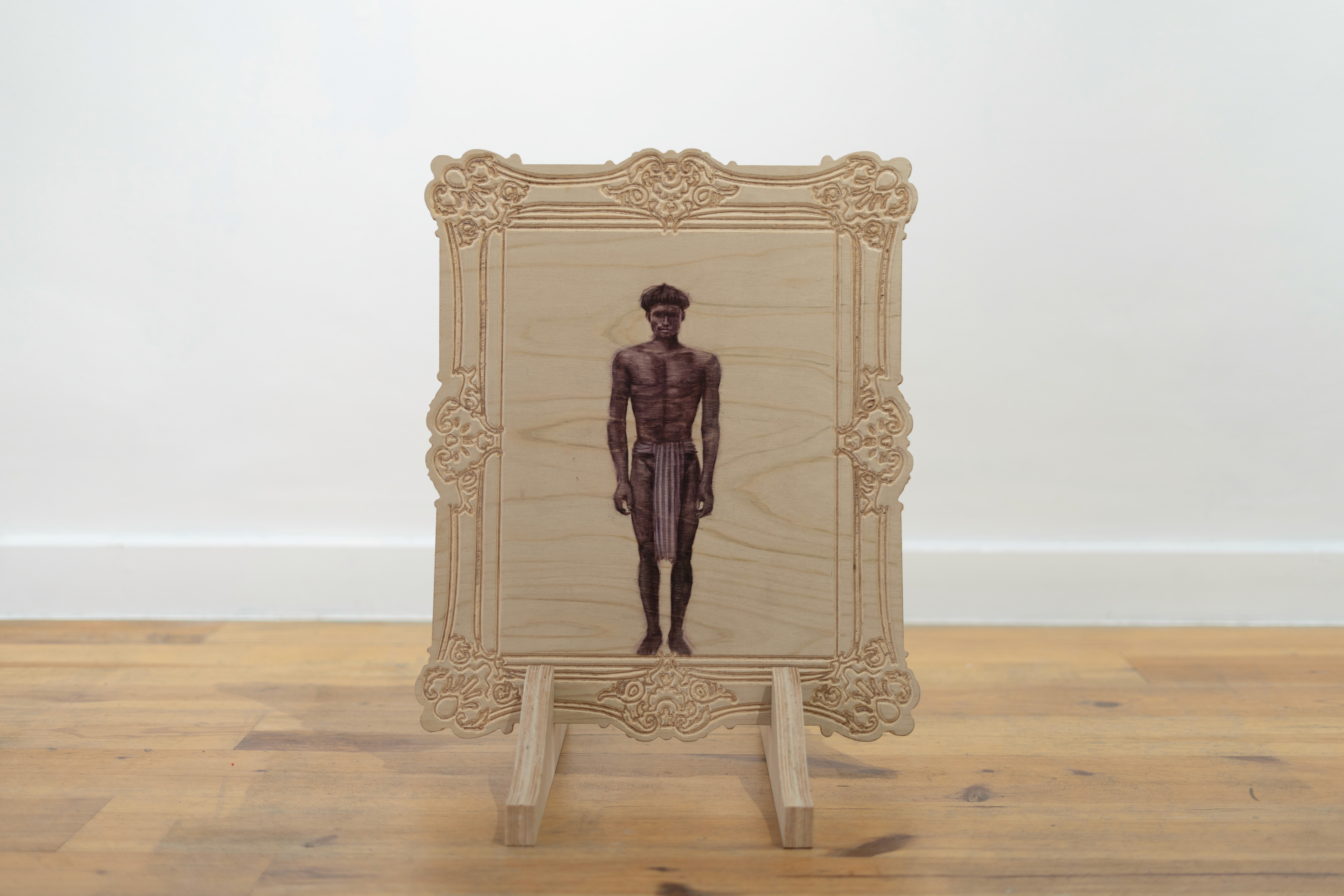
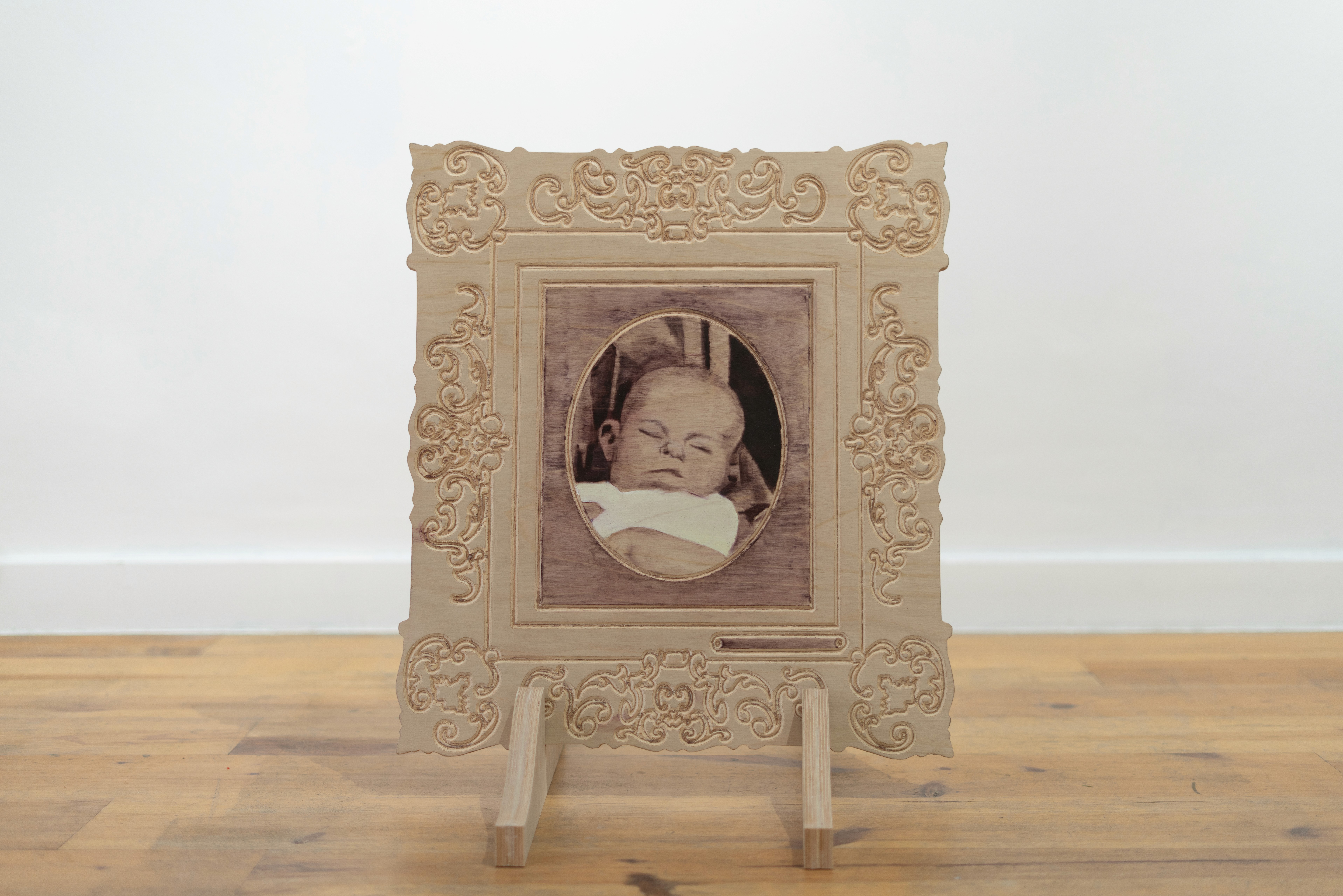
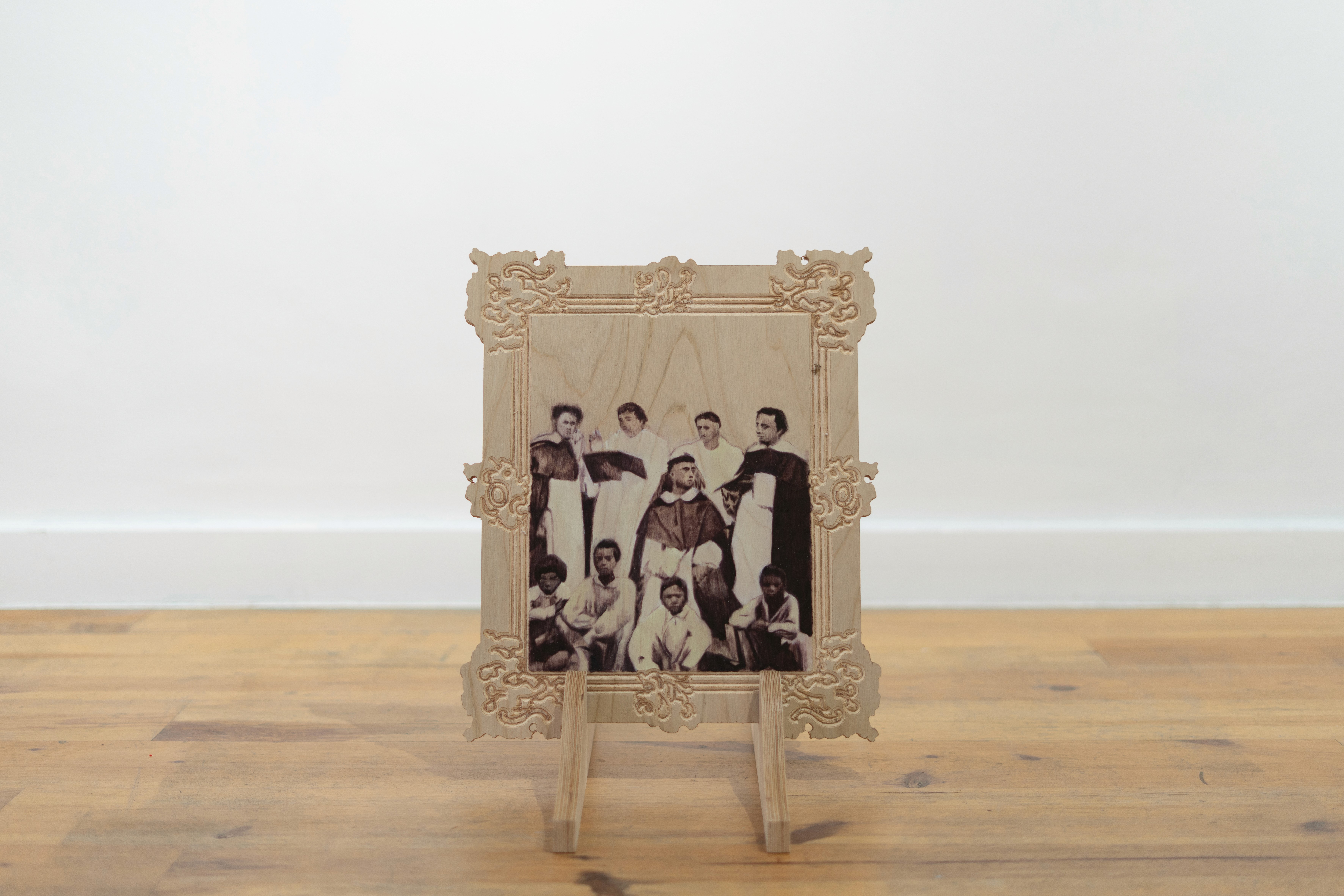
Lukban addresses ideology through structures of display, examining Spanish colonial rule in the Philippines as a mediating centre of authority. Her carved wooden frames draw from ecclesiastical and museum formats encountered during her research in Madrid’s museums and churches — visual systems that were also established in the Philippines under Spanish rule and that defined what was sacred, civilised, and worthy of preservation. By recreating these ornate structures and inserting Philippine archival images, she returns Philippine history to the very frameworks that once marginalised it. The frame becomes both subject and structure: not merely a border, but a device that organises and authorises meaning.
Here the boomerang effect becomes evident. Colonial methods of classification and display do not disappear with political independence; they are internalised. The same framing devices once used to discipline colonial subjects are absorbed into national institutions and systems of cultural value. Authority is reproduced through inherited formats. The border continues to organise perception.
Theodor Adorno’s analysis of the culture industry clarifies this persistence: ideology embeds itself in aesthetic form, presenting hierarchy as order and tradition. Lukban’s frames make this embedding visible. They demonstrate how power resides less in individual images than in the structures that contain, legitimise, and circulate them.
Together, Chatu and Lukban trace colonial power at the level of representation and infrastructure. Empire survives in materials, formats, and habits of seeing. Their works render these mechanisms legible, foregrounding how ideology endures through repetition, framing, and institutional memory.