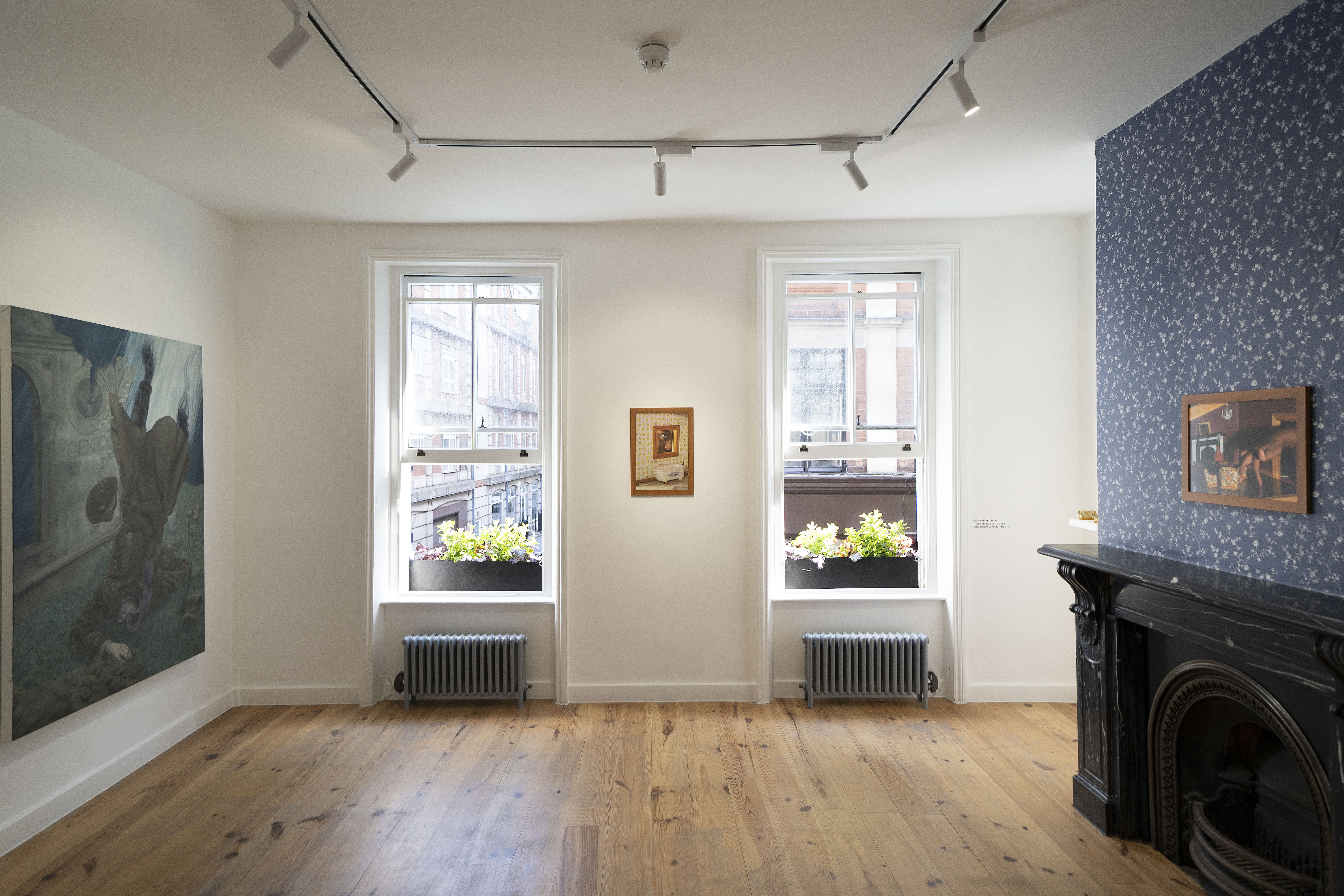
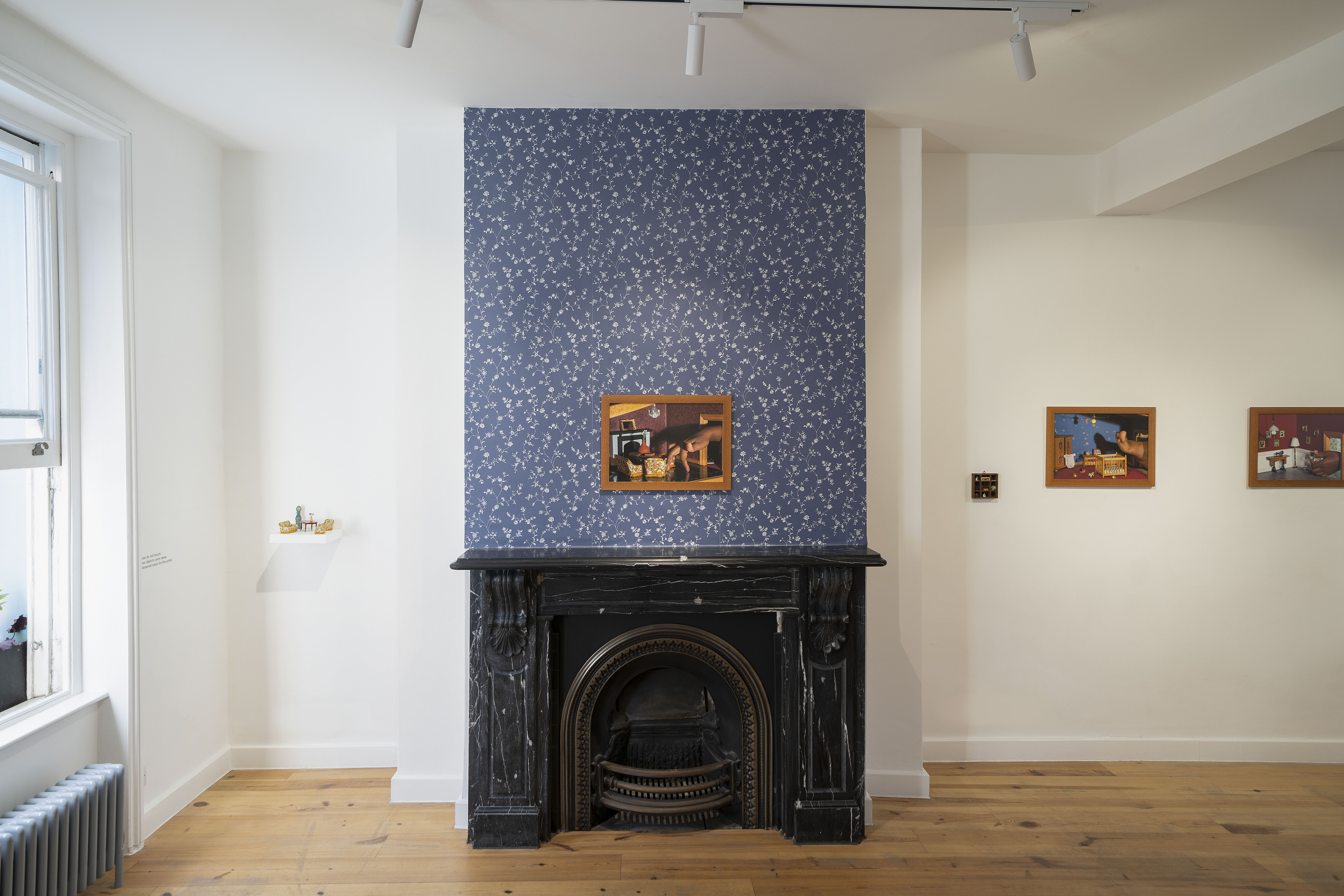
Flatmates 37 opens with SOFT SERVE, a group exhibition bringing together five artists whose practices consider belonging, vulnerability, material memory and the unstable boundaries between bodies, objects and places.
Shared by NORITO, starch and Teaspoon Projects, Flatmates 37 takes its name and structure seriously: three independent programmes inhabiting one space. Rather than operating as a gallery with a singular curatorial voice, it is conceived as a place of cohabitation — a rotating programme of exhibitions by each of its three ‘flatmates’, punctuated by collective exhibitions such as SOFT SERVE.
The exhibition begins with a contemporary idea of home as something increasingly personal, shared and abstract. In cosmopolitan lives, home is often less tied to a single place than to people, habits, objects, memories and temporary forms of belonging. Across the works, home is inherited, withheld, reconstructed and carried between places, shaped as much by displacement as by intimacy. Familiar materials and forms become slightly strange, reflecting the instability of belonging when home is something we continually make, lose and remake.
SOFT SERVE also proposes a way of thinking about hospitality. Flatmates 37 is interested in forms of gathering that do not depend on a singular host or centre. Instead, hospitality becomes reciprocal: a willingness to make room for different positions, to relinquish control, and to create conditions in which uncertainty and vulnerability are not treated as weaknesses. The exhibition embraces this instability — between host and guest, belonging and estrangement, protection and exposure, the organic and the manufactured.
London-based Venezuelan artist Francisca Sosa López explores materiality and process through shifting definitions of home, migration, femininity and cultural contrast. Working with materials that can travel back and forth across the Atlantic, she extends drawing into thread, beads and textile, making portability part of the work’s relationship to place. In Bamboleo de detalles ambigüos (Swaying of Ambiguous Details), a Margarita hammock becomes both painting and object. Weaving, repetition and intervention bring forms of making historically associated with women into dialogue with the language of painting, while the hammock itself hovers between domestic utility, memory and exhibition object.
This sense of home as something carried, inherited and never entirely secure also runs through Cansu Yıldıran’s Dispossessed series. Made in the Kuşmer Highlands in northern Turkey, where their family has roots, the photographs emerge from a landscape to which Yıldıran is deeply connected yet cannot fully lay claim. Women, animals and the landscape form a collective presence within images that are tender and uncanny, marked by histories of gendered inheritance and dispossession. Yıldıran describes this condition as being “guests for life”: belonging intimately to a place while remaining, in some sense, outside it.
Questions of who or what occupies the centre shift again in Chok Si Xuan’s installations. Working with found electronics and industrial materials, Chok looks to cybernetics and the feedback systems connecting humans, living organisms and machines. Her environments resist a stable hierarchy between body and apparatus, organic and manufactured, allowing agency to circulate through the systems she constructs. If home can be understood as a network of relations rather than a fixed site, Chok pushes that network beyond the human, towards the objects, technologies and organisms with which we continually share space.
A related surrender of control appears in Ruijin Song’s approach to making. Working across painting, ceramics, metalwork and printmaking, Song describes the studio as an expanding inner ‘burrow’: intuitive, secretive and without a predetermined route. Images are layered, rotated and interrupted until familiar ways of seeing begin to loosen. Her sensitivity to death, labour and fragile forms of existence gives this process an emotional weight; vulnerability becomes less a subject to depict than a condition through which the work is allowed to emerge.
Mithra Jeevananthan’s practice explores speculative ecologies and chimeric spaces. Through sculpture and installation, she combines references to flora, fauna, insects, and biological systems with industrial materials such as welded metal, plastics, readymade objects, laser-cut elements, and fabricated structures. These fragments are distorted, reconstructed, and brought together to form unfamiliar habitats that resist fixed interpretation. The work considers how imagined environments might develop their own systems and relationships, creating spaces that feel simultaneously beautiful, unsettling, and difficult to classify. Welcome to My Island is an ongoing exploration of world-building through mutation, transformation, and the possibility of landscapes that exist somewhere between reality and fiction.
Together, the works in SOFT SERVE resist the idea that belonging requires certainty. They propose instead something gentler and more permeable: identities formed through contact, homes assembled from fragments, and spaces made meaningful through the people, materials and memories temporarily held within them.
As the first exhibition at Flatmates 37, SOFT SERVE makes its position clear: loosen the centre; belonging is something we make together.
Heterotopia is Foucault’s post-structuralist concept referring to a space that “exists in relation to other spaces, reflecting, subverting, or contesting their conditions.” These uncanny spaces, which juxtapose diverse spaces and times within a single site, effectively encapsulate the shift from traditional temporality to a more spatialized experience of time in contemporary culture. This shift is significant as it challenges the traditional dichotomy between past and present, with the past continuously reactivated and reinterpreted within the spatial-temporal matrix of the present. As a result, we find ourselves enmeshed in an endless "now," unable to distinguish past events as past or project ourselves into the future.
Within this framework, memory has emerged as a central keyword across various discursive contexts. Memory now privileges fluidity and hybridity over fixed identities, as time becomes an experiential, spatial phenomenon—constantly conjuring both the experienced and unexperienced past as something immediately present, resembling the mechanism explained by Marianne Hirsch or Jacque Derrida as postmemory and hauntology. In this way, heterotopia provides a setting where memories are continuously performed and renegotiated, offering a site of critical reflection on the shifting conditions of contemporary temporality.
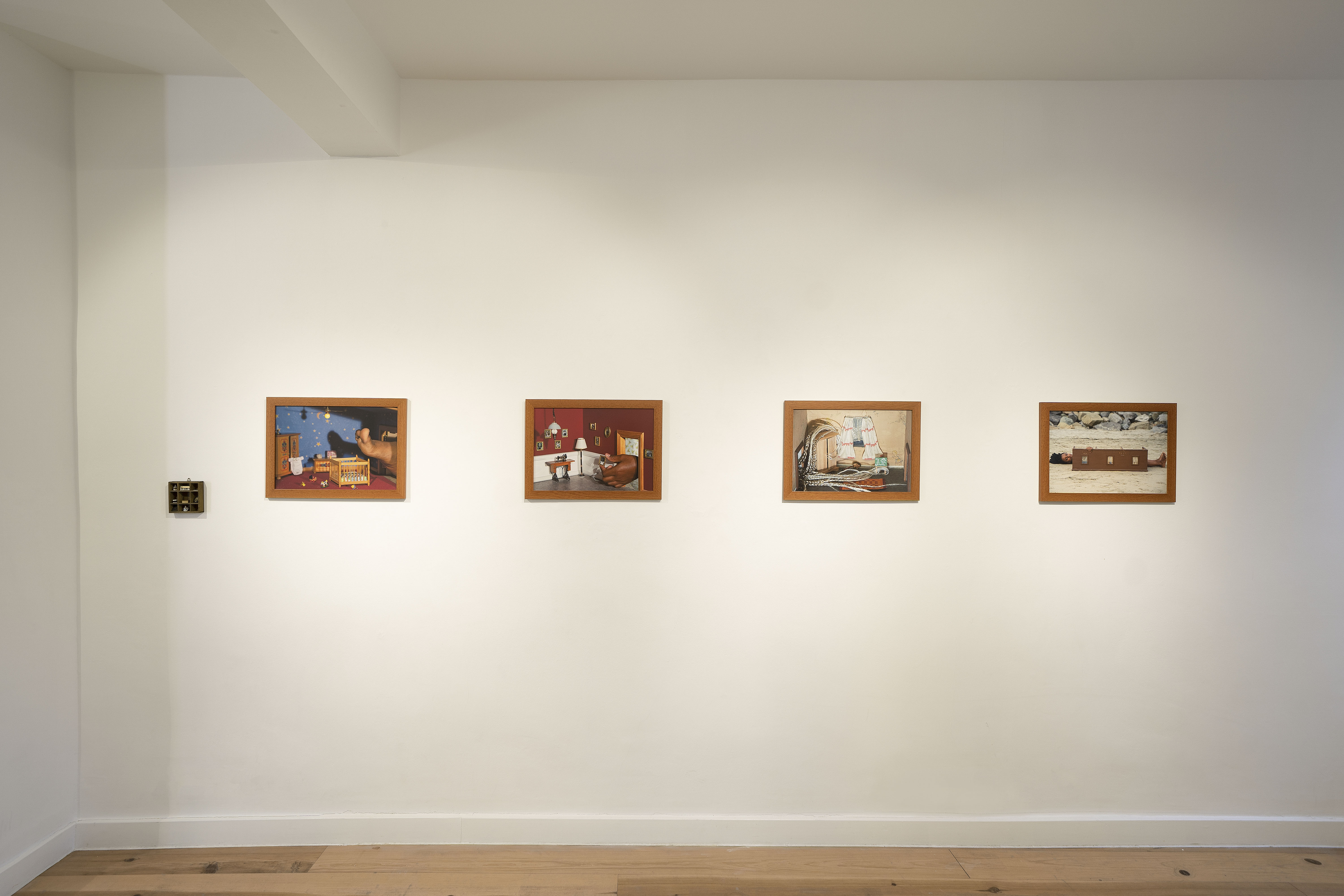
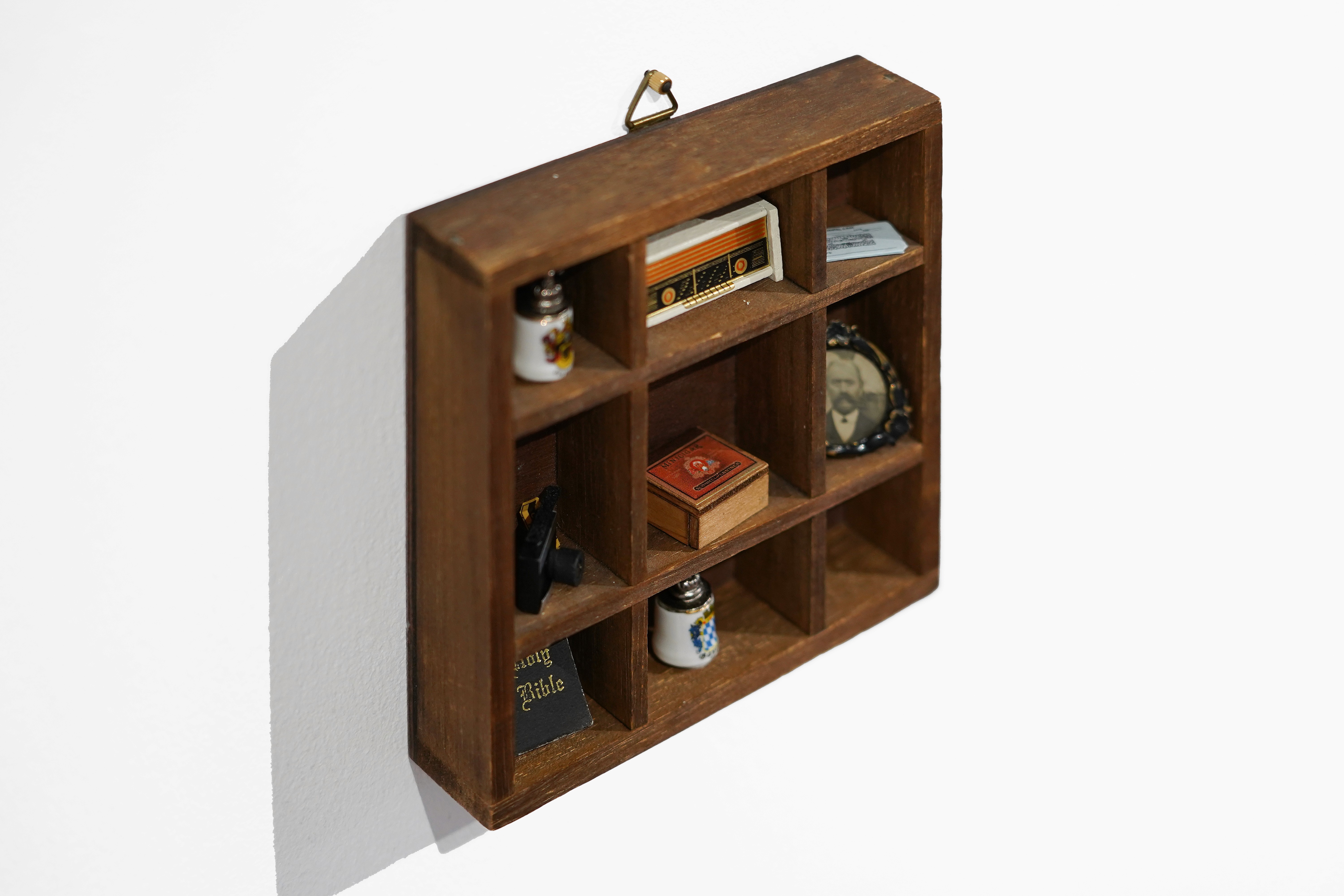
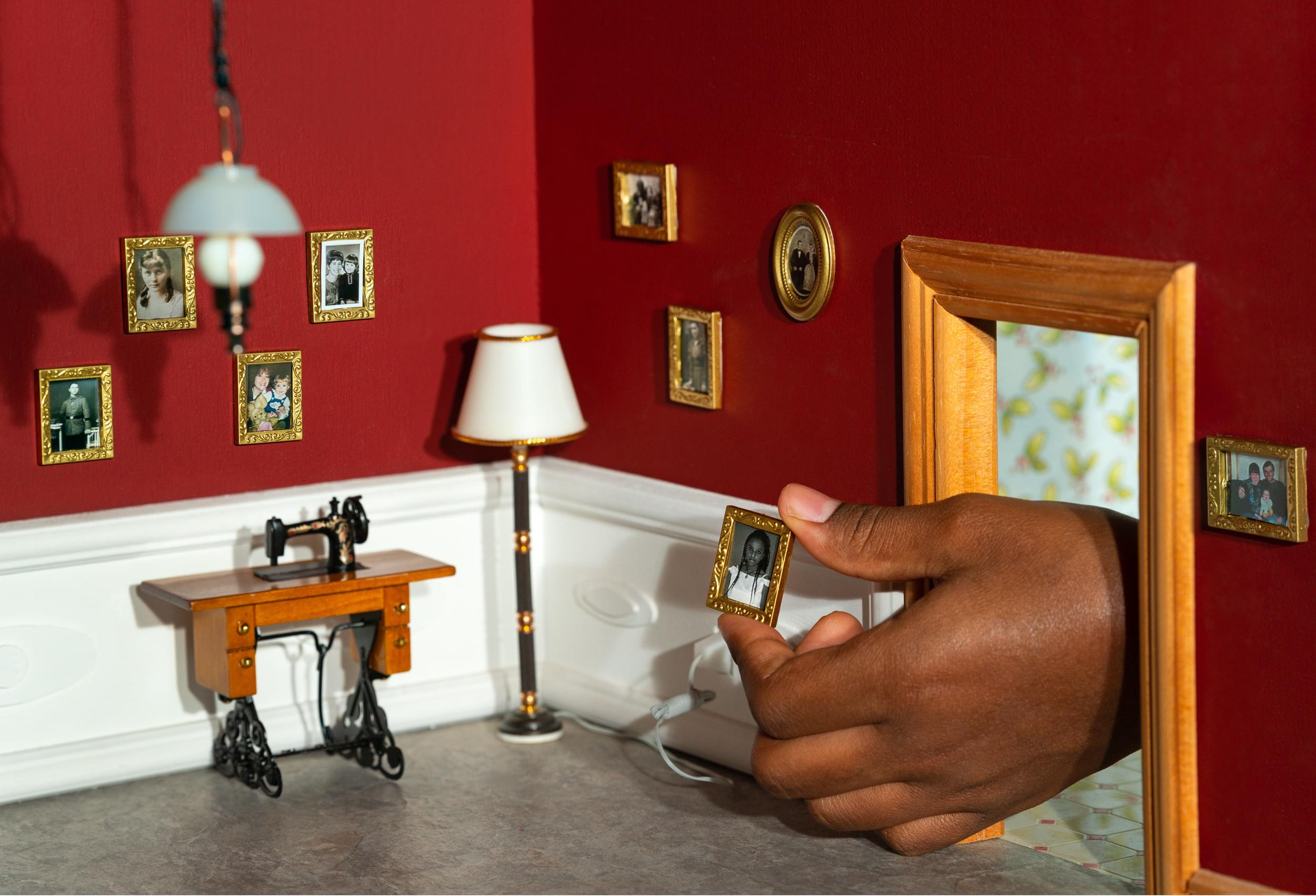
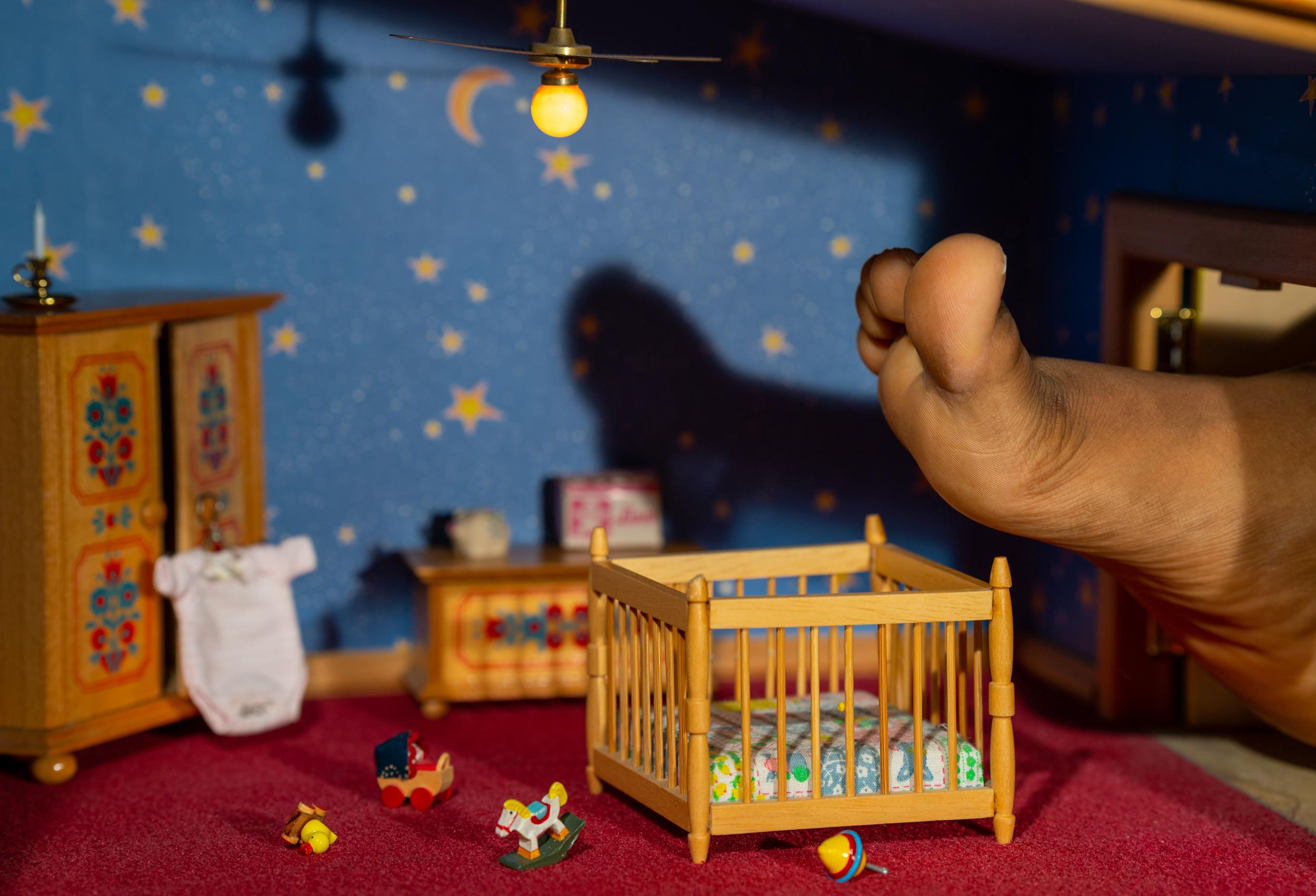
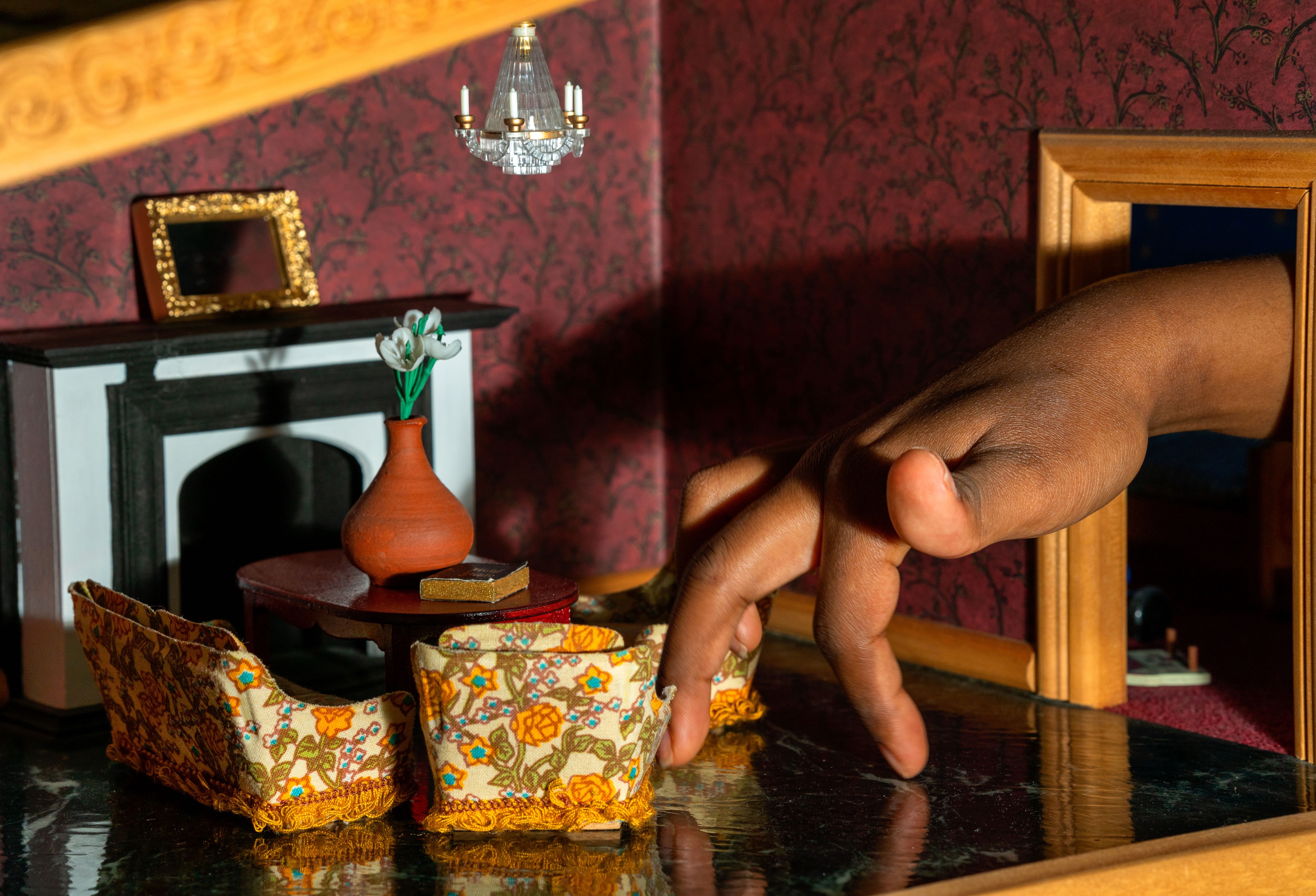
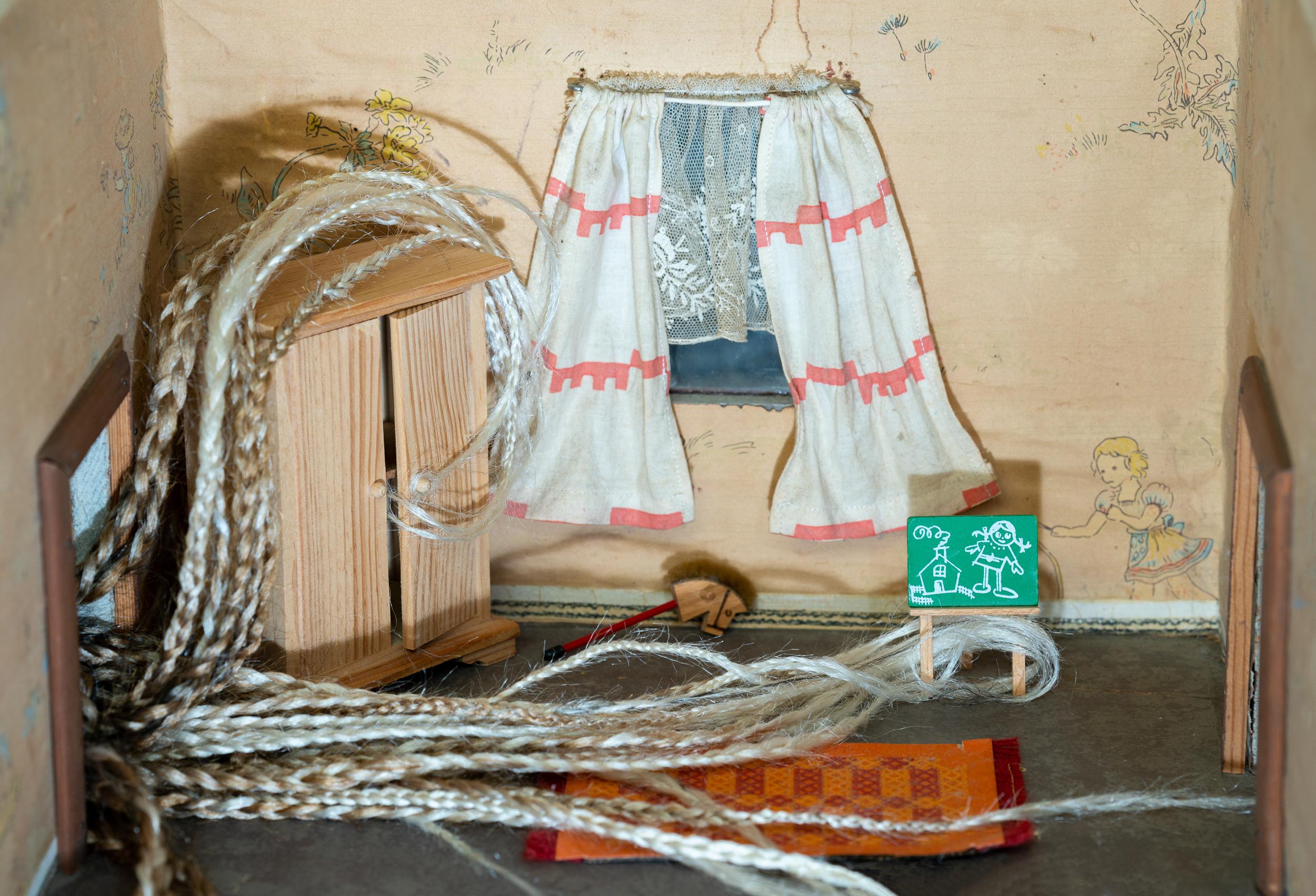
Francesca Hummler’s dollhouse operates as a microcosmic heterotopia, encapsulating layered temporalities and inherited narratives. Each room and object bears traces of family members across generations—from her great-grandparents to her parents—now extended through Francesca’s own hand. By orchestrating the bodily insertion of her adopted sister Masantu into space, Francesca introduces a figure who exists outside the biological lineage. This performative gesture—both tender and resistive—disrupts the linearity of inheritance and introduces a rupture within the familial script. The dollhouse, once a vessel for memory, is transformed into a heterotopic site of critical engagement where memory, identity, and temporal-spatial relations collide.
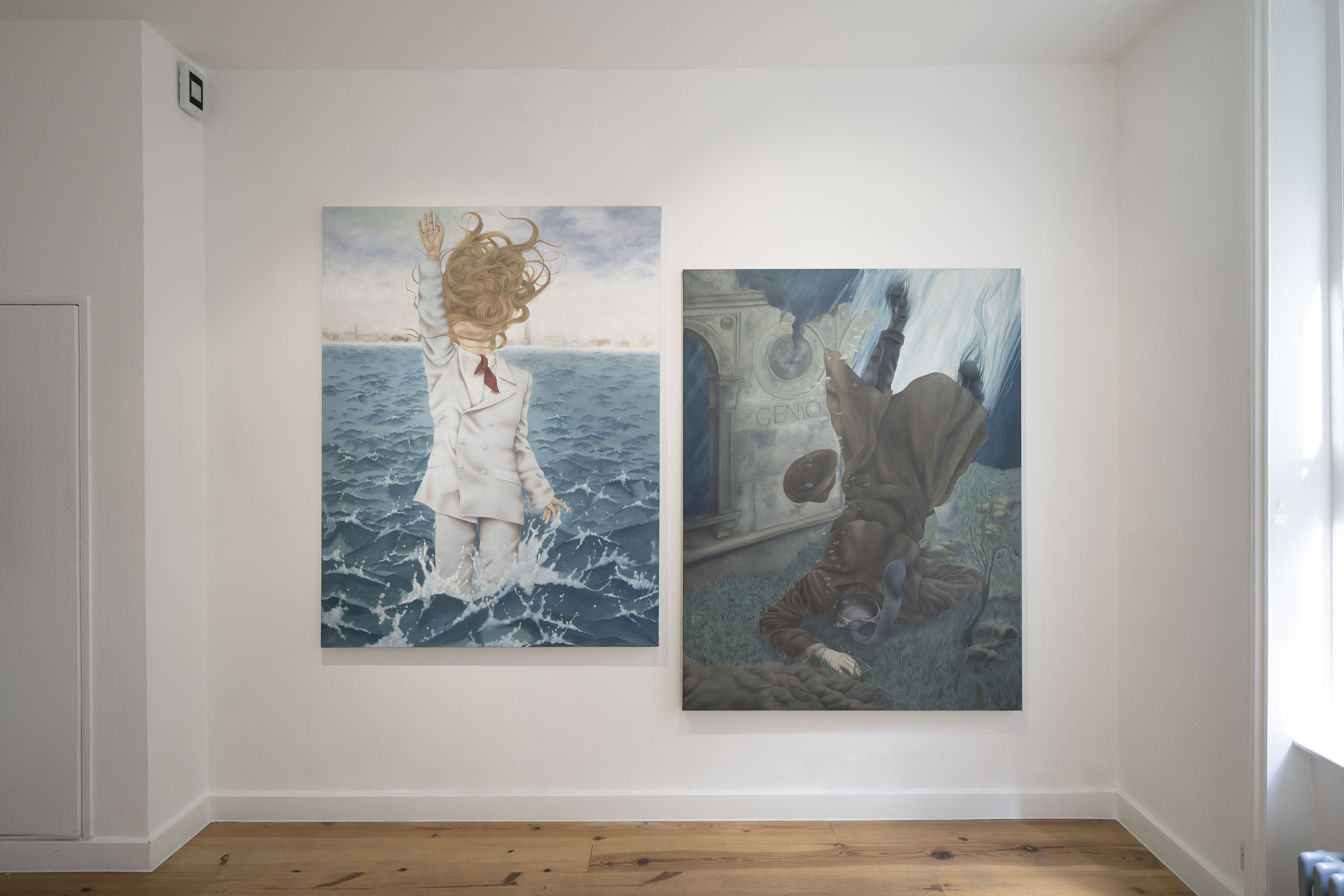
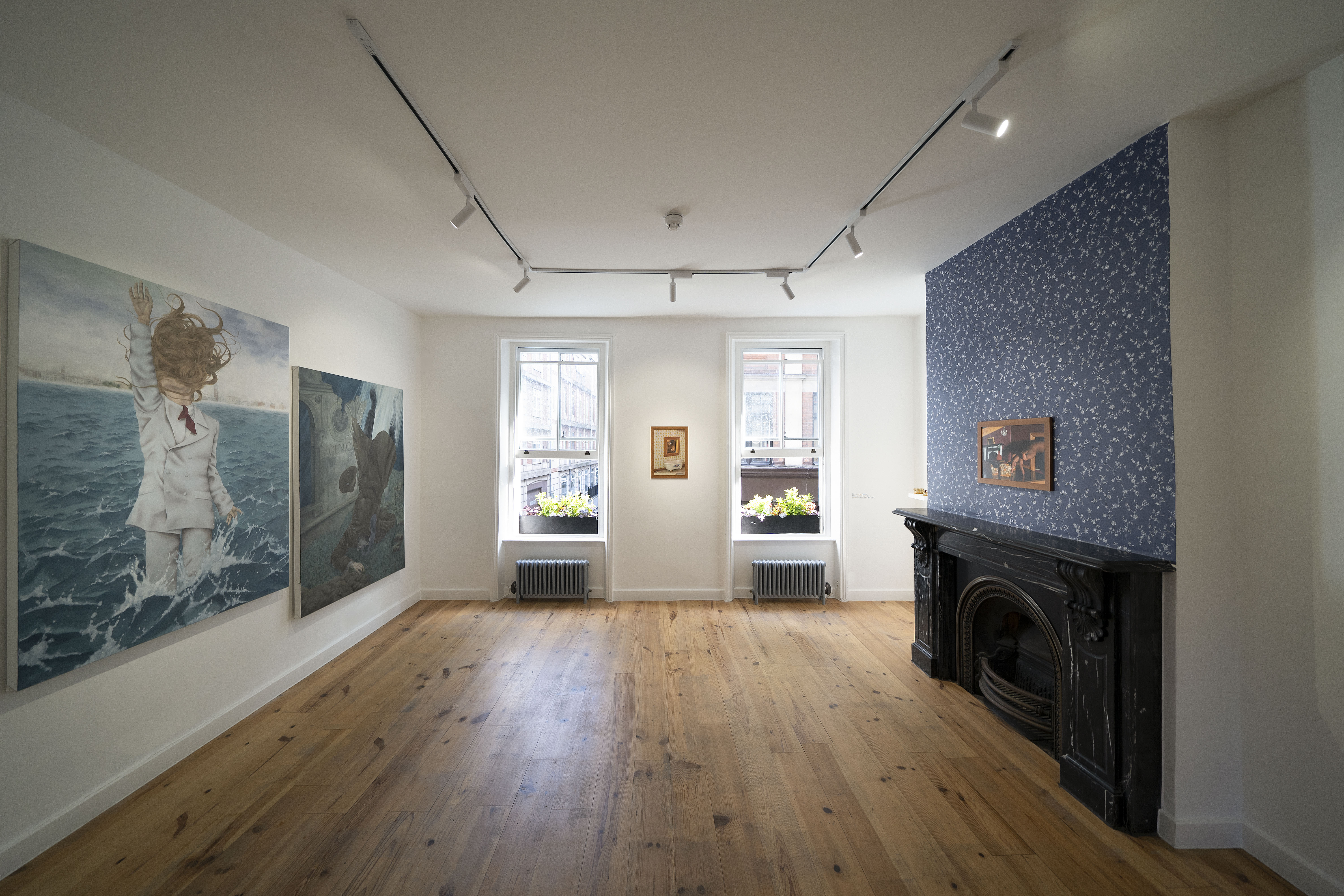
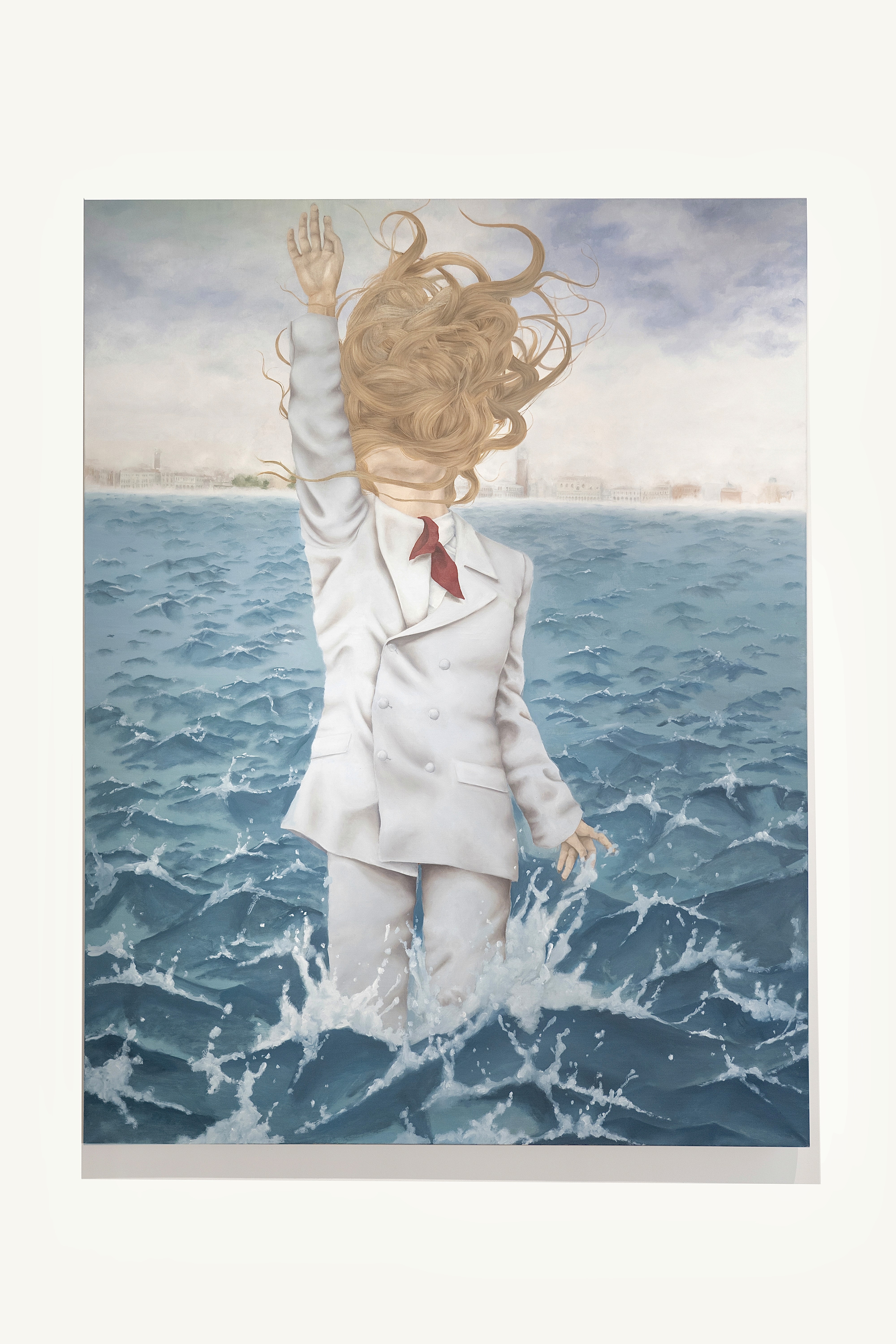
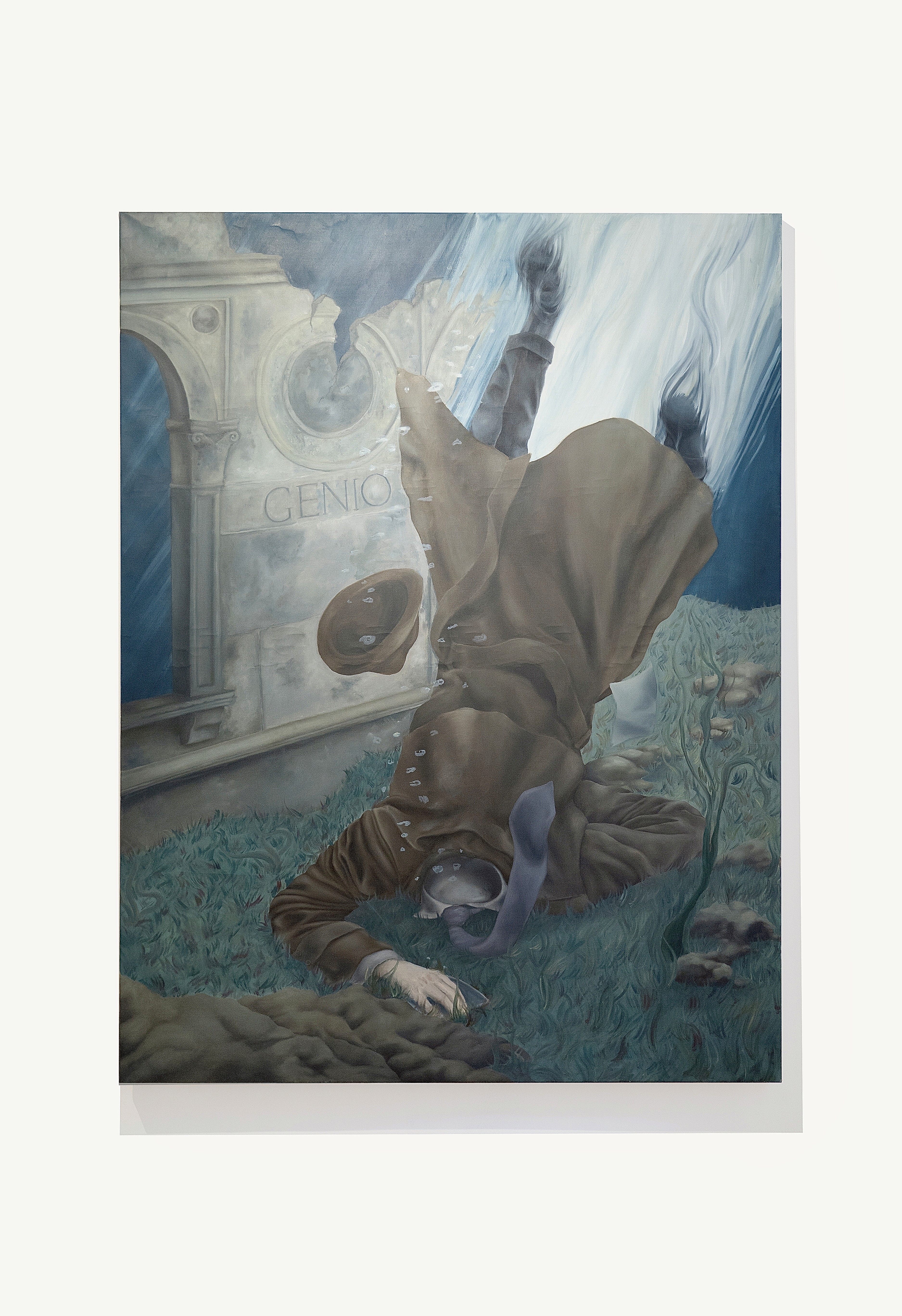
Ivana Vozelj’s diptych introduces visual cues that collapse multiple temporalities—drawing on the myth of Icarus, misty Venetian landscapes, and the iconic imagery of Elvis’s 1968 Comeback Special jacket. Her visual language is grounded in the contemporary, yet it deliberately mimics the aesthetic codes of analogue photography—light leaks, faded colours, cinematic framing—to evoke a sense of belatedness and spectral familiarity. These vintage photographic effects are not stylistic flourishes, but conceptual tools: they signal the distance between past and present while simultaneously collapsing them. In doing so, Ivana transforms the canvas into a heterotopic space where history circulates not linearly, but recursively—filtered, distorted, and re-performed through the logic of image culture. Nostalgia, here, is neither sentimental nor passive, but a critical mode of engaging with how memory is constructed and consumed in late capitalist visual regimes.
While Francesca destabilizes the intimate narrative of familial heritage through performative photographic staging, Ivana engages the collective formation of memory shaped by the reproduction and circulation of historical imagery. Together, their practices situate memory within heterotopic spaces—sites where inherited narratives are disrupted and reassembled. By invoking the camera both as a literal medium and as a conceptual device for framing time, the exhibition complicates linear understandings of history, offering a critical reflection on how memory is constructed, spatialised, and felt in the contemporary moment.