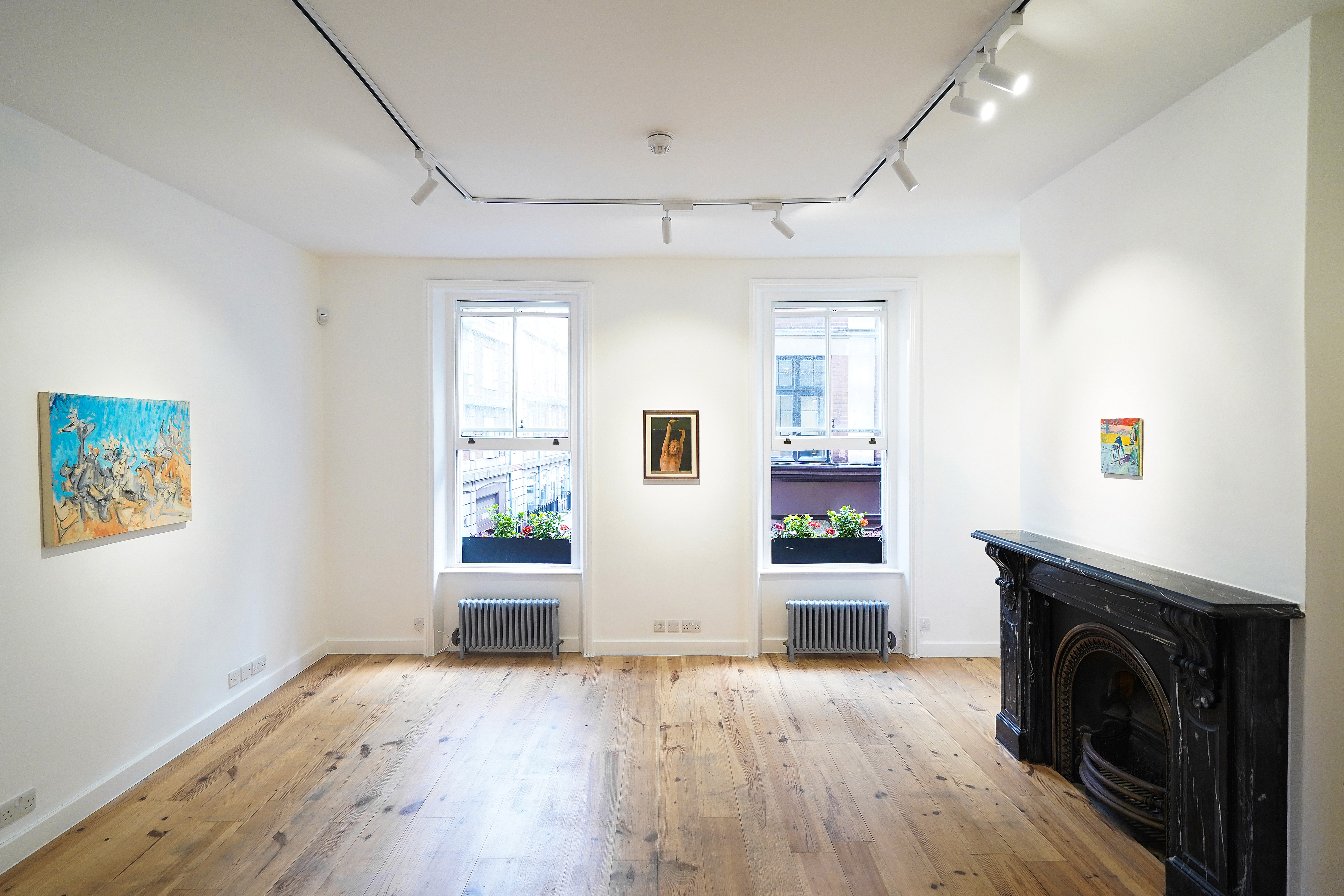
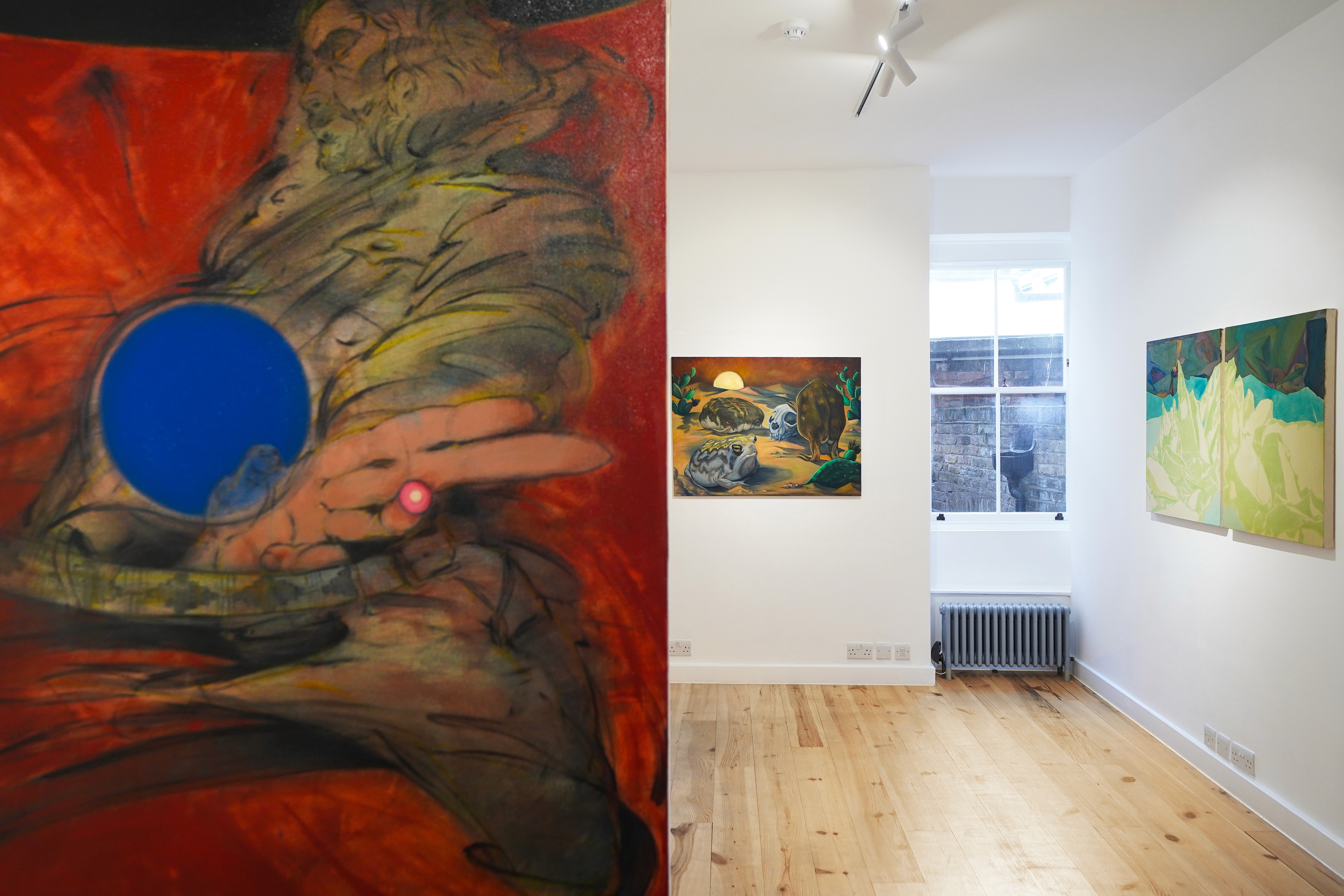
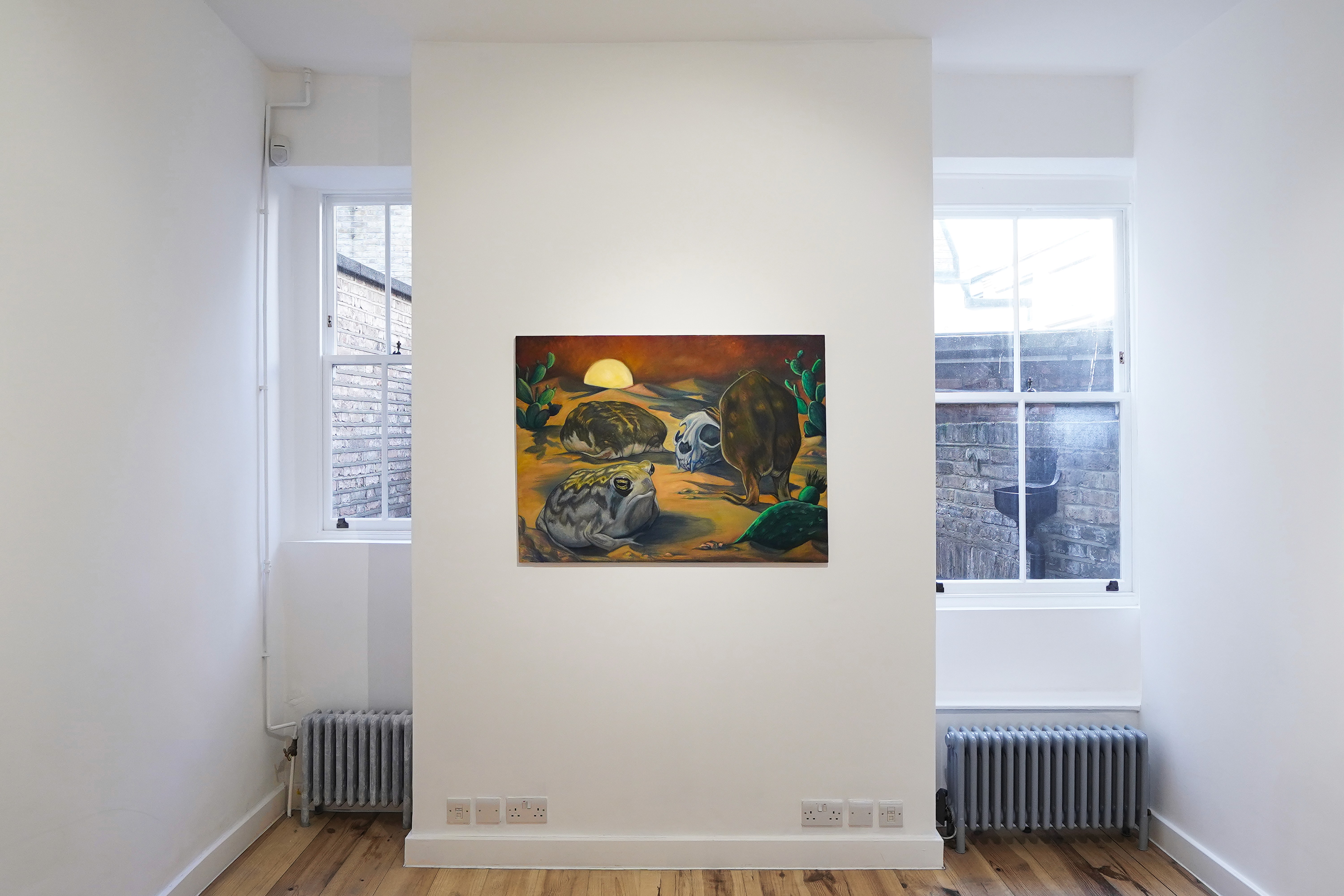
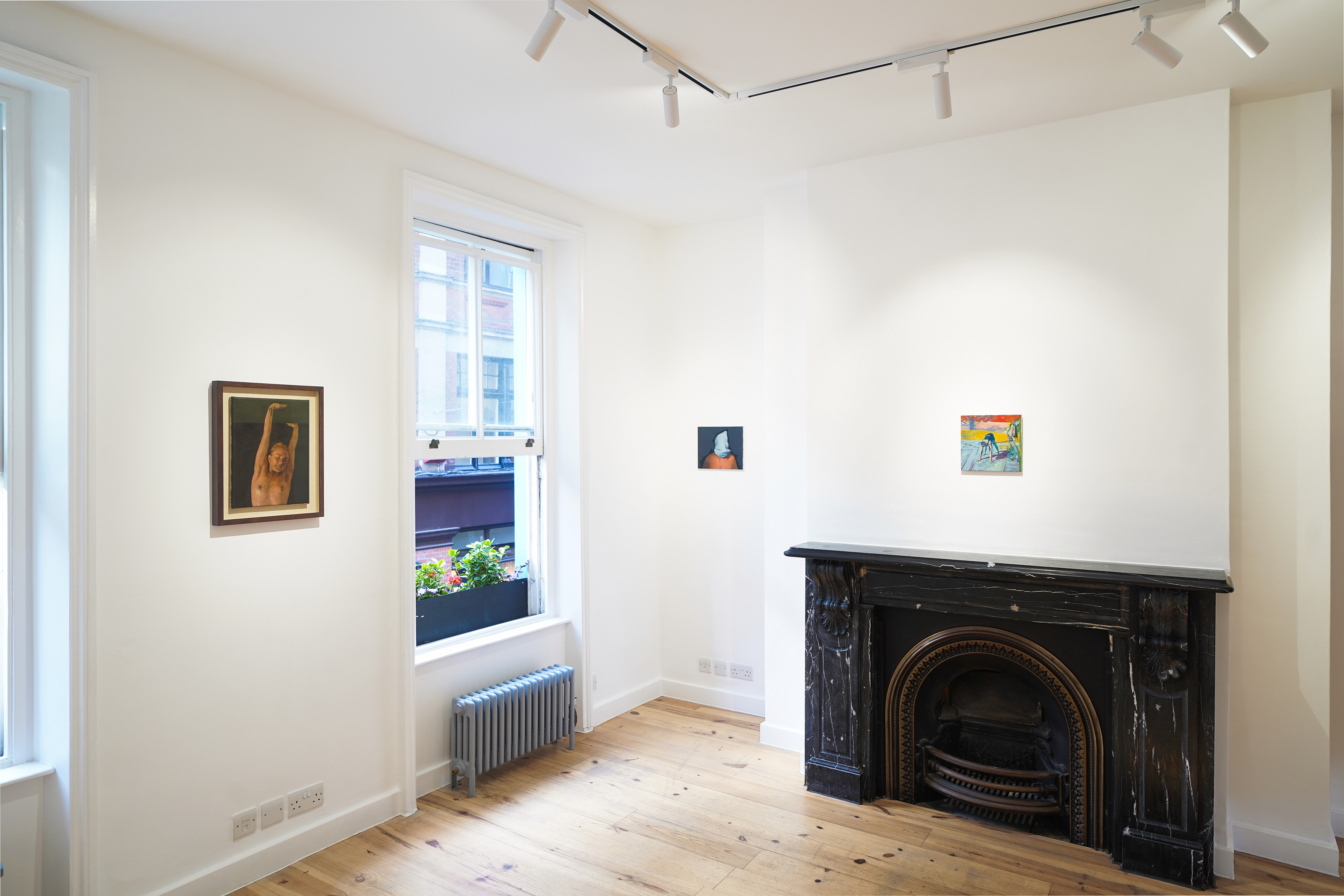
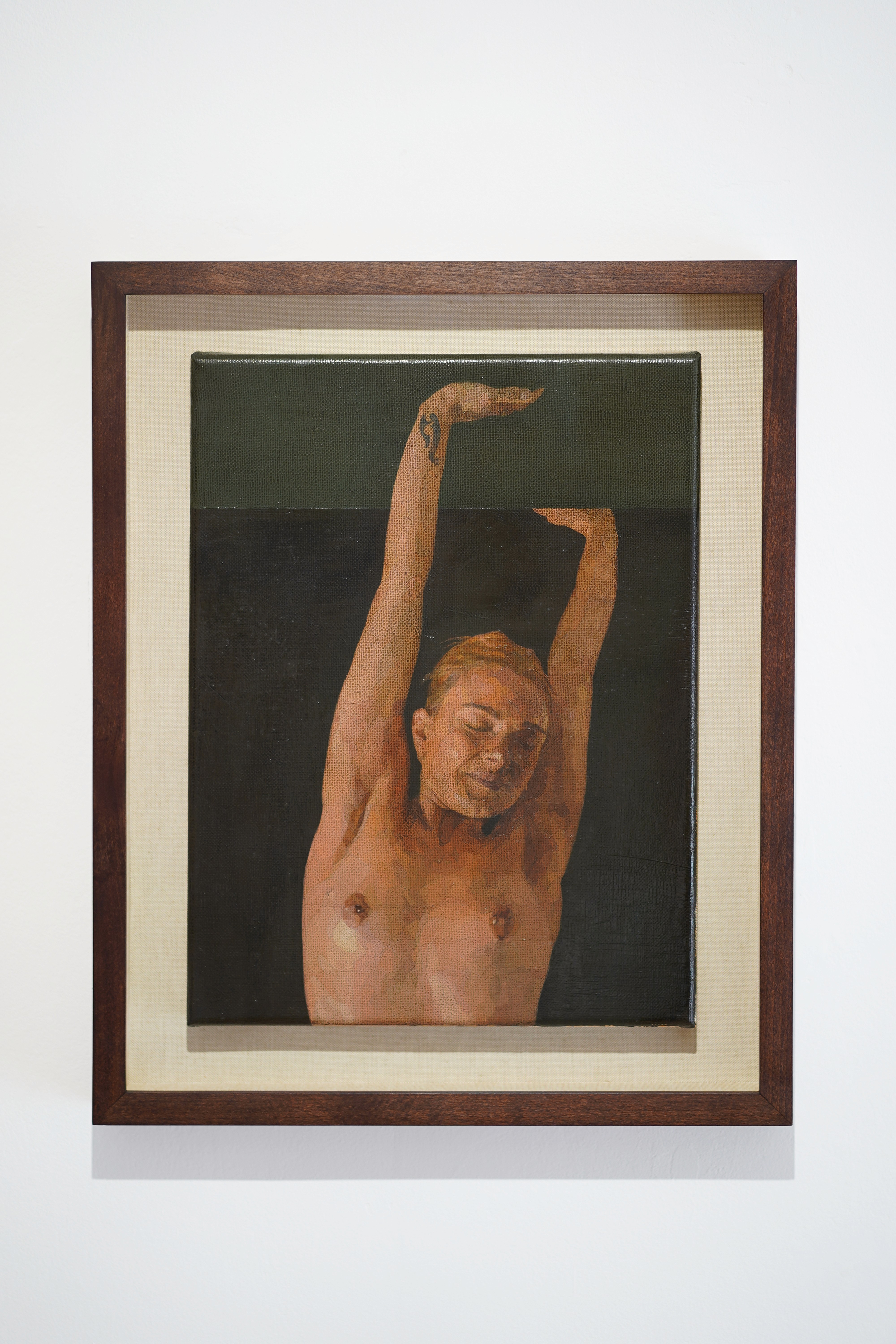
Flatmates 37 opens with SOFT SERVE, a group exhibition bringing together five artists whose practices consider belonging, vulnerability, material memory and the unstable boundaries between bodies, objects and places.
Shared by NORITO, starch and Teaspoon Projects, Flatmates 37 takes its name and structure seriously: three independent programmes inhabiting one space. Rather than operating as a gallery with a singular curatorial voice, it is conceived as a place of cohabitation — a rotating programme of exhibitions by each of its three ‘flatmates’, punctuated by collective exhibitions such as SOFT SERVE.
The exhibition begins with a contemporary idea of home as something increasingly personal, shared and abstract. In cosmopolitan lives, home is often less tied to a single place than to people, habits, objects, memories and temporary forms of belonging. Across the works, home is inherited, withheld, reconstructed and carried between places, shaped as much by displacement as by intimacy. Familiar materials and forms become slightly strange, reflecting the instability of belonging when home is something we continually make, lose and remake.
SOFT SERVE also proposes a way of thinking about hospitality. Flatmates 37 is interested in forms of gathering that do not depend on a singular host or centre. Instead, hospitality becomes reciprocal: a willingness to make room for different positions, to relinquish control, and to create conditions in which uncertainty and vulnerability are not treated as weaknesses. The exhibition embraces this instability — between host and guest, belonging and estrangement, protection and exposure, the organic and the manufactured.
London-based Venezuelan artist Francisca Sosa López explores materiality and process through shifting definitions of home, migration, femininity and cultural contrast. Working with materials that can travel back and forth across the Atlantic, she extends drawing into thread, beads and textile, making portability part of the work’s relationship to place. In Bamboleo de detalles ambigüos (Swaying of Ambiguous Details), a Margarita hammock becomes both painting and object. Weaving, repetition and intervention bring forms of making historically associated with women into dialogue with the language of painting, while the hammock itself hovers between domestic utility, memory and exhibition object.
This sense of home as something carried, inherited and never entirely secure also runs through Cansu Yıldıran’s Dispossessed series. Made in the Kuşmer Highlands in northern Turkey, where their family has roots, the photographs emerge from a landscape to which Yıldıran is deeply connected yet cannot fully lay claim. Women, animals and the landscape form a collective presence within images that are tender and uncanny, marked by histories of gendered inheritance and dispossession. Yıldıran describes this condition as being “guests for life”: belonging intimately to a place while remaining, in some sense, outside it.
Questions of who or what occupies the centre shift again in Chok Si Xuan’s installations. Working with found electronics and industrial materials, Chok looks to cybernetics and the feedback systems connecting humans, living organisms and machines. Her environments resist a stable hierarchy between body and apparatus, organic and manufactured, allowing agency to circulate through the systems she constructs. If home can be understood as a network of relations rather than a fixed site, Chok pushes that network beyond the human, towards the objects, technologies and organisms with which we continually share space.
A related surrender of control appears in Ruijin Song’s approach to making. Working across painting, ceramics, metalwork and printmaking, Song describes the studio as an expanding inner ‘burrow’: intuitive, secretive and without a predetermined route. Images are layered, rotated and interrupted until familiar ways of seeing begin to loosen. Her sensitivity to death, labour and fragile forms of existence gives this process an emotional weight; vulnerability becomes less a subject to depict than a condition through which the work is allowed to emerge.
Mithra Jeevananthan’s practice explores speculative ecologies and chimeric spaces. Through sculpture and installation, she combines references to flora, fauna, insects, and biological systems with industrial materials such as welded metal, plastics, readymade objects, laser-cut elements, and fabricated structures. These fragments are distorted, reconstructed, and brought together to form unfamiliar habitats that resist fixed interpretation. The work considers how imagined environments might develop their own systems and relationships, creating spaces that feel simultaneously beautiful, unsettling, and difficult to classify. Welcome to My Island is an ongoing exploration of world-building through mutation, transformation, and the possibility of landscapes that exist somewhere between reality and fiction.
Together, the works in SOFT SERVE resist the idea that belonging requires certainty. They propose instead something gentler and more permeable: identities formed through contact, homes assembled from fragments, and spaces made meaningful through the people, materials and memories temporarily held within them.
As the first exhibition at Flatmates 37, SOFT SERVE makes its position clear: loosen the centre; belonging is something we make together.
A mirage is a cruel trick of perception—a shimmering promise of relief that dissipates upon approach, revealing not an oasis, but a barren expanse. Mirage of Water explores this futile illusion of everyday life, where reality does not conform to expectation, and reason does not yield clarity. The works in this exhibition stage a confrontation between the rational mind and the irrational world, between what is seen and what is real, evoking a landscape where meaning slips through our grasp like water in the desert.
The absurdity of life lies in this confrontation—the realization that despite our search for structure, order, and causality, existence remains indifferent, chaotic, and beyond our control.
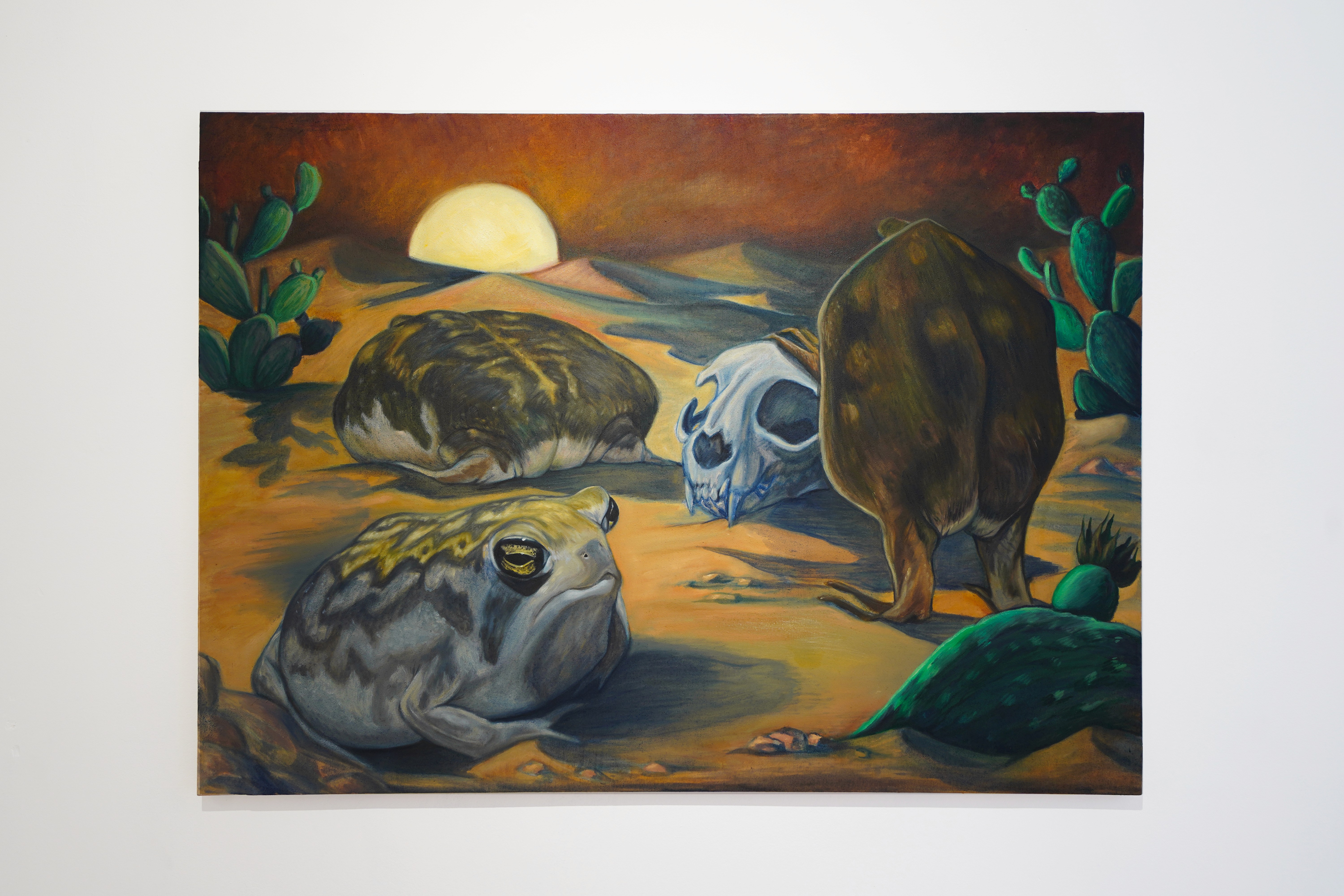
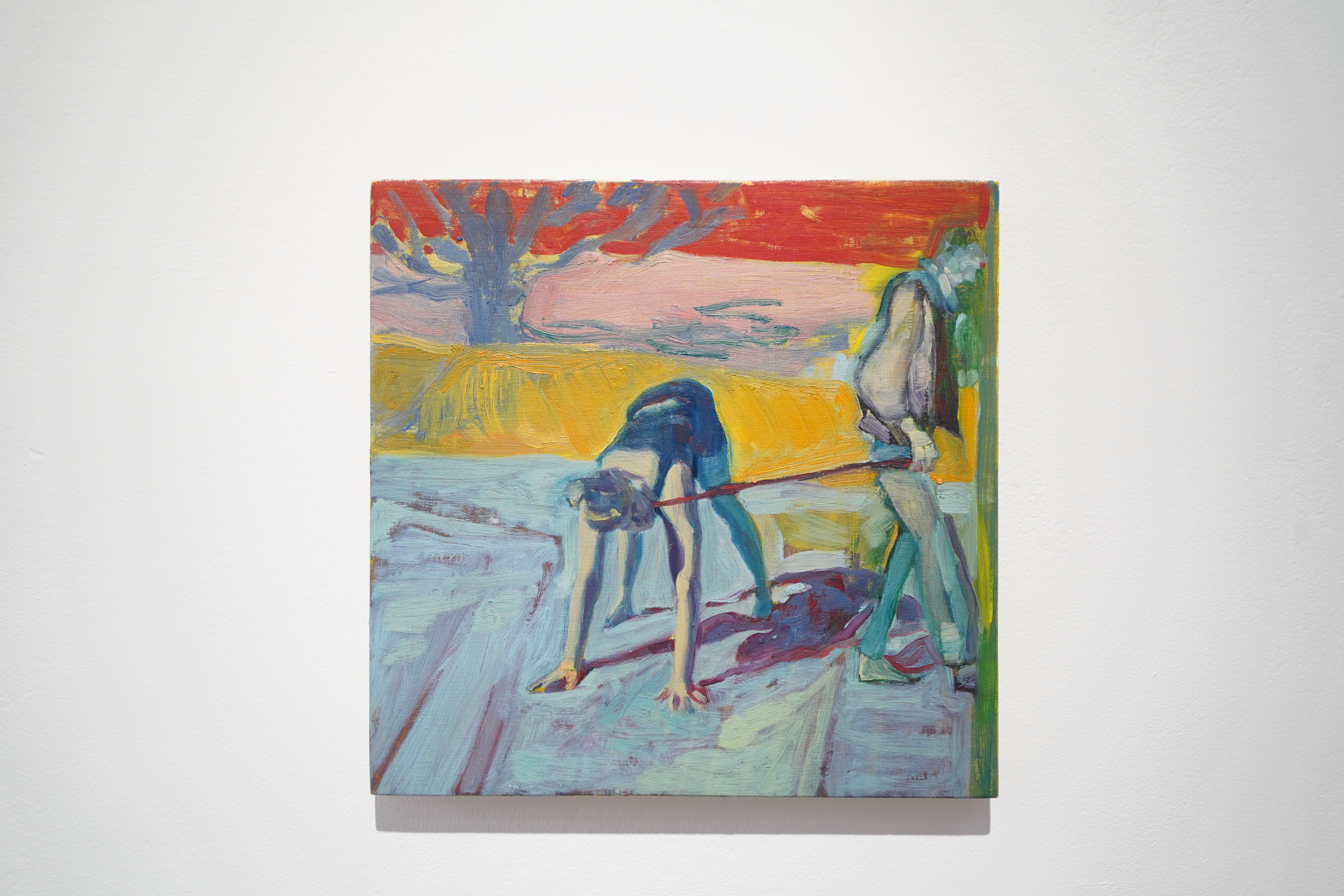
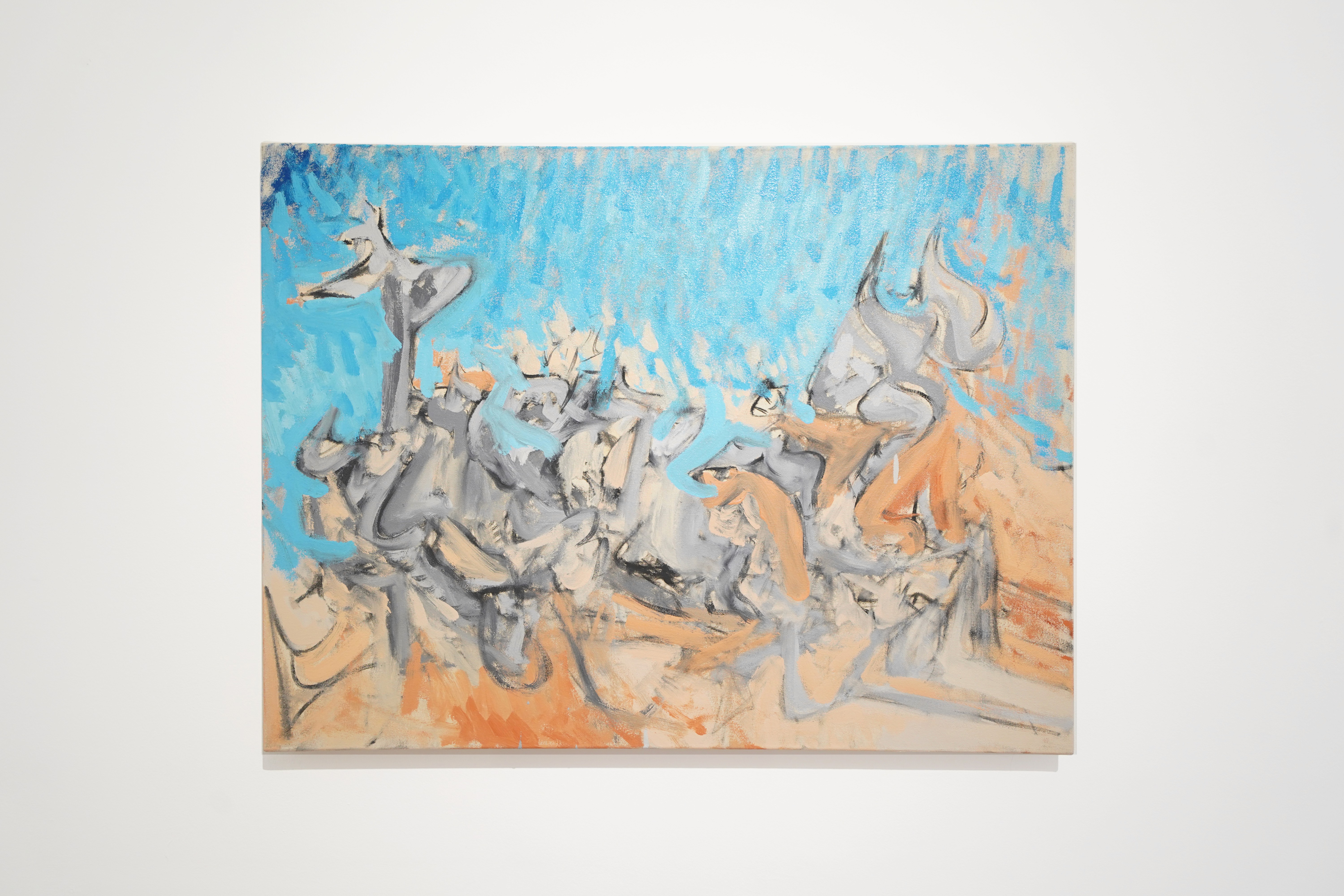
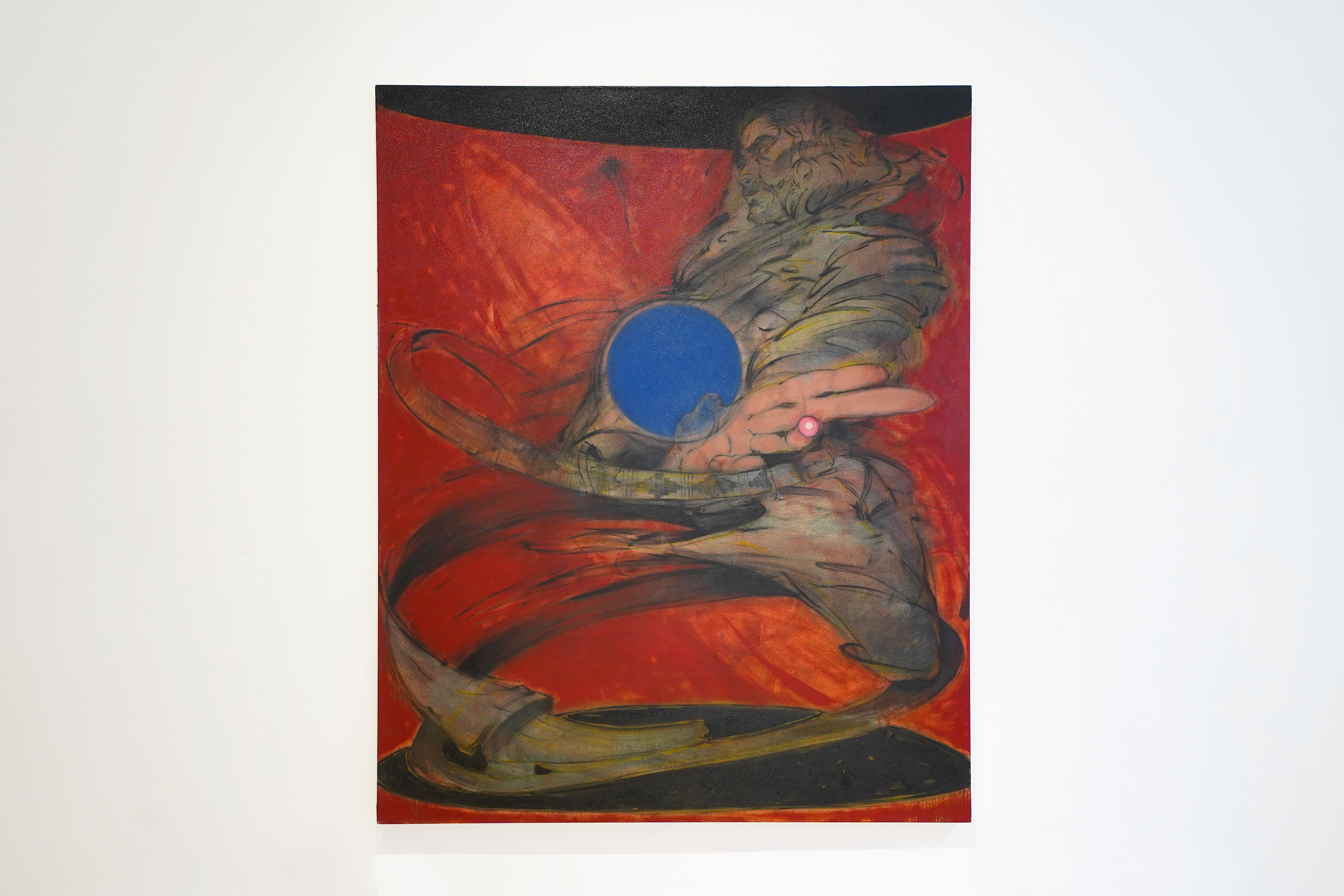
Cayetano S. D. Santamaria’s Serenade in a Mental Wasteland (2025) delves into the repetitive and obsessive thoughts that croak through the mind, blurring the lines between creativity and burden, lucidity and madness. His silent hallucinatory imagery reflects the death of rational thought, replaced by cyclical patterns that entrap and liberate in equal measure. Danny Leyland’s quiet yet disquieting scene in Downward Dog (2023) is set against layered backdrops of contrasting colors that evoke a sense of unsettleness. Blurred faces and muted tones amplify the underlying tension, confronting hidden hierarchies lurking beneath everyday life. Shane Berkery’s Meditation on Time (2024) navigates the liminal space between internal and external realities, where memory acts as a doorway to alternate worlds. By invoking Roman mythology, Shane challenges perceptions of time and identity, urging viewers to confront the paradoxes that shape their narratives. Edward Jones’s Do be there, 3000 in winter (2024) reimagines landscapes as psychological spaces, using dark evocative palettes that reflect memory’s elusive grip. His shifting terrains mock humanity’s futile attempt to tame nature, laying bare the absurdity of imposing meaning on the wild and unpredictable. Julius Killerby’s figure in veil in Untitled I (2024) embodies anonymity and elusiveness, offering a poignant meditation on the human condition through fragmented identities and existential ambiguity. His figures exist in states of flux, reflecting the absurdity of a world constantly in motion yet perpetually uncertain. Julian Lombardi’s biomorphic abstractions weave surrealism with psychosocial awareness, exploring the fluidity of agency, identity, and emotion. His protean forms navigate the uncanny dreamscapes of the subconscious, revealing our nuanced relationships with a complicated present.
Rebelling against the absurd becomes an act of defiance, a refusal to surrender to the weight of the vacuum. In confronting the irrational, these works do not seek resolution but instead revel in ambiguity. This exhibition invites the viewer to examine how the six artists engage with the absurdity of contemporary existence and psychological landscapes through painting’s tactile immediacy and symbolic depth.