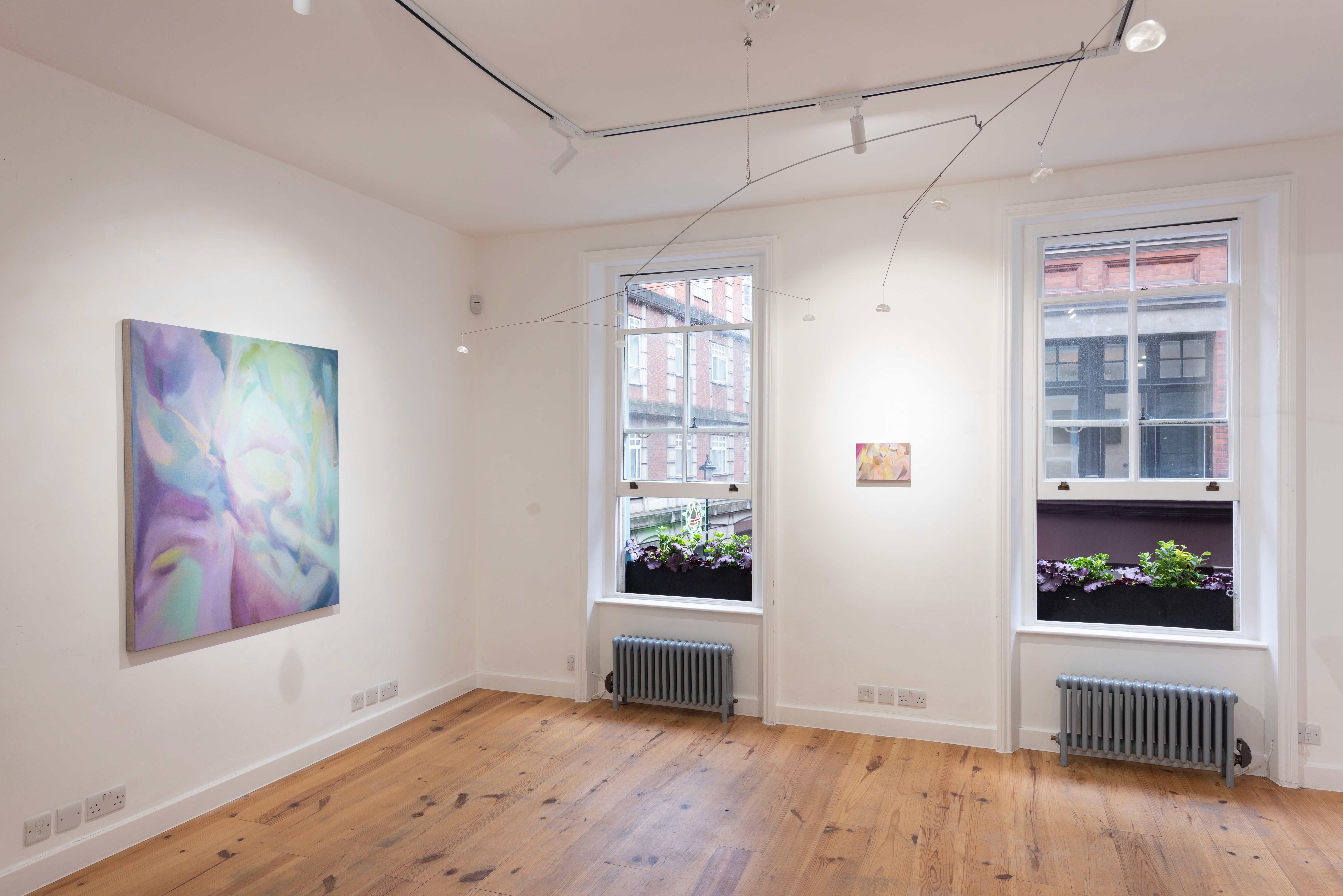
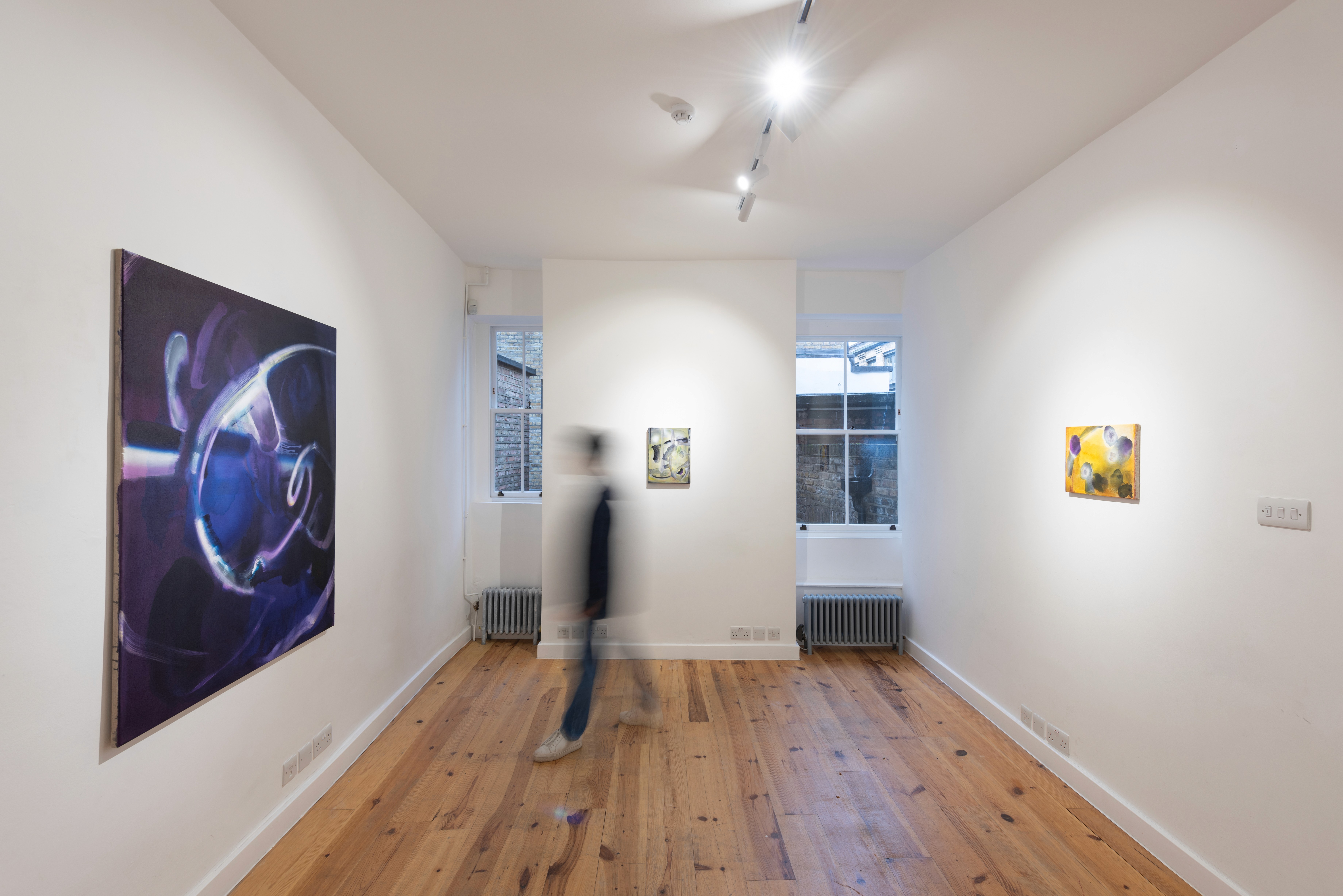
Flatmates 37 opens with SOFT SERVE, a group exhibition bringing together five artists whose practices consider belonging, vulnerability, material memory and the unstable boundaries between bodies, objects and places.
Shared by NORITO, starch and Teaspoon Projects, Flatmates 37 takes its name and structure seriously: three independent programmes inhabiting one space. Rather than operating as a gallery with a singular curatorial voice, it is conceived as a place of cohabitation — a rotating programme of exhibitions by each of its three ‘flatmates’, punctuated by collective exhibitions such as SOFT SERVE.
The exhibition begins with a contemporary idea of home as something increasingly personal, shared and abstract. In cosmopolitan lives, home is often less tied to a single place than to people, habits, objects, memories and temporary forms of belonging. Across the works, home is inherited, withheld, reconstructed and carried between places, shaped as much by displacement as by intimacy. Familiar materials and forms become slightly strange, reflecting the instability of belonging when home is something we continually make, lose and remake.
SOFT SERVE also proposes a way of thinking about hospitality. Flatmates 37 is interested in forms of gathering that do not depend on a singular host or centre. Instead, hospitality becomes reciprocal: a willingness to make room for different positions, to relinquish control, and to create conditions in which uncertainty and vulnerability are not treated as weaknesses. The exhibition embraces this instability — between host and guest, belonging and estrangement, protection and exposure, the organic and the manufactured.
London-based Venezuelan artist Francisca Sosa López explores materiality and process through shifting definitions of home, migration, femininity and cultural contrast. Working with materials that can travel back and forth across the Atlantic, she extends drawing into thread, beads and textile, making portability part of the work’s relationship to place. In Bamboleo de detalles ambigüos (Swaying of Ambiguous Details), a Margarita hammock becomes both painting and object. Weaving, repetition and intervention bring forms of making historically associated with women into dialogue with the language of painting, while the hammock itself hovers between domestic utility, memory and exhibition object.
This sense of home as something carried, inherited and never entirely secure also runs through Cansu Yıldıran’s Dispossessed series. Made in the Kuşmer Highlands in northern Turkey, where their family has roots, the photographs emerge from a landscape to which Yıldıran is deeply connected yet cannot fully lay claim. Women, animals and the landscape form a collective presence within images that are tender and uncanny, marked by histories of gendered inheritance and dispossession. Yıldıran describes this condition as being “guests for life”: belonging intimately to a place while remaining, in some sense, outside it.
Questions of who or what occupies the centre shift again in Chok Si Xuan’s installations. Working with found electronics and industrial materials, Chok looks to cybernetics and the feedback systems connecting humans, living organisms and machines. Her environments resist a stable hierarchy between body and apparatus, organic and manufactured, allowing agency to circulate through the systems she constructs. If home can be understood as a network of relations rather than a fixed site, Chok pushes that network beyond the human, towards the objects, technologies and organisms with which we continually share space.
A related surrender of control appears in Ruijin Song’s approach to making. Working across painting, ceramics, metalwork and printmaking, Song describes the studio as an expanding inner ‘burrow’: intuitive, secretive and without a predetermined route. Images are layered, rotated and interrupted until familiar ways of seeing begin to loosen. Her sensitivity to death, labour and fragile forms of existence gives this process an emotional weight; vulnerability becomes less a subject to depict than a condition through which the work is allowed to emerge.
Mithra Jeevananthan’s practice explores speculative ecologies and chimeric spaces. Through sculpture and installation, she combines references to flora, fauna, insects, and biological systems with industrial materials such as welded metal, plastics, readymade objects, laser-cut elements, and fabricated structures. These fragments are distorted, reconstructed, and brought together to form unfamiliar habitats that resist fixed interpretation. The work considers how imagined environments might develop their own systems and relationships, creating spaces that feel simultaneously beautiful, unsettling, and difficult to classify. Welcome to My Island is an ongoing exploration of world-building through mutation, transformation, and the possibility of landscapes that exist somewhere between reality and fiction.
Together, the works in SOFT SERVE resist the idea that belonging requires certainty. They propose instead something gentler and more permeable: identities formed through contact, homes assembled from fragments, and spaces made meaningful through the people, materials and memories temporarily held within them.
As the first exhibition at Flatmates 37, SOFT SERVE makes its position clear: loosen the centre; belonging is something we make together.
The days melt in my hands like ice in the sun” Honoré de Balzac
“…and I circle ten thousand years long;
and I still don’t know if I’m a falcon, a storm, or an unfinished song.” Rainer Maria Rilke
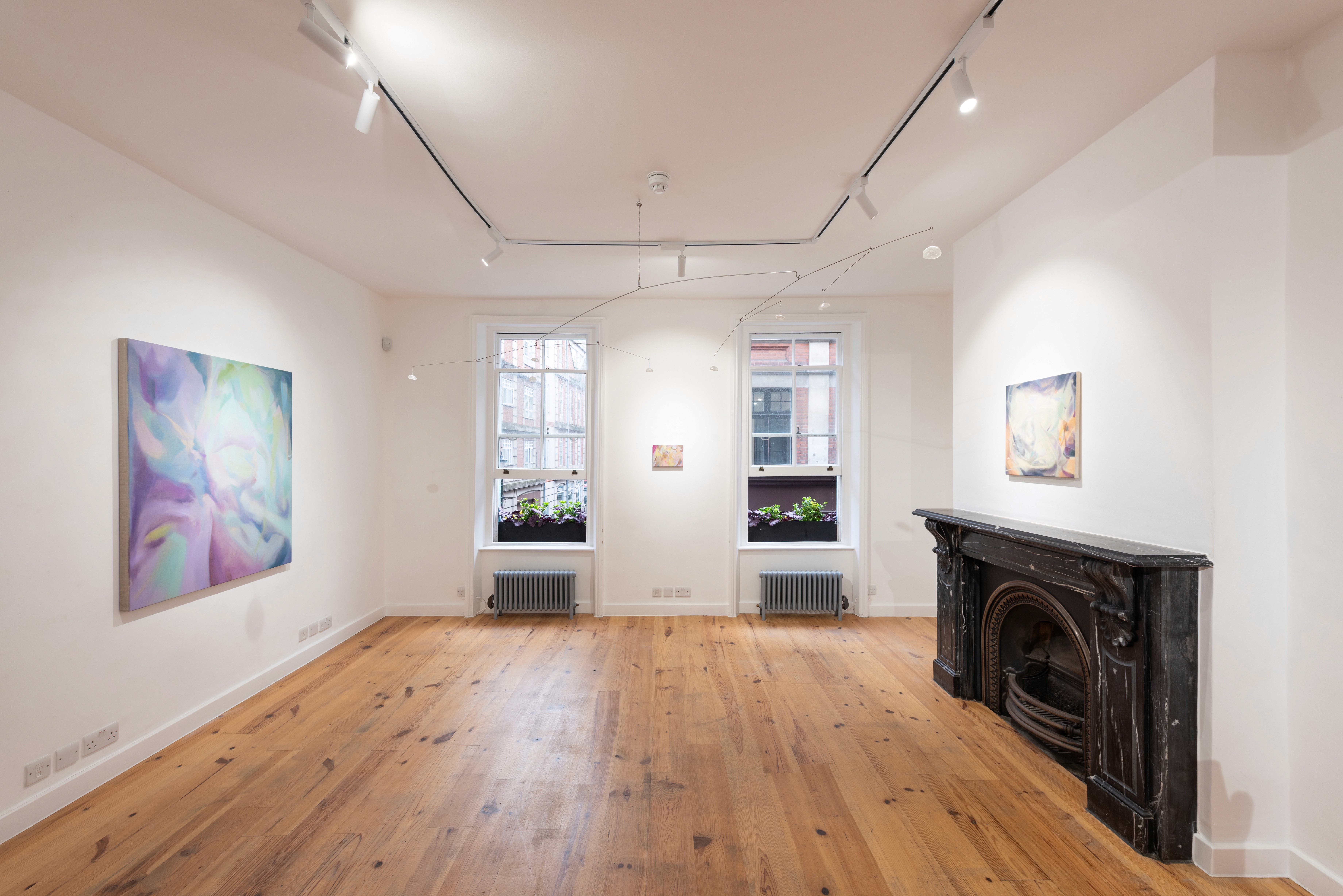
Composed of works by three artists, whose approaches differ as they overlap, this exhibition aims to emphasise and articulate an often lost sensitivity in today’s fast-paced, hurried society. Both metaphorically and visually, it is that sense of letting the invisible, yet tangibly experienced aspects, to gain form that drives the respective practices of these artists.
The gap, and hence the tension, between conventionally accepted meanings and introspectively non-verbal nature of creation opens a question of how much (or how little) evocation is required for that ephemeral to be communicated and to manifest in a shared space? Not only towards the public, but perhaps even more urgently in between and among the works themselves? To point one’s finger right between "there is" and "there is not," — presence and absence — while giving priority to none. Both hazy and yet distinct, "at once light and dark”, one emerges from within the other.
Is it between present and absent, sensed and known, that the bridge can fleetingly emerge yet, in fact, not to be sustained?
_________________
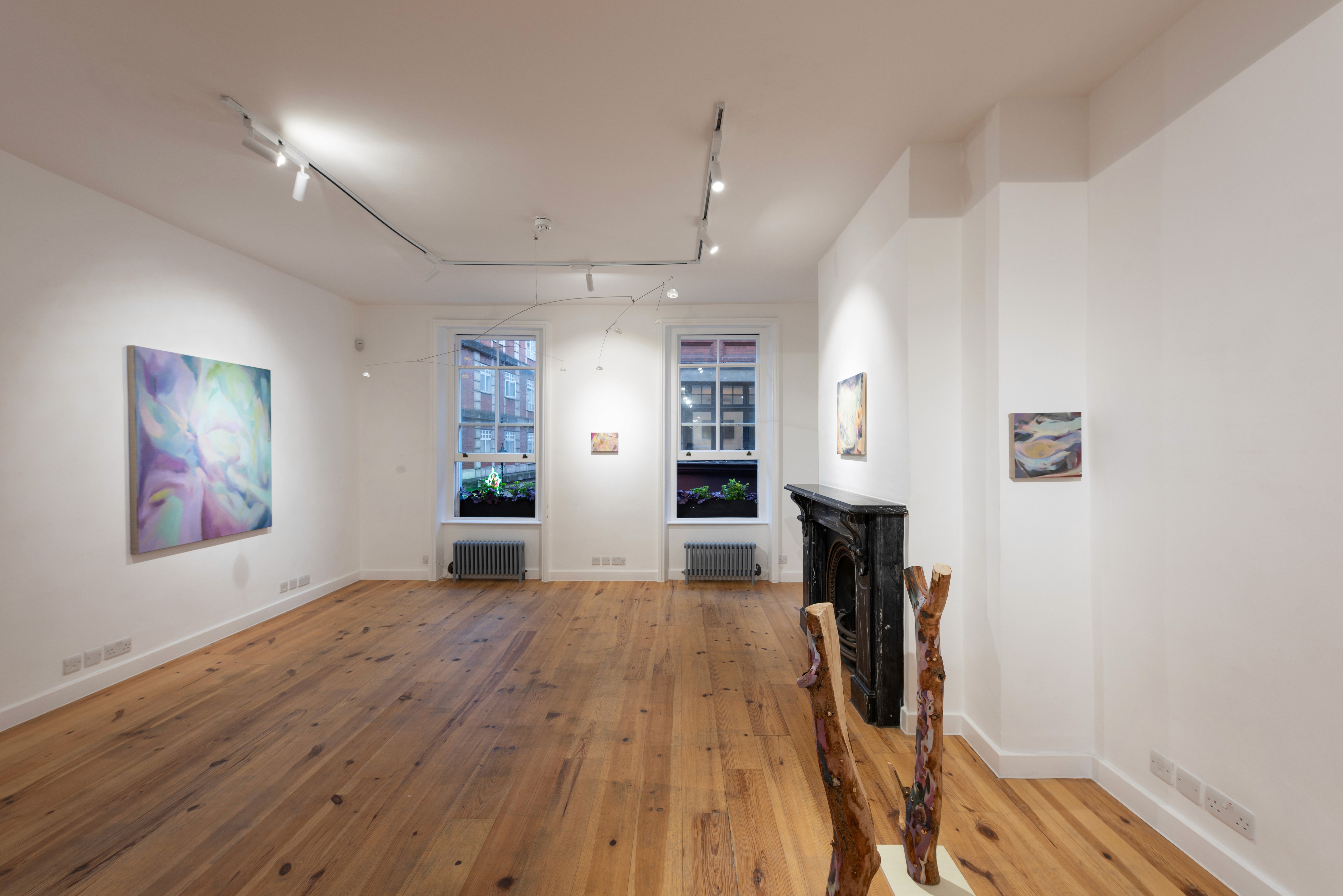
‘Once Belonged to the Same Forest’, a pair of park-found branches transformed by Yiwen Liu carry their natural memory and organic essence while simultaneously acting as a vessel of human actions — rough (cut) and subtle (colour) — reflecting and balancing these in equal measure. Linked by a subtle hues of the painter’s palette, both her paintings and objects draw from a deeply felt sense of subjective quietude which opens a broad space for contemplation and point to one’s changing condition.
Suggesting yet another kind of fragility and ephemerality is the piece ‘Tears’ by Rene Lazovy. Solemnly taking their shape after enlarged raindrops falling through the Earth’s atmosphere, this work is standing on crossroads and/or moving into multiple directions: a clear reference to Alexander Calder, yet distinctively stripped of colour, it is also informed by the artist’s research into hyperobjects, an idea articulated by the ecology-oriented philosophy of Timothy Morton.
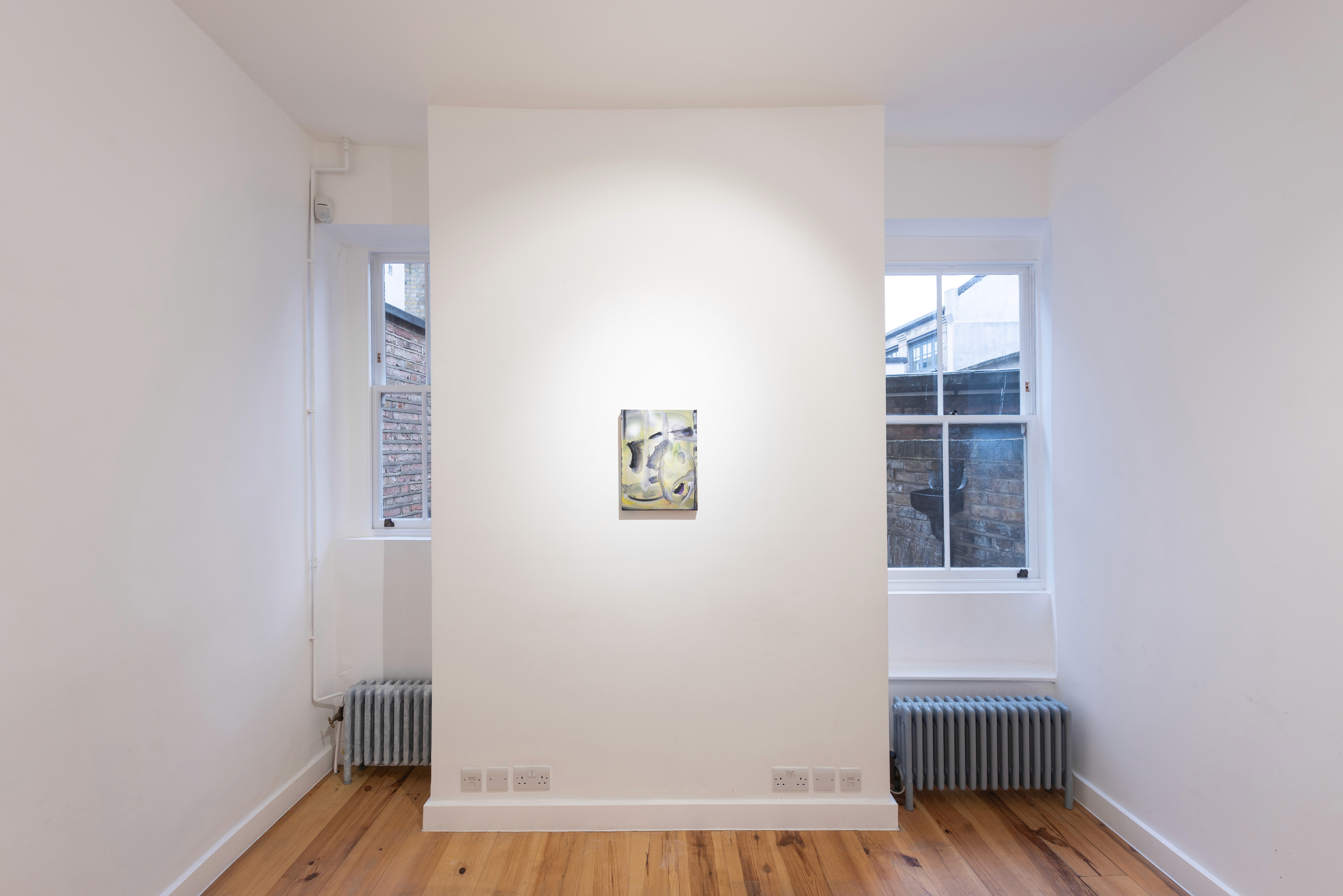
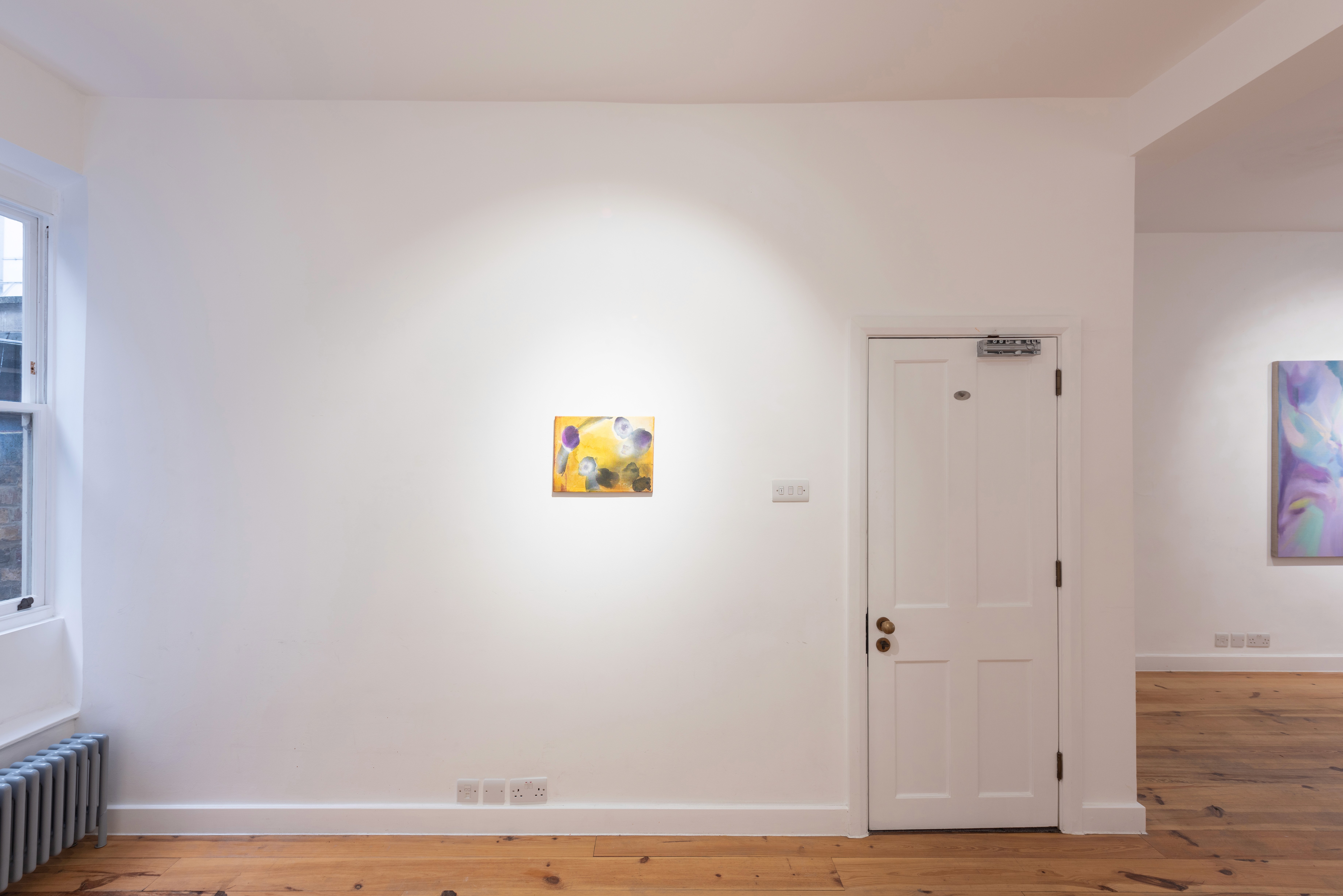
Exploring painting as a conjured territory of perceptual ambiguities, Jan Valik’s work balances alchemical spontaneity with certain control in an effort to reach from subjective towards something universal. Held in evocative tensions between depicting and concealing, these semi abstract ecosystems or atmospherically fluid spaces are influenced by ideas of painting’s parallels and contradictions to psychology, the subjectivity of emotions, landscape and quantum physics (particularly the idea of superposition).