The god is selfish and the trees are wise

Camille Bernard, Dimitra Liogka, Soo Hyun Lee, Yujin Son

Camille Bernard, Dimitra Liogka, Soo Hyun Lee, Yujin Son

9 October – 8 November 2025

9 October – 8 November 2025

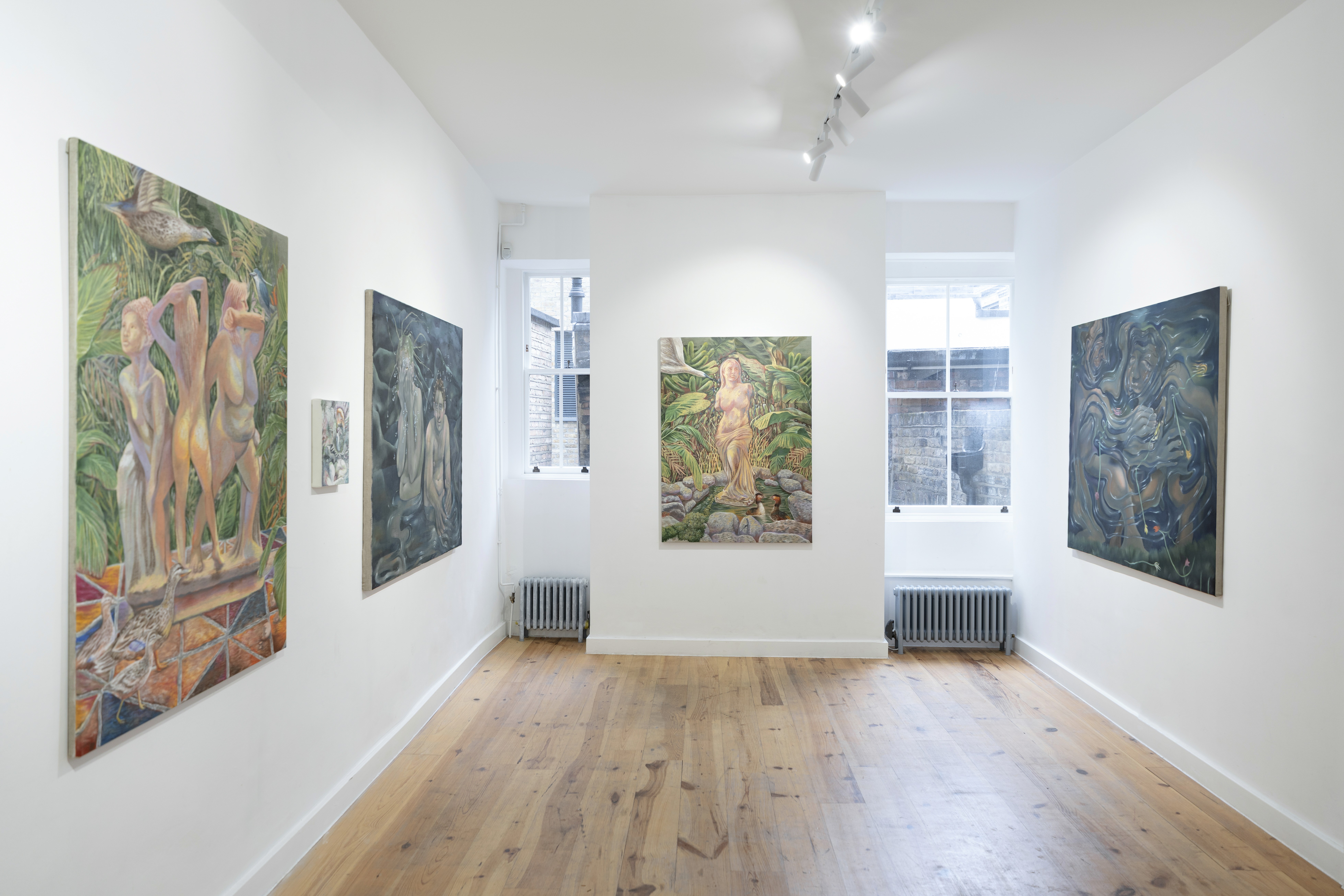
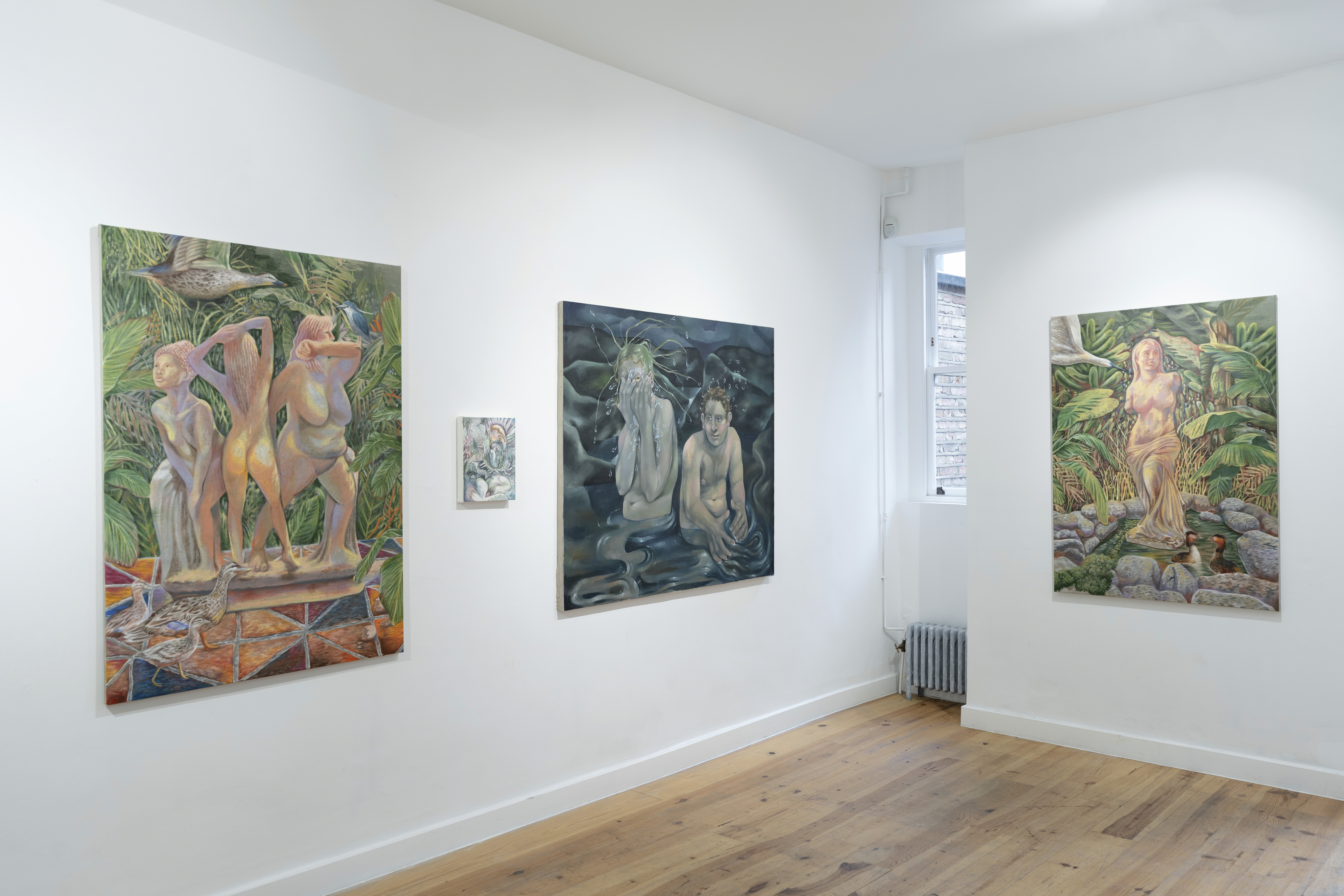
The god is selfish and the trees are wise situates the body at the hinge of two allegories: the selfish god and the wise trees. The selfish god stands for forces that threaten to fragment and estrange the body. The wise trees, by contrast, figure endurance and transformation. The artists in this exhibition do not give form to the selfish god, but rather reveal how bodies—female, vulnerable, insistent—resist its force through gestures of hybridity and defiance.

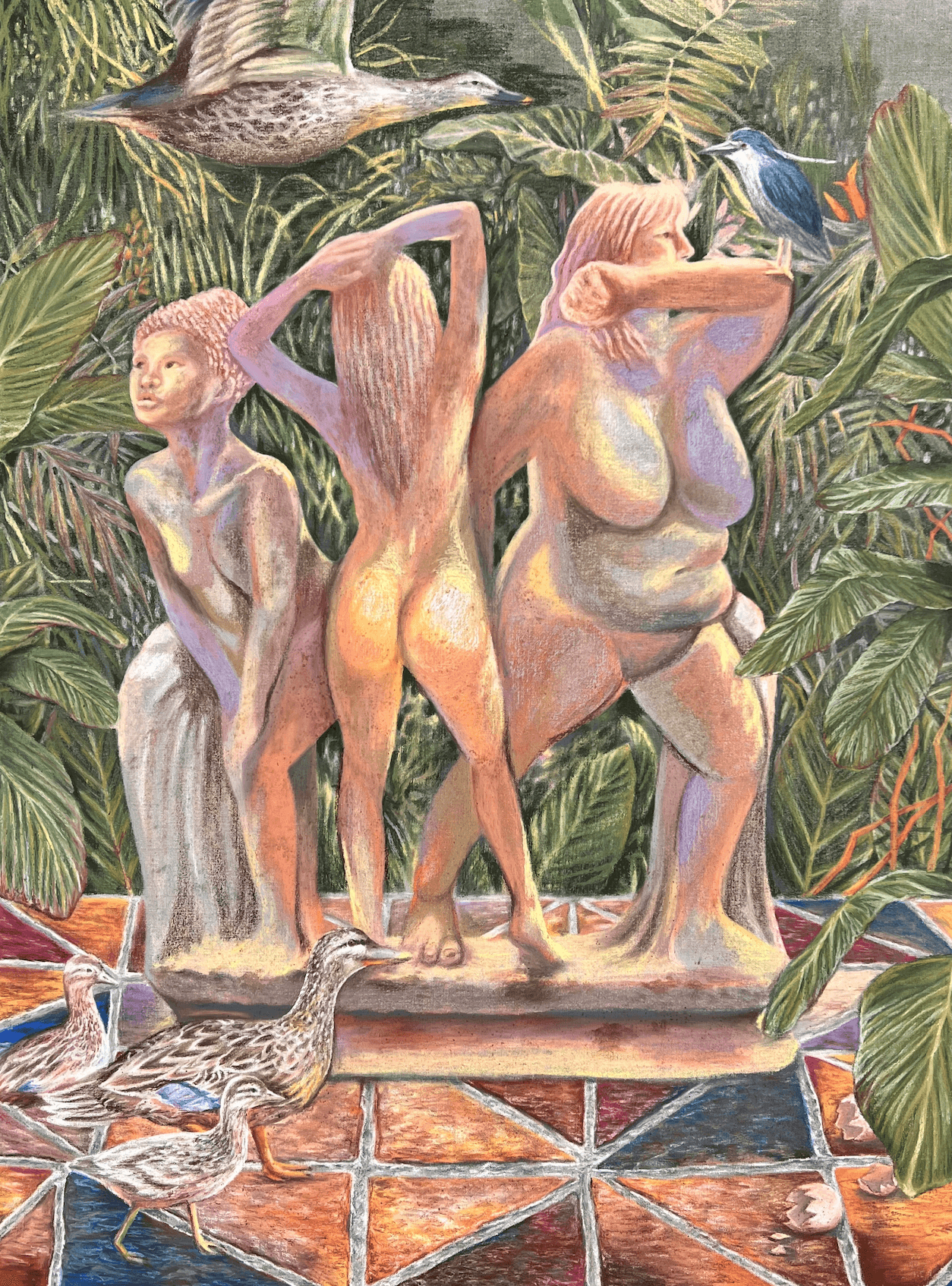
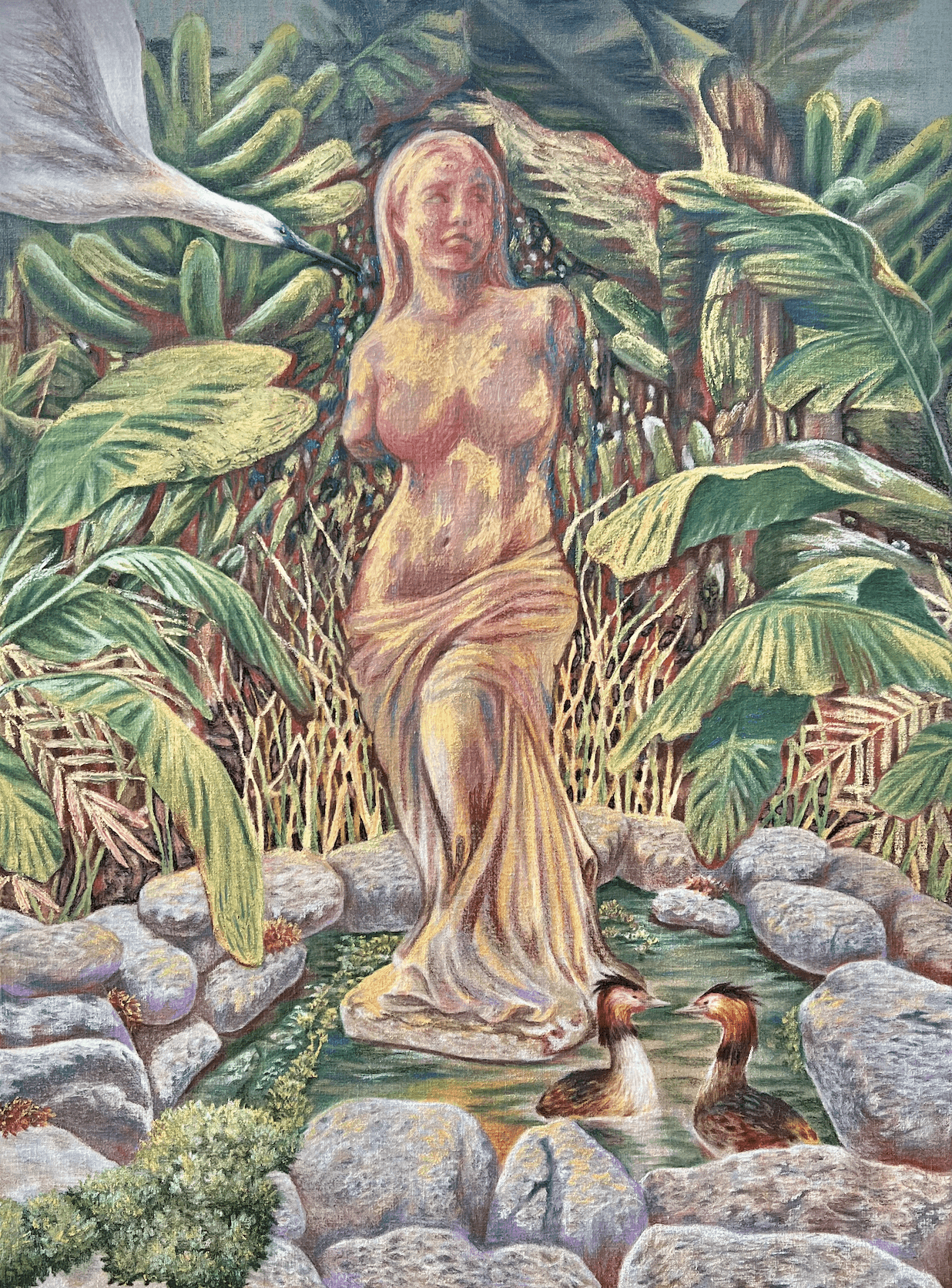
Yujin Son and Camille Bernard reveal bodies of hybridity that arise through collision, dissolution, and merging. In Son’s earlier paintings, birds assumed the role long carried by the artist’s hand — a mediating instrument that makes the invisible visible, recording traces of her local community and translating its lived, often silenced histories into image. In her recent works, the birds have shifted their role. No longer distant chroniclers of the past, they turn inward, drawing close to her own body. This non-human gaze carries a certain strangeness: the self perceived as if from elsewhere, suggesting that subjectivity is always refracted through the eyes of the Other. In this fragile balance — between intimacy and estrangement, liberation and constraint — the body is transformed into a site of hybridity. These migrating creatures, whose very presence exposes the latent anxiety of a subject that is bound, now lay before us a body reborn, strengthened through the very openness of this encounter.

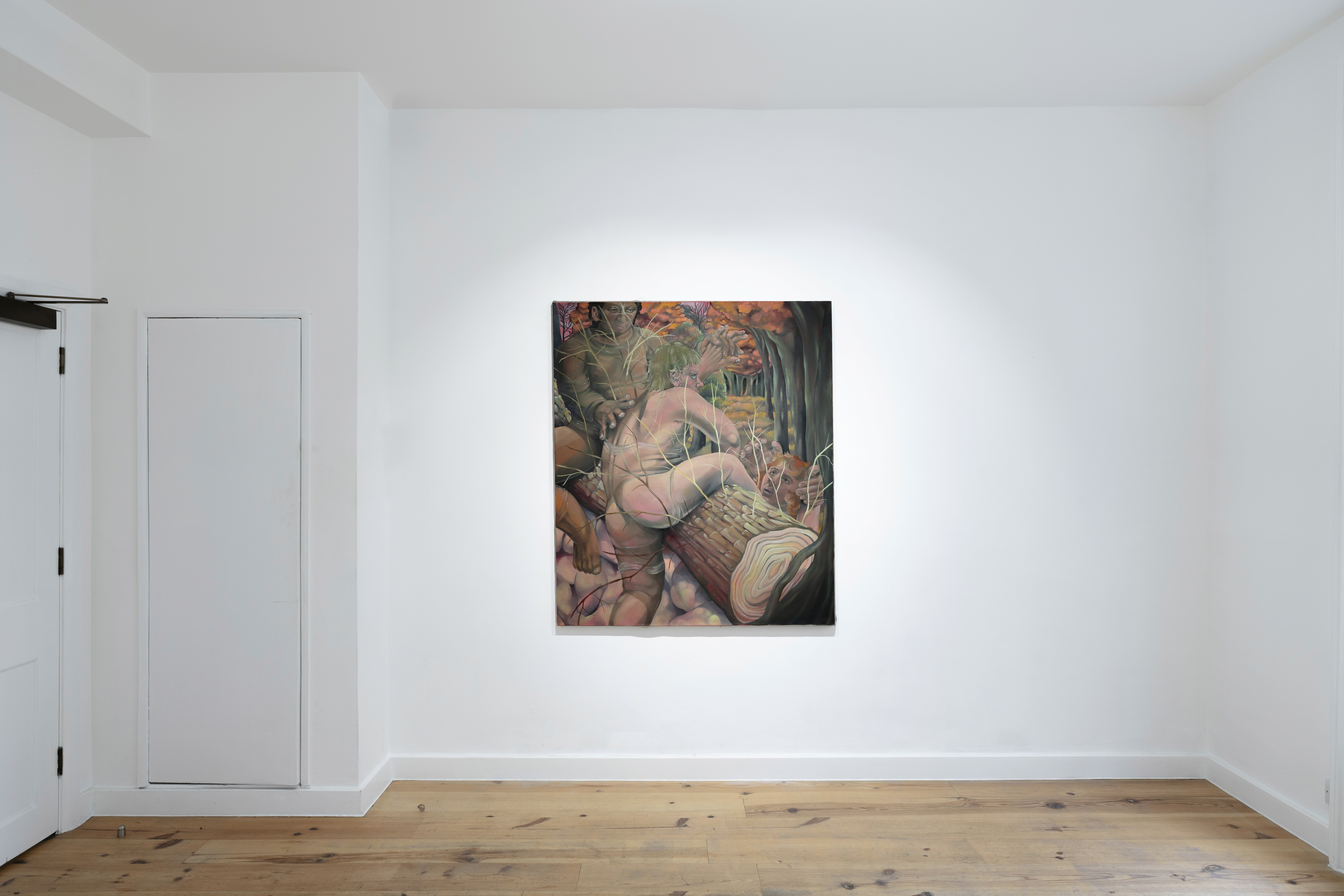
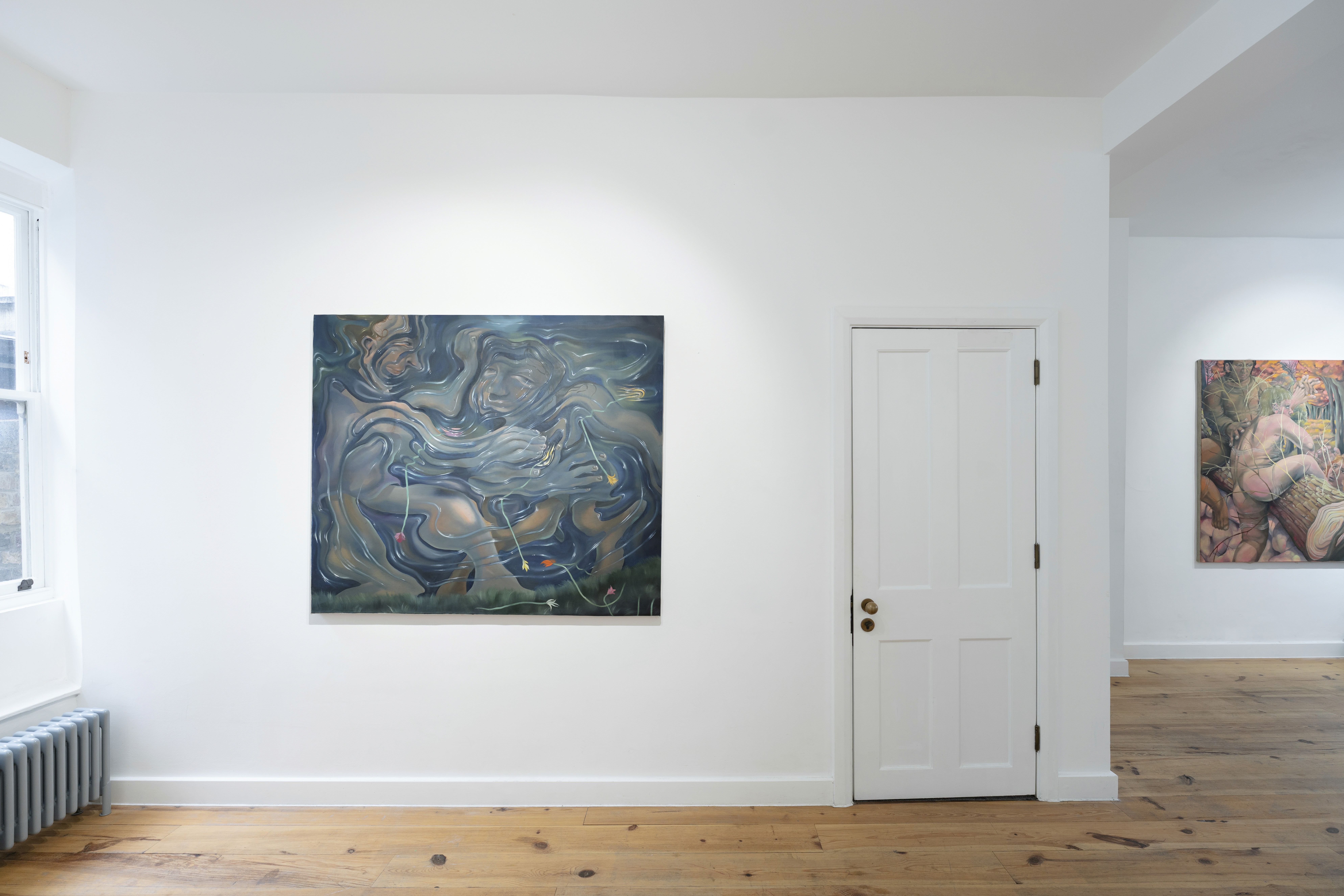
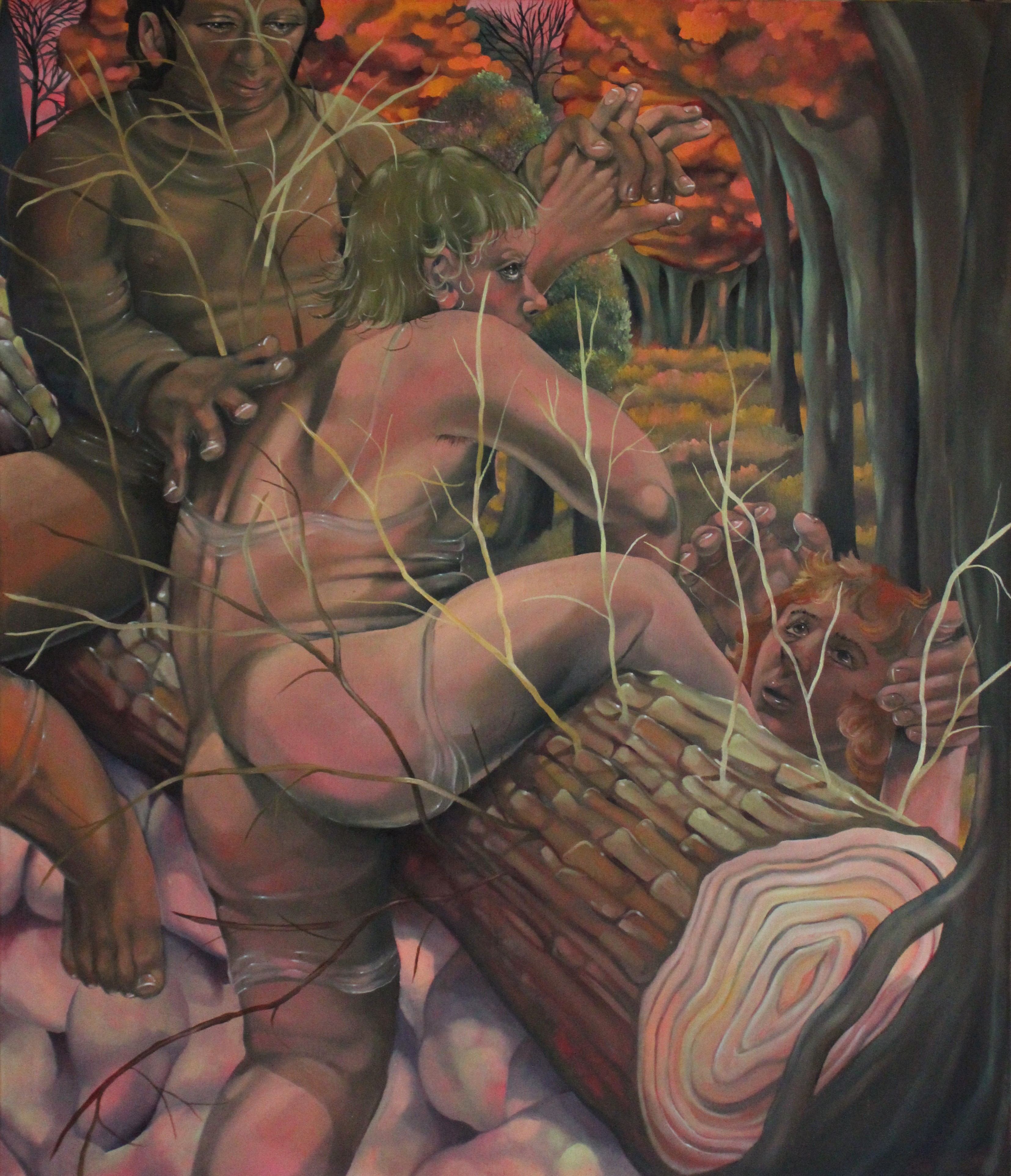
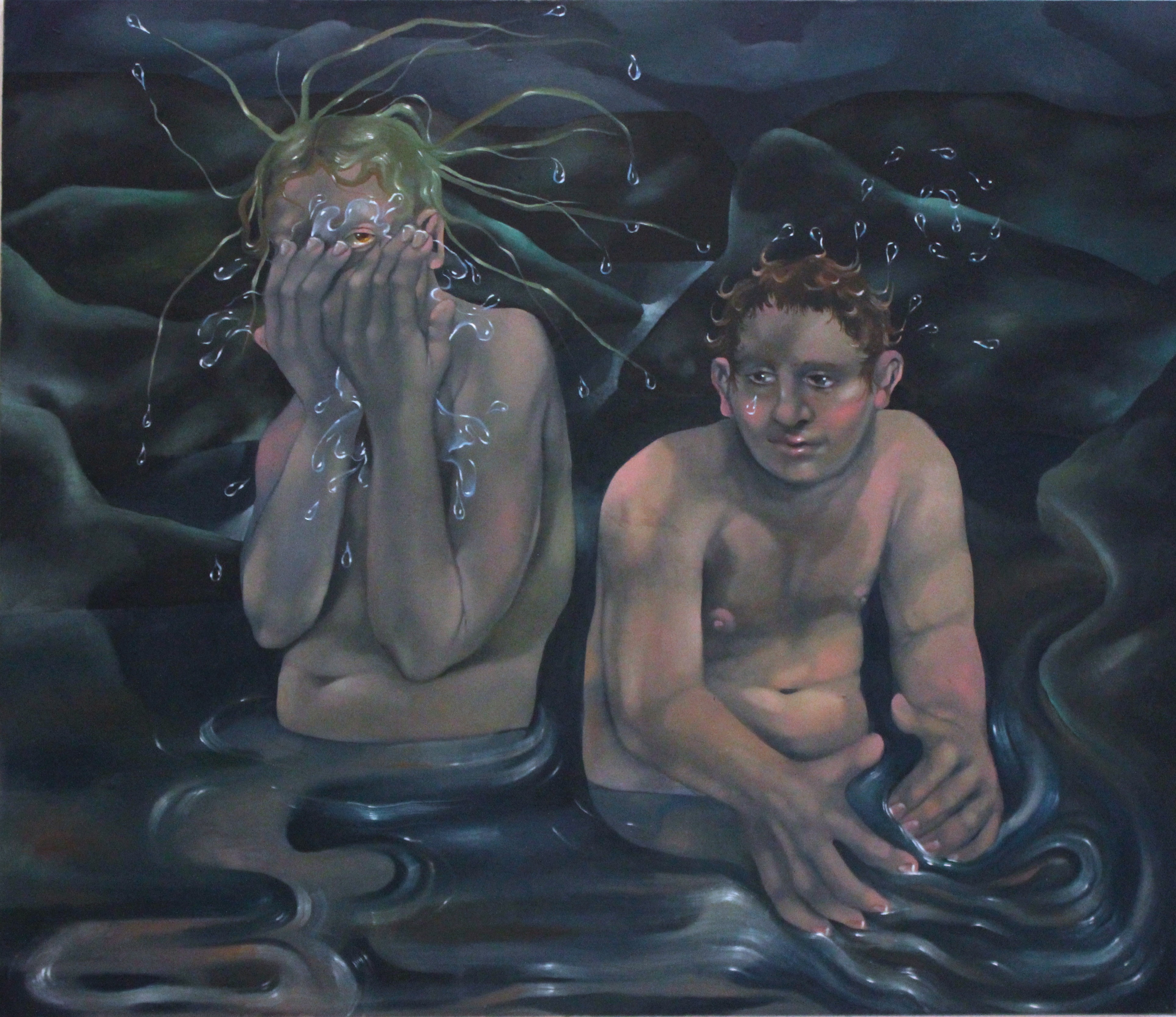
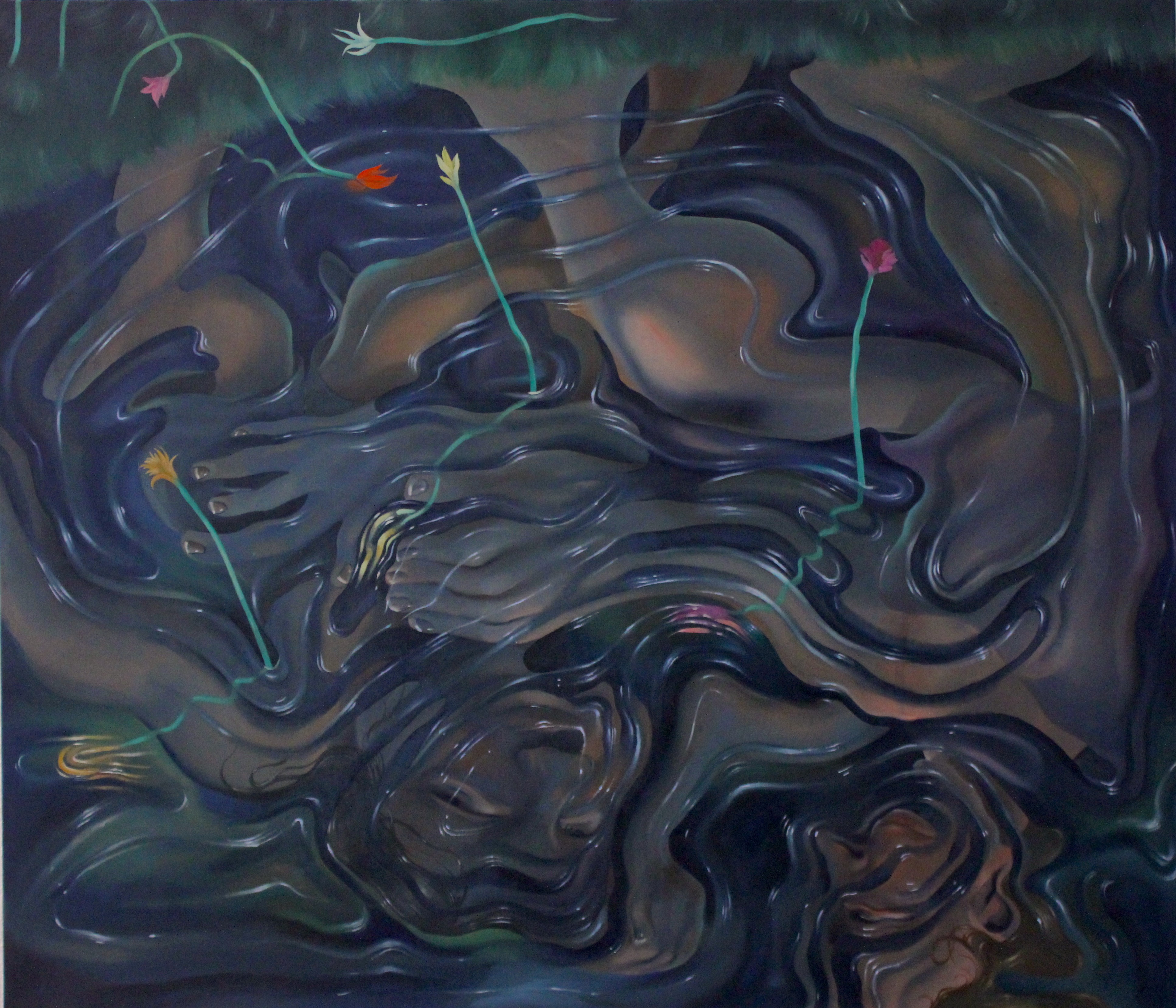
Camille Bernard’s painting generates new gestures of connection as figures drift through arboreal and aqueous fields where distinctions between self and other, foreground and background, begin to dissolve. Bound by tenderness and collaboration, Bernard’s figures rest, embrace, and nourish one another, enacting a body that finds strength through embrace. Here, hybridity does not simply blur borders but creates fragile communities of relation. Figures and landscapes meet as equal protagonists, entangled in a balance that is at once turbulent and sustaining. The “embracing body” that emerges is not idealized or harmonious, but porous enough to absorb indifference alongside care. Like the wise trees of the exhibition’s allegory, Bernard’s work imagines resilience not as solidity but as the ability to entwine, to endure, and to grow through entanglement with others.

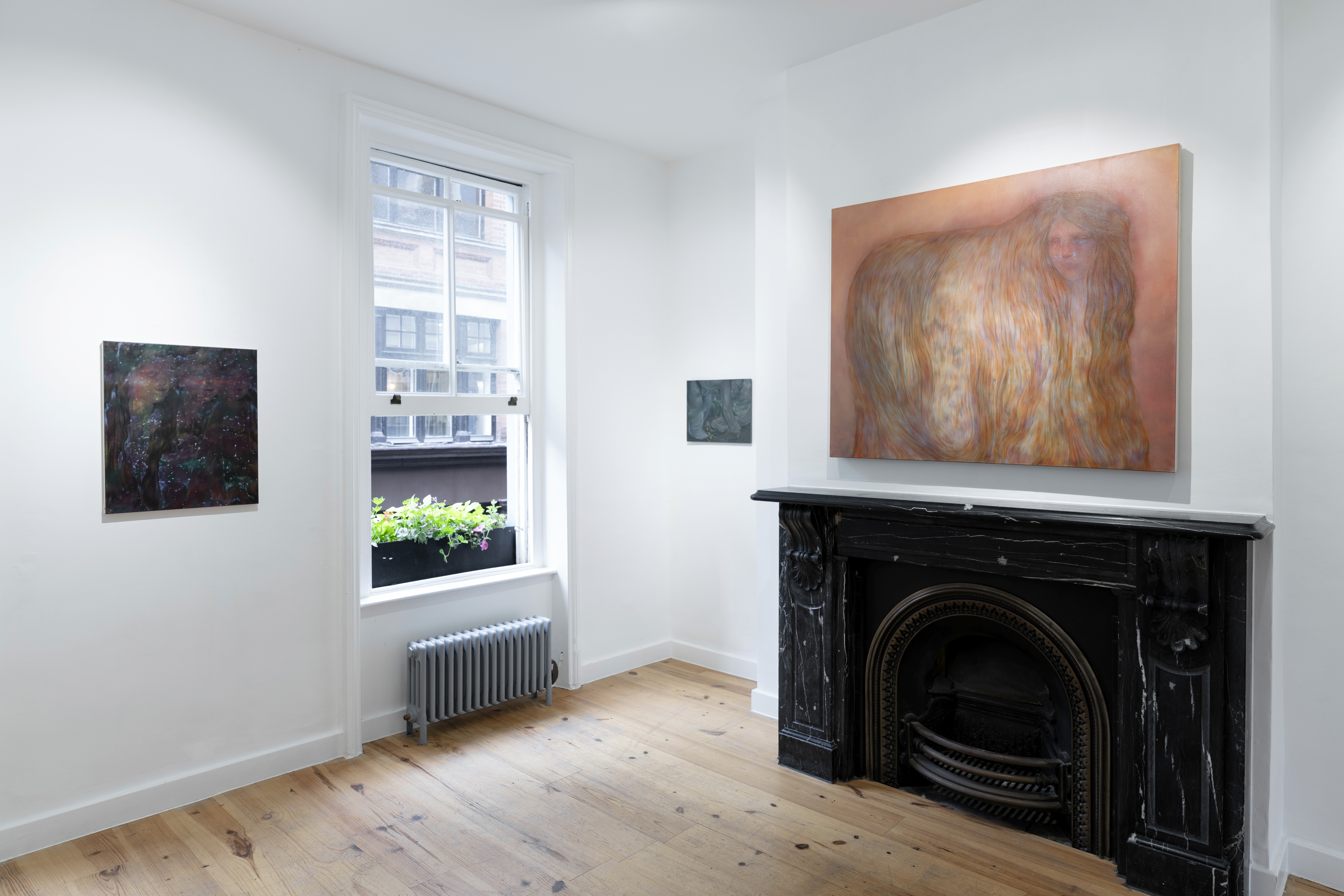
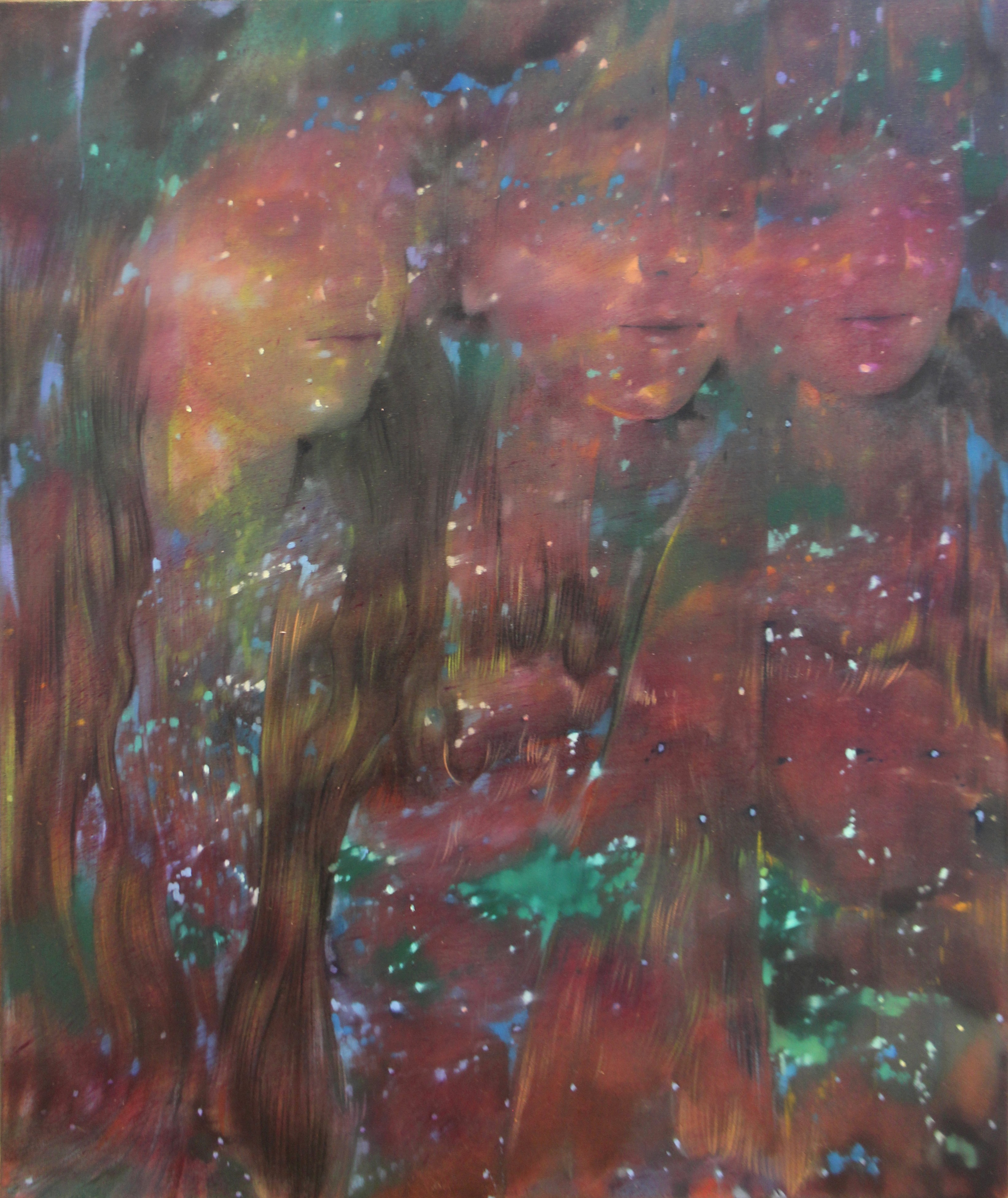
Dimitra Liogka and Soo Hyun Lee resist the oppressions inscribed upon the body, disrupting established order by either exposing its wounds or consolidating strength through concealment. Their practices articulate gestures of defiance that operate through both revelation and withdrawal. In Dimitra Liogka’s paintings, the body refuses completed contours. Brushstrokes, dispersed like strands of hair, blur its form and leave behind traces that society prefers to dismiss. Rather than disappearing, this body persists by exposing what is unwanted, existing as a body of resistance.

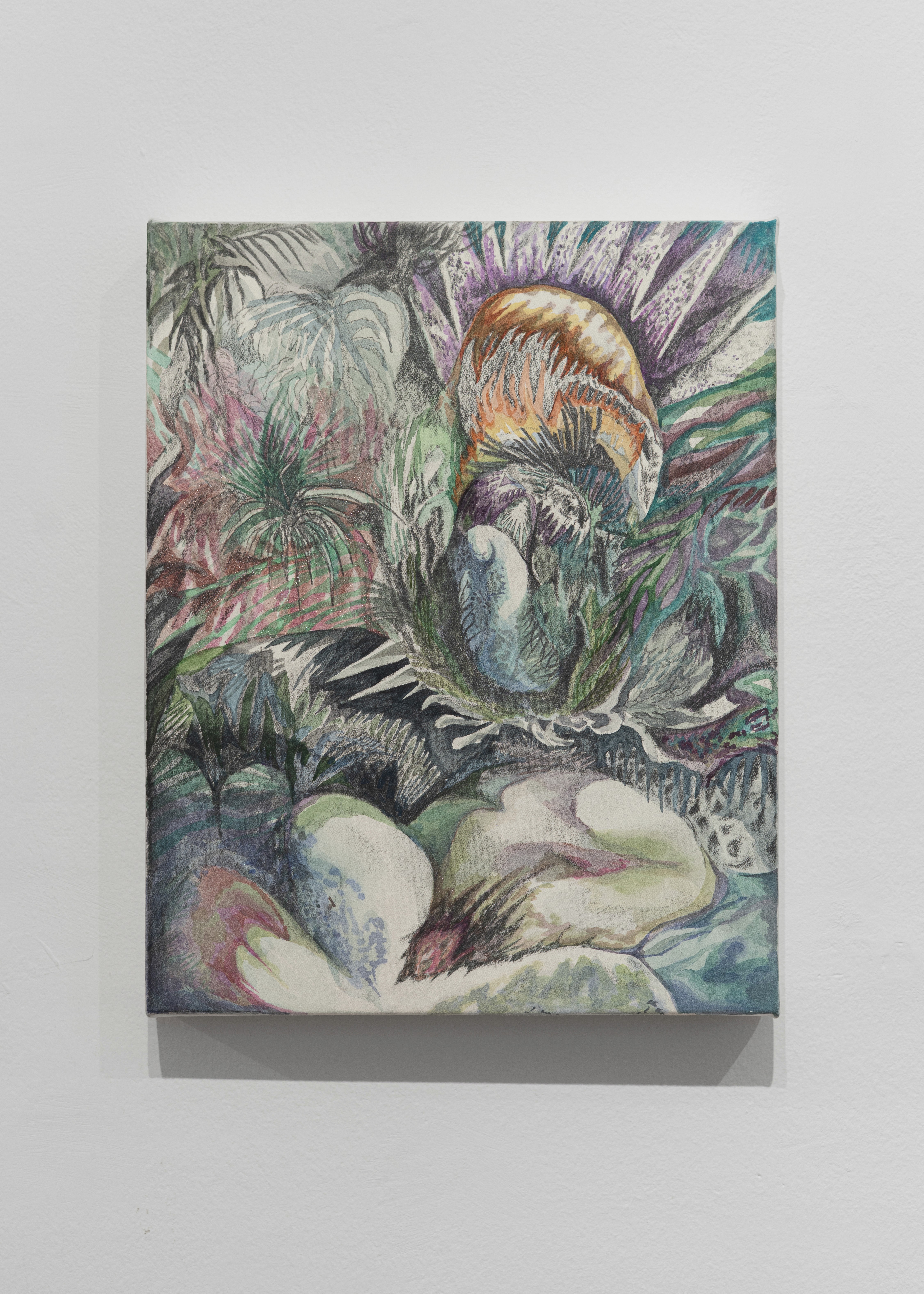
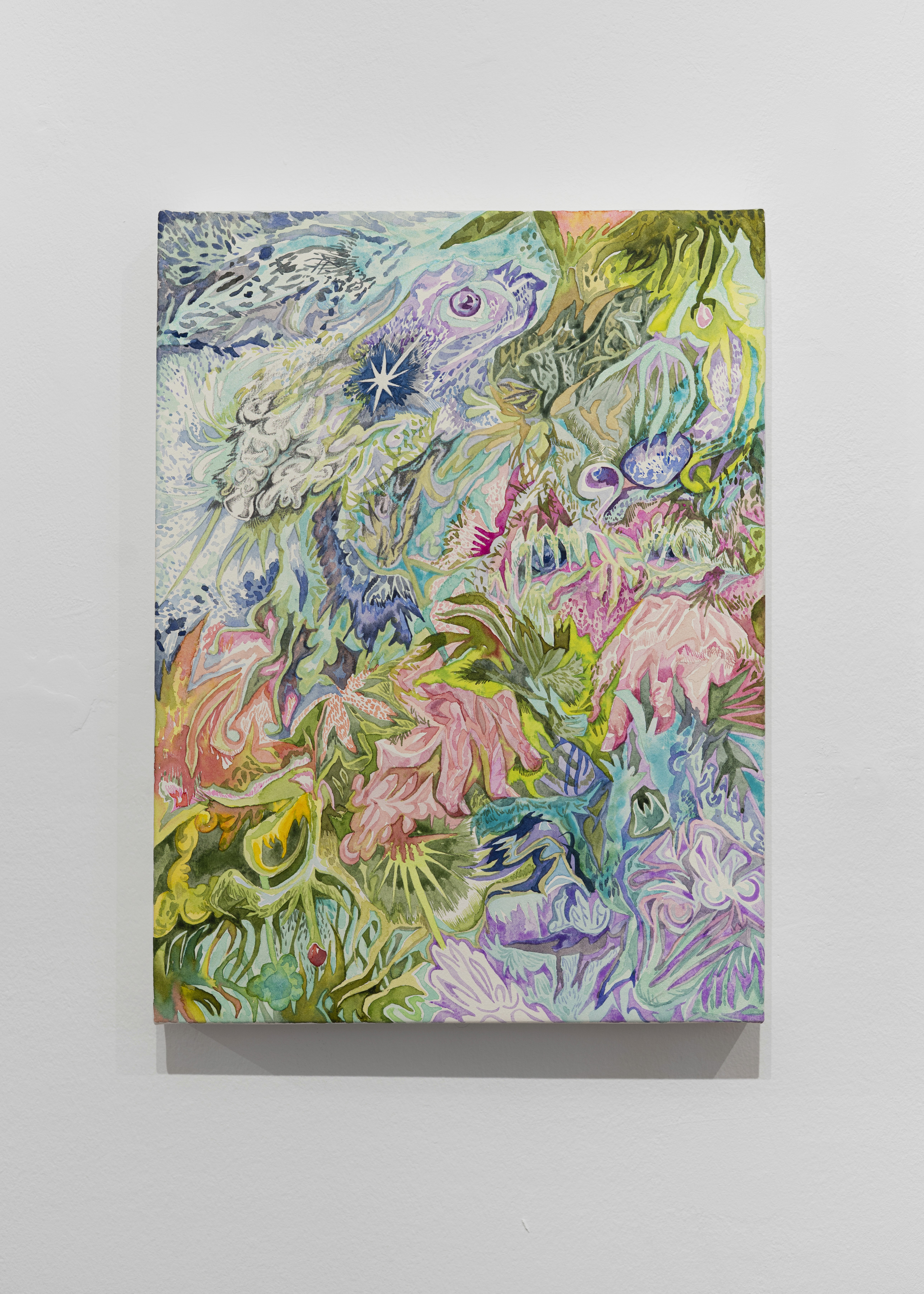
In Soo Hyun Lee’s Daphne series, myth becomes a language of resistance. Daphne’s metamorphosis, once read as a powerless escape, is reimagined as an act of defiance: branches sharpen into weapons, leaves lure predators into traps, and the transformed body stares back without fear or shame. Lee channels her own experiences of violence and marginalization into these figures, turning what was once an emblem of victimhood into a strategy of attack. Vulnerability is redirected and converted into an active force. The body that conceals in order to survive now also strikes back — a body that transforms oppression into energy. Like this, the defiant body does not conform to ideal forms or norms. Instead, through acts of disclosure or concealment, it resists and acquires new vitality.

Hybridity and defiance operate in different ways, yet they converge in making the body a site of transformation. Through hybridity, the body dissolves boundaries and forges new relations; through defiance, it breaks norms and converts oppression into energy. In this process, the body—long subjected to discipline and control—emerges as a site of resistance and reconfiguration, of metamorphic imagination: hybrid, porous, and wise.
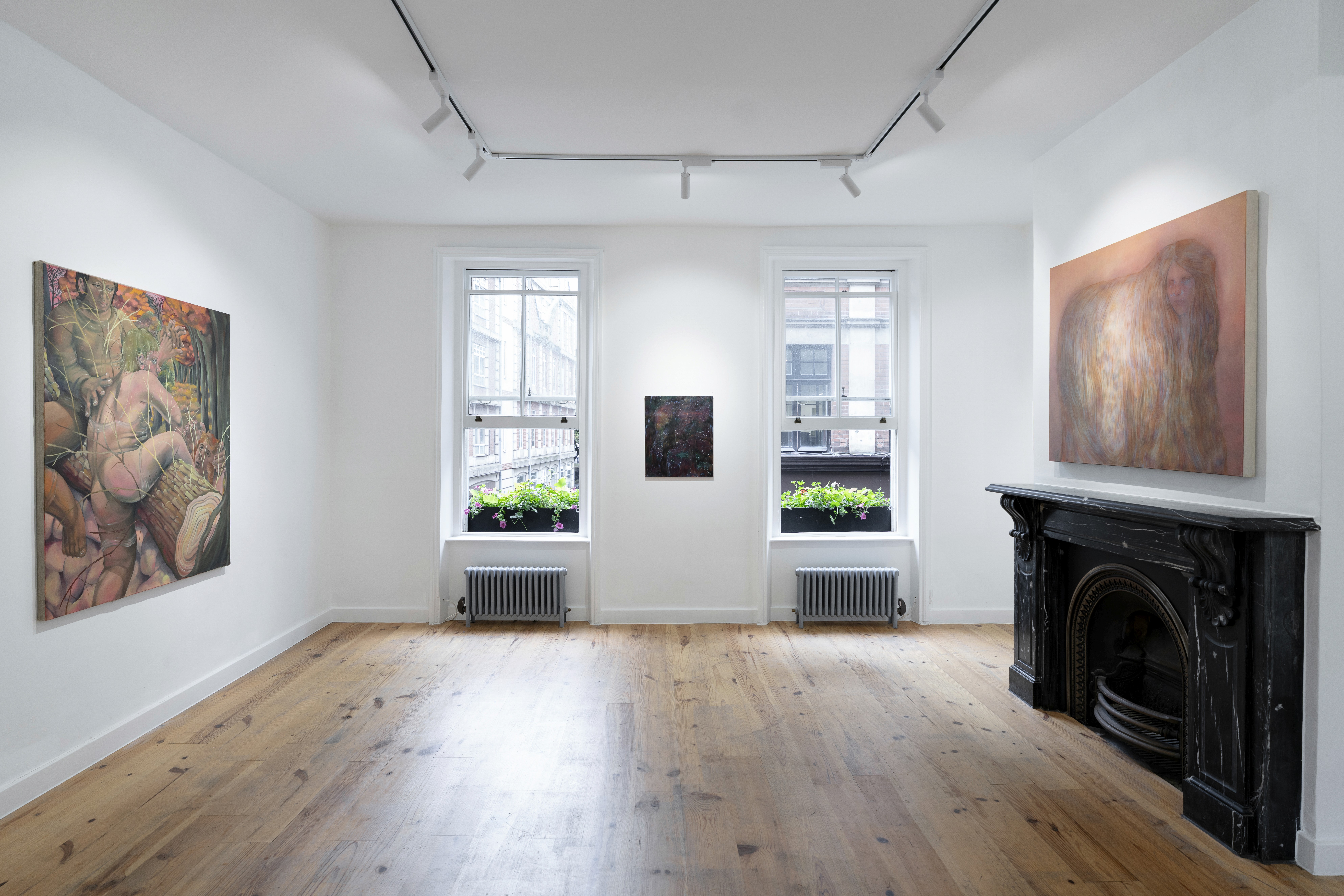
Flatmates 37 opens with SOFT SERVE, a group exhibition bringing together five artists whose practices consider belonging, vulnerability, material memory and the unstable boundaries between bodies, objects and places.


Shared by NORITO, starch and Teaspoon Projects, Flatmates 37 takes its name and structure seriously: three independent programmes inhabiting one space. Rather than operating as a gallery with a singular curatorial voice, it is conceived as a place of cohabitation — a rotating programme of exhibitions by each of its three ‘flatmates’, punctuated by collective exhibitions such as SOFT SERVE.

The exhibition begins with a contemporary idea of home as something increasingly personal, shared and abstract. In cosmopolitan lives, home is often less tied to a single place than to people, habits, objects, memories and temporary forms of belonging. Across the works, home is inherited, withheld, reconstructed and carried between places, shaped as much by displacement as by intimacy. Familiar materials and forms become slightly strange, reflecting the instability of belonging when home is something we continually make, lose and remake.

SOFT SERVE also proposes a way of thinking about hospitality. Flatmates 37 is interested in forms of gathering that do not depend on a singular host or centre. Instead, hospitality becomes reciprocal: a willingness to make room for different positions, to relinquish control, and to create conditions in which uncertainty and vulnerability are not treated as weaknesses. The exhibition embraces this instability — between host and guest, belonging and estrangement, protection and exposure, the organic and the manufactured.


London-based Venezuelan artist Francisca Sosa López explores materiality and process through shifting definitions of home, migration, femininity and cultural contrast. Working with materials that can travel back and forth across the Atlantic, she extends drawing into thread, beads and textile, making portability part of the work’s relationship to place. In Bamboleo de detalles ambigüos (Swaying of Ambiguous Details), a Margarita hammock becomes both painting and object. Weaving, repetition and intervention bring forms of making historically associated with women into dialogue with the language of painting, while the hammock itself hovers between domestic utility, memory and exhibition object.

This sense of home as something carried, inherited and never entirely secure also runs through Cansu Yıldıran’s Dispossessed series. Made in the Kuşmer Highlands in northern Turkey, where their family has roots, the photographs emerge from a landscape to which Yıldıran is deeply connected yet cannot fully lay claim. Women, animals and the landscape form a collective presence within images that are tender and uncanny, marked by histories of gendered inheritance and dispossession. Yıldıran describes this condition as being “guests for life”: belonging intimately to a place while remaining, in some sense, outside it.

Questions of who or what occupies the centre shift again in Chok Si Xuan’s installations. Working with found electronics and industrial materials, Chok looks to cybernetics and the feedback systems connecting humans, living organisms and machines. Her environments resist a stable hierarchy between body and apparatus, organic and manufactured, allowing agency to circulate through the systems she constructs. If home can be understood as a network of relations rather than a fixed site, Chok pushes that network beyond the human, towards the objects, technologies and organisms with which we continually share space.

A related surrender of control appears in Ruijin Song’s approach to making. Working across painting, ceramics, metalwork and printmaking, Song describes the studio as an expanding inner ‘burrow’: intuitive, secretive and without a predetermined route. Images are layered, rotated and interrupted until familiar ways of seeing begin to loosen. Her sensitivity to death, labour and fragile forms of existence gives this process an emotional weight; vulnerability becomes less a subject to depict than a condition through which the work is allowed to emerge.

Mithra Jeevananthan’s practice explores speculative ecologies and chimeric spaces. Through sculpture and installation, she combines references to flora, fauna, insects, and biological systems with industrial materials such as welded metal, plastics, readymade objects, laser-cut elements, and fabricated structures. These fragments are distorted, reconstructed, and brought together to form unfamiliar habitats that resist fixed interpretation. The work considers how imagined environments might develop their own systems and relationships, creating spaces that feel simultaneously beautiful, unsettling, and difficult to classify. Welcome to My Island is an ongoing exploration of world-building through mutation, transformation, and the possibility of landscapes that exist somewhere between reality and fiction.


Together, the works in SOFT SERVE resist the idea that belonging requires certainty. They propose instead something gentler and more permeable: identities formed through contact, homes assembled from fragments, and spaces made meaningful through the people, materials and memories temporarily held within them.

As the first exhibition at Flatmates 37, SOFT SERVE makes its position clear: loosen the centre; belonging is something we make together.


Selected Works

Camille Bernard
Paumes (Courage), 2023
Oil on canvas
140 x 120 cm

Camille Bernard
Seuil (Bassin), 2023
Oil on canvas
120 x 140 cm

Camille Bernard
Seuil (Onde), 2023
Oil on canvas
120 x 140 cm

Yujin Son
Contemporary Charities, 2025
Acrylic and oil pastel, oil on linen
130 X 97 cm

Yujin Son
Liberation Under Identifying With, 2025
Acrylic and oil pastel, oil on linen
130 X 97 cm

Dimitra Liogka
Reflections, 2025
Oil on linen
60 x 50 cm

Soo Hyun Lee
Even if it burns down to ashes, 2025
Pencil, watercolour and mineral pigment on paper
30 x 24 cm

Soo Hyun Lee
Daring behind the blooming leaves, 2025
Pencil, watercolour and mineral pigment on paper
40 x 30 cm

The god is selfish and the trees are wise situates the body at the hinge of two allegories: the selfish god and the wise trees. The selfish god stands for forces that threaten to fragment and estrange the body. The wise trees, by contrast, figure endurance and transformation. The artists in this exhibition do not give form to the selfish god, but rather reveal how bodies—female, vulnerable, insistent—resist its force through gestures of hybridity and defiance.

Yujin Son and Camille Bernard reveal bodies of hybridity that arise through collision, dissolution, and merging. In Son’s earlier paintings, birds assumed the role long carried by the artist’s hand — a mediating instrument that makes the invisible visible, recording traces of her local community and translating its lived, often silenced histories into image. In her recent works, the birds have shifted their role. No longer distant chroniclers of the past, they turn inward, drawing close to her own body. This non-human gaze carries a certain strangeness: the self perceived as if from elsewhere, suggesting that subjectivity is always refracted through the eyes of the Other. In this fragile balance — between intimacy and estrangement, liberation and constraint — the body is transformed into a site of hybridity. These migrating creatures, whose very presence exposes the latent anxiety of a subject that is bound, now lay before us a body reborn, strengthened through the very openness of this encounter.

Camille Bernard’s painting generates new gestures of connection as figures drift through arboreal and aqueous fields where distinctions between self and other, foreground and background, begin to dissolve. Bound by tenderness and collaboration, Bernard’s figures rest, embrace, and nourish one another, enacting a body that finds strength through embrace. Here, hybridity does not simply blur borders but creates fragile communities of relation. Figures and landscapes meet as equal protagonists, entangled in a balance that is at once turbulent and sustaining. The “embracing body” that emerges is not idealized or harmonious, but porous enough to absorb indifference alongside care. Like the wise trees of the exhibition’s allegory, Bernard’s work imagines resilience not as solidity but as the ability to entwine, to endure, and to grow through entanglement with others.

Dimitra Liogka and Soo Hyun Lee resist the oppressions inscribed upon the body, disrupting established order by either exposing its wounds or consolidating strength through concealment. Their practices articulate gestures of defiance that operate through both revelation and withdrawal. In Dimitra Liogka’s paintings, the body refuses completed contours. Brushstrokes, dispersed like strands of hair, blur its form and leave behind traces that society prefers to dismiss. Rather than disappearing, this body persists by exposing what is unwanted, existing as a body of resistance.

In Soo Hyun Lee’s Daphne series, myth becomes a language of resistance. Daphne’s metamorphosis, once read as a powerless escape, is reimagined as an act of defiance: branches sharpen into weapons, leaves lure predators into traps, and the transformed body stares back without fear or shame. Lee channels her own experiences of violence and marginalization into these figures, turning what was once an emblem of victimhood into a strategy of attack. Vulnerability is redirected and converted into an active force. The body that conceals in order to survive now also strikes back — a body that transforms oppression into energy. Like this, the defiant body does not conform to ideal forms or norms. Instead, through acts of disclosure or concealment, it resists and acquires new vitality.

Hybridity and defiance operate in different ways, yet they converge in making the body a site of transformation. Through hybridity, the body dissolves boundaries and forges new relations; through defiance, it breaks norms and converts oppression into energy. In this process, the body—long subjected to discipline and control—emerges as a site of resistance and reconfiguration, of metamorphic imagination: hybrid, porous, and wise.
Mailing List

Opening Hours

Wed–Fri: 12 – 6 PM

Saturday: 12 – 6 PM

Sun–Tue: Closed

Get In Touch

NORITO

1st Floor, 37 Foley Street

W1W 7TN

info@noritogallery.com

NORITO © 2026

Mailing List

Opening Hours

Wed–Fri: 12 – 6 PM

Saturday: 12 – 6 PM

Sun–Tue: Closed

Get In Touch

NORITO

1st Floor, 37 Foley Street

W1W 7TN

info@noritogallery.com

NORITO © 2026

Mailing List

Opening Hours

Wed–Fri: 12 – 6 PM

Saturday: 12 – 6 PM

Sun–Tue: Closed

Get In Touch

NORITO

1st Floor, 37 Foley Street

W1W 7TN

info@noritogallery.com

NORITO © 2026